Get Full Government Meeting Transcripts, Videos, & Alerts Forever!
Get email alerts on the Solid Waste topic
No spam. Unsubscribe anytime.
Lynnwood staff recommends pausing multi‑year effort to municipalize solid-waste hauling
Summary
After community outreach found broad satisfaction with current curbside service, city staff recommended pausing a multi-year project to move solid-waste hauling from the Washington Utilities and Transportation Commission tariff to a city-managed contract.
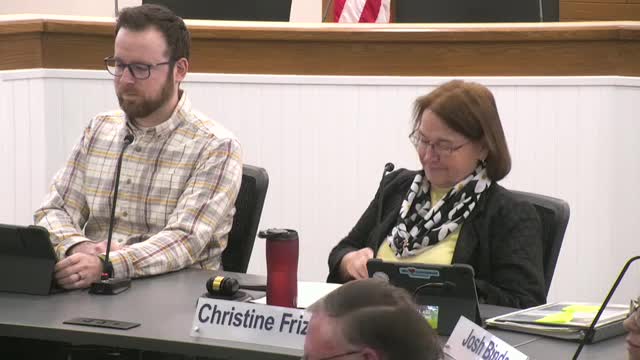
Interim Public Works Director Marcy McQuarrie updated the Lynnwood City Council on Feb. 3 on the city's multi‑year review of the Washington Utilities and Transportation Commission (WUTC) solid-waste hauler tariff and recommended pausing further work on municipalizing curbside hauling.
McQuarrie said Lynnwood has been governed by the WUTC tariff since annexation and that the tariff currently divides the city down State Route 99: Republic Services serves the west side and Waste Management serves the east. She described a 7-to-10-year process the city would need to undertake to replace that tariff with a single municipal contract and summarized outreach and analysis completed to date.
The city ran a May–July 2023 survey that received 529 responses. McQuarrie said the survey showed the majority of respondents were satisfied or very satisfied with current service; recurring concerns were hauler customer service, missed pickups during weather, and confusion about recyclable materials. “The results pointed towards the following. Number 1, community members didn't really want change,” McQuarrie said.
Staff described operational steps taken after 2022 weather-related service disruptions, including monthly coordination meetings with haulers, agreements on handling missed collection during weather events, additional community drop-off events (electronics, foam, shredding), and strengthened local contacts at haulers and the WUTC. McQuarrie said some events and outreach are funded in part by a Department of Ecology grant.
McQuarrie recommended pausing the ordinance-driven municipalization process and continuing the current approach to waste reduction and hauler coordination. “We do not have to necessarily renege the ordinance that put us into this process. We don't really have to pull back on anything. We just stop the clock,” she said. Council members and staff discussed bringing a short formal motion next week to put the ordinance process on pause.
Nut Graf: After two years of outreach and data collection, staff concluded that municipalizing hauling would require a lengthy, resource-intensive process and that current community sentiment and stepped-up coordination with haulers justify pausing the municipalization effort while keeping options open for the future.
Council members asked specific equity and service questions: McQuarrie reported a small price difference between the two tariffs (about $5–$10 per account), and provided account counts the city compiled during outreach—Republic Services: 3,661 accounts; Waste Management: 5,266 accounts. She said the primary differences are service details (for example, yard‑waste pickup weekly on one side vs. every other week on the other) rather than large rate disparities.
Council members also requested clearer public information on drop-off and transfer station options; staff agreed to review and, where missing, add links and updated event listings to the city's waste reduction webpages.
Ending: Staff will prepare a short motion for council consideration to pause the municipalization timeline; if the council formally pauses the process the city would retain the option to restart it in the future.