Get Full Government Meeting Transcripts, Videos, & Alerts Forever!
Get email alerts on the Community Partners Mentoring topic
No spam. Unsubscribe anytime.
100 Black Men of Triangle East pitches mentoring, academic programs to Wake County schools
Summary
Representatives from 100 Black Men of Triangle East outlined mentoring, academic enrichment and health programs for Wake County students and invited district partnership, noting Saturday Academies and programming for grades 6–12.
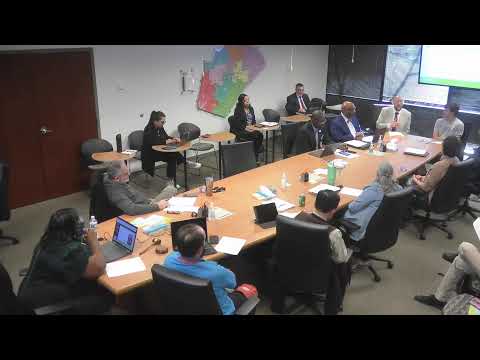
Representatives of 100 Black Men of Triangle East told a Wake County Public School System board committee that the group’s mentoring and enrichment programs could expand support for Black students across the district.
The organization outlined mentoring, academic enrichment, health and economic-empowerment programs and asked school and district staff to use the district’s partnership “map” so schools can connect with available community organizations.
Corbin Smith, representing 100 Black Men of Triangle East, said the group’s work follows four pillars — mentoring, education, health and wellness, and economic empowerment — and that “mentoring is the cornerstone of everything we do.” He described a flagship Saturday Academy that provides tutoring, SAT/ACT prep and workshops on topics such as financial literacy and college readiness and said the group serves students in grades 6 through 12.
Smith said the chapter is piloting a Saturday Academy in Durham Public Schools and previously ran a program at Parkwood Elementary; about 80% of the chapter’s mentees attend Wake County schools, he said. He also encouraged Wake County staff to consider the organization for professional-development work on equity and inclusion and for family-facing workshops that align with district goals.
Board members asked how district leaders will know whether partnerships move from discussion to action. District staff said they track community providers through a mapping initiative and plan an annual report to summarize partner engagement — the number of organizations used, engagement hours and students impacted — so the board can see “boots on the ground” outcomes rather than only initial outreach.
Smith closed by inviting board members and district staff to visit a Saturday Academy session and said the organization has data available to share on program outcomes.