Get Full Government Meeting Transcripts, Videos, & Alerts Forever!
Get email alerts on the Water Infrastructure topic
No spam. Unsubscribe anytime.
Hooksett water precincts present budgets, seek voter approval for warrant articles; budget committee recommends support
Summary
Superintendents for Hooksett’s Central and Village water precincts reviewed their fiscal 2025 budgets, capital plans and a lead-service-line financing option. The Budget Committee recommended all warrant articles presented, including a Village bond application that could include up to 71% principal forgiveness for lead-service-line work.
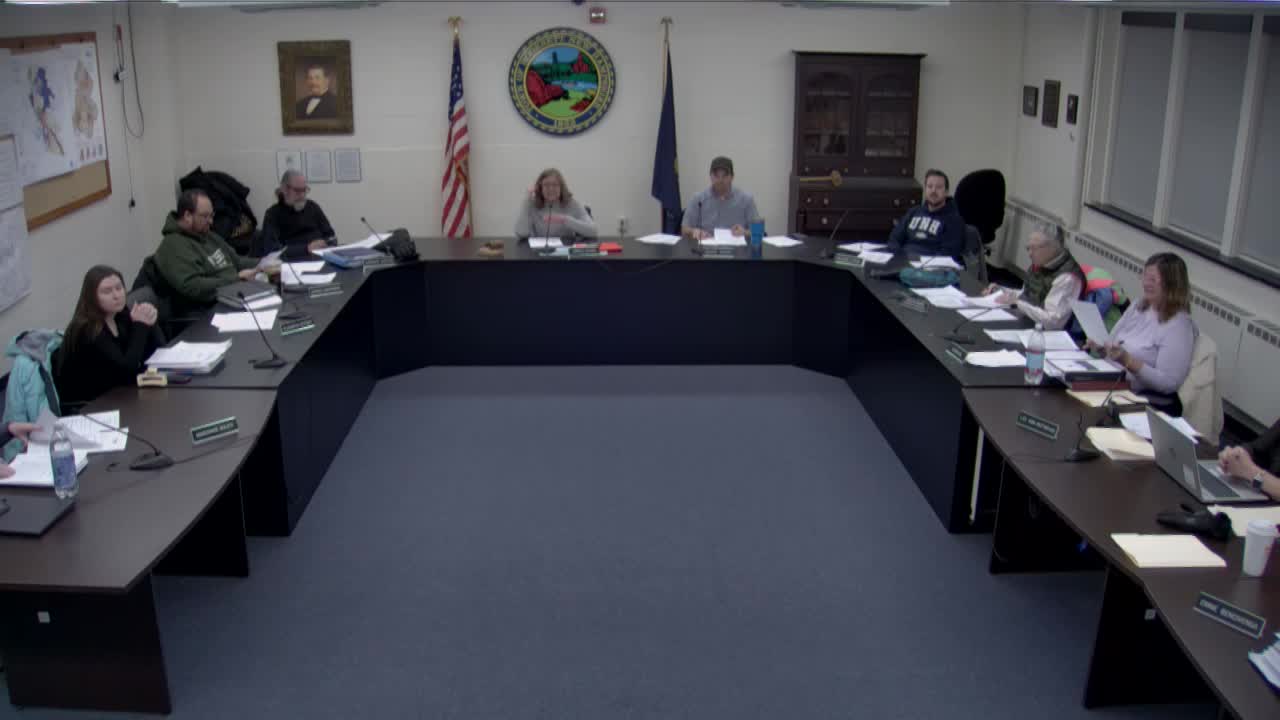
Hooksett’s Central and Village water precincts presented their 2025 operating budgets, capital reserve transfers and a planned application for state funding to address lead service lines during a joint meeting of the town’s Budget Committee. Each precinct’s commission described near-term work on mains, tanks and service-line inventories and answered committee questions on water quality, rates and reserves.
The meeting focused on two practical questions: how the precincts will pay for an array of capital needs and regulatory responses (including a federally driven lead-service-line inventory) and whether those costs will affect taxpayers or ratepayers. Central and Village presenters told the committee their operations are largely rate‑funded and that the warrant articles would draw from operating revenues, reserves, loans or grants rather than town property tax levies.
Why it matters: both precincts provide Hooksett residents’ drinking water and manage assets that affect public health, fire protection and local development. The precincts also face evolving state and federal water rules (including EPA and New Hampshire Department of Environmental Services guidance) and have begun work required by those rules, such as lead service‑line inventories and PFAS monitoring.
Central Water Precinct superintendent Chris Culberson opened the presentation with an overview of the precinct’s system, its interconnections with Manchester Water Works and recent organizational changes. Culberson said the precinct has about 1,700 service connections and that, after the mandated lead-service-line inventory directed by federal and state regulators, “only one came back as galvanized,” a result he described as favorable for long‑term lead remediation planning. Culberson told the committee the precinct implemented a 3% rate increase this year to match an identical increase from Manchester Water Works and that the precinct’s proposed operating budget was “just under 2% greater than last year. It’s about 1.8%.”
Culberson also addressed water‑quality questions from committee members. On PFAS, he said Manchester’s treated water contains trace amounts that are below current New Hampshire DES and EPA limits and that the exact numbers are published in the precinct’s consumer confidence report: “I can get back with you on the exact numbers. It is in our consumer confidence report,” he said. He cautioned that federal PFAS thresholds may change.
Village Water Precinct superintendent Mike Heidorn and Village commission chair Todd Smith described a larger capital program. Heidorn said the Village precinct has pursued in‑house construction and meter replacement to reduce long‑term costs and reported that recent in‑house main replacement work produced substantial savings compared with outside construction estimates. “We estimate we save the town about $300,000 to $400,000 by doing that,” a commission speaker said, describing the Highland Street replacement as an example of in‑house work that came in well below engineering estimates.
Heidorn told the committee the Village’s operating budget reflects planned capital work and a continuing need to develop new source capacity: the precinct relies on wells near Pinnacle Pond and has been studying new source-development options and grant opportunities. Heidorn said the district had applied for and received planning grant funding to support that effort and that there is a small planning line item in the budget for new source work.
Both precincts described their capital reserve structure and how they are funding tank maintenance, mains and other long‑term needs. The Village reported approximately $1.33 million across five trust funds that earmark money for source development, storage, new construction, repair and standpipe work, and said the district is shifting more money into “source development” to prepare for potential purchases of contracted water or capital work.
The Village also presented a warrant article to apply for a low‑interest loan with up to 71% principal forgiveness from a state lead‑service‑line financing program; the commission described that arrangement as a combination of grant and loan forgiveness that would reduce the precinct’s net cost if approved and used. Both precincts reiterated that, as presented, the warrant articles carry no direct town tax impact because the precincts are rate‑funded and use operating revenue, reserves, grants or borrowing when needed.
Votes at a glance - Central Water Precinct — Article 5 (operating budget): Budget Committee recommended approval by roll‑call vote, unanimous (10–0); committee members voting yes were William Lynch, Darren Greenberg, Mike Kovac, Alyssa Owes, Mary Ann Susie, Elizabeth Spitzer, Evelyn Baker, Germano Martins, Ernie Benj Vega and Abigail Shane. Other Central warrant articles read into the record included source development, water storage, new construction, repair and replacement, and standpipe funding; the Budget Committee recommended those articles by voice vote with no opposing votes recorded in the minutes. - Village Water Precinct — Article 5 (water service infrastructure improvements / bond with principal‑forgiveness option), Article 6 (operating budget $1,671,631 as stated in the warrant materials), Article 7 (transfer to water‑main capital reserve $75,000) and Article 8 (transfer to facility capital reserve $20,000): the Budget Committee recommended all four Village warrant articles; Article 5 was described by the presenters as a bond/loan application that could include up to 71% principal forgiveness if the state program awards that level of support.
Discussion and clarifications Committee members pressed for clarifications about where excess revenue is held, how late fees are assessed and why rate increases are being proposed. Culberson said excess revenue is held in the precinct’s operating account and that the precinct is reviewing its investment policy to manage balances prudently. Culberson explained a recent increase in late fees to $35 (from a prior $10 penalty) tied to collection practices and pandemic‑era policy changes. Both superintendents emphasized that revenues are sensitive to weather and usage patterns and that year‑to‑year water sales can affect net receipts.
On technical and regulatory matters, the superintendents described work already underway: full meter replacements, GIS expansion to track samples and assets, and the federally required lead‑service‑line inventory. Culberson said the inventory work was substantially funded by a 100% grant of approximately $50,000 for his precinct’s inventory and that the inventory identified very few legacy galvanized/lead connections.
Public process and next steps Each precinct opened and closed a public hearing on its warrant articles at the meeting. The precincts’ commissions will present the warrant articles to voters at their respective deliberative sessions; the presenters urged committee members and precinct officials to attend the deliberative sessions and noted that final votes and any amendments occur at those meetings. Several committee members recommended more outreach to residents about usage, rates and the lead‑service‑line program to reduce confusion at town deliberations.
What the meeting did not decide No final borrowing or construction contracts were executed at the meeting. The Village’s lead‑service‑line financing article, if approved by voters and if the state awards forgiveness at the levels described, would still require subsequent design and contracting steps before any large expenditures take place.
Ending note Budget Committee members recommended support for both precincts’ warrant articles and closed the hearings. Precinct officials said they will return to voters with the warrant language as read at the meeting and will provide additional technical and financial details at the deliberative session.