Get Full Government Meeting Transcripts, Videos, & Alerts Forever!
Get email alerts on the Tax Increment Financing topic
No spam. Unsubscribe anytime.
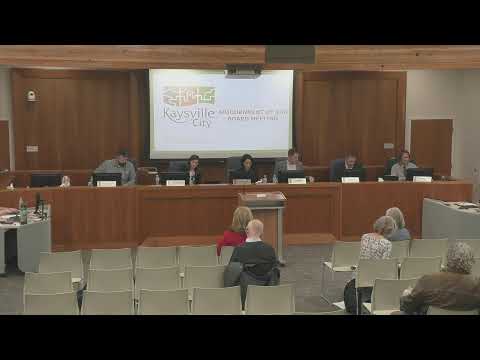
Kaysville delays decision on community reinvestment area after packed public hearing
Summary
After more than an hour of public comment, Kaysville City Council voted to postpone action on an interlocal agreement that would create a community reinvestment area covering downtown. Council members said they want more public engagement and technical detail before the redevelopment agency moves forward.
Kaysville — The Kaysville City Council voted Jan. 2 to postpone a decision on an interlocal agreement that would let the Kaysville Redevelopment Agency collect tax-increment revenues for a proposed Kaysville City Center community reinvestment area (CRA), citing resident concerns and the need for additional outreach.
The postponement came after a lengthy staff presentation and about two hours of public comment. Council members said they will return to the item at their Jan. 16 meeting to give residents and taxing entities more time to review the plan and ask questions.
City Community Development Director Melinda (last name not stated) told the meeting the CRA proposal would not raise property tax rates and would not change zoning or force property owners to sell. She described how tax-increment financing works: the incremental growth above a base property valuation within a defined project area would be redirected to the redevelopment agency for a defined period to pay for public improvements and incentives. The proposed project area covers approximately 261.5 acres around Kaysville’s downtown and includes sections of Main Street, 200 North and parts of Flint Street.
Melinda said the agency projects it could receive about $5,100,000 in incremental revenues over 15 years under a realistic scenario and that county documents cap the agency’s receipts at $10,000,000 over the 15-year period. She said the city would propose to participate at a higher share—keeping 20 percent of any growth above base value for city purposes while allowing 80 percent of the incremental growth identified to be used by the RDA—though the final percentage and participation by other taxing entities, including the Davis School District and Davis County, would be decided through separate interlocal agreements.
The proposal would also set aside a portion of revenues for housing-related uses; Melinda said a housing set-aside can be used anywhere in the city, unlike most RDA funds which must be spent within the project area. Uses listed in the plan include Main Street and streetscape improvements, sidewalk repairs, parking, façade preservation, historic preservation and infrastructure work. Melinda said the small-area plan process the city will launch will further refine the ideas and include additional public engagement.
Residents who spoke at the hearing raised several recurring concerns: inadequate notice and timing (some said the Jan. 2 date fell too close to holidays), traffic and parking impacts on Main Street if design changes are implemented, the potential for increased density and multifamily development, possible negative effects on small businesses and uncertainty about who would finance future projects. Several commenters asked how the city would protect homeowners and business owners from collateral damage during public-works projects and whether the city would repair damage it caused. Melinda and city staff said state law governs notice requirements (noting the city mailed notices to property owners within the project area and to taxing entities) and that any future development actions would come back through public processes, including planning commission reviews and conditional-use permitting where applicable.
Some business owners and developers spoke in favor, saying a clear signal from the city about a downtown reinvestment strategy and more predictable permitting and communication could encourage private investment. Developer Ryan Forsyth said clearer communication, timeliness and predictable permitting speed decisions by businesses and developers and that he intends to invest in properties on Main Street.
Council members who spoke emphasized the proposal is a financing tool, not a mandate. Council members noted the RDA’s governing board would be the mayor and city council (per city code), making the board publicly accountable; they reiterated that any participation agreements with developers would require public review and that the council could decline projects that do not meet adopted community goals. Several members said the item has been under discussion for years and reflected community survey results calling for downtown enhancements, but they also supported delaying the vote so residents could raise more questions and staff could provide additional detail.
Votes at a glance: - Motion to close the public hearing on the CRA: approved (unanimous Aye). The public hearing closed before council debate and votes on the interlocal agreement. - Motion to table/postpone consideration of the interlocal agreement to the Jan. 16 council meeting: approved (unanimous Aye).
What happens next: If the council votes to approve an interlocal agreement at a future meeting, Kaysville would then present that interlocal to other taxing entities (Davis County, the Davis School District and other taxing districts) for their approval before the RDA could begin collecting tax-increment revenue. The city also plans a small-area plan and a consultant-led public engagement process funded in part through a Wasatch Front Regional Council grant to further refine designs and implementation steps.
The council also approved other items on the Jan. 2 agenda. A consent agenda award for rail-trailhead and Flint Street improvements passed; separately, the council approved an ordinance to allow electronic message center signs in public-use zones (for example, a sign at Barnes Park), subject to planning commission review and conditions.
The discussion and the decision to postpone reflected strong local interest in downtown planning and a desire among elected officials to balance the potential for public improvements with requests for additional transparency and technical detail. The council set the CRA interlocal agreement for further consideration at its Jan. 16 meeting; if citizens want to comment, the council indicated additional public input opportunities will be available as the project moves through the planning process.