Get Full Government Meeting Transcripts, Videos, & Alerts Forever!
Get email alerts on the Utility Disconnections topic
No spam. Unsubscribe anytime.
Maryland PSC adopts 72-hour, 95°F trigger for summer termination protections
Summary
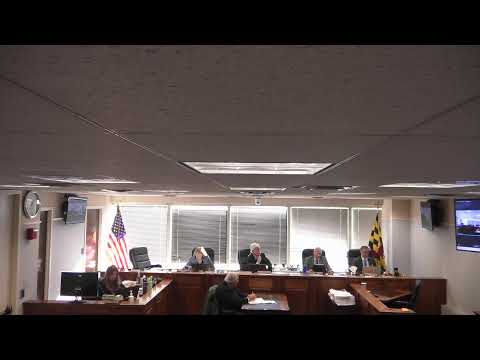
The Public Service Commission voted to adopt amended regulations of COMAR 20.31 that create a summer extreme weather period defined as a 72-hour window with a forecasted heat index or ambient temperature of 95'F or higher, with determinations repeated daily at 6 a.m.
The Public Service Commission voted to adopt amended regulations of COMAR 20.31 that create a summer extreme weather period defined as a 72-hour (three consecutive 24-hour segments) window during which the forecasted heat index or ambient air temperature is expected to reach 95 degrees Fahrenheit or higher, with determinations repeated every day at 6 a.m.
The change, adopted during a rulemaking hearing on RM 86, also adds a heat-index definition aligned with the National Weather Service and implements temporary residential weather-restriction language that prevents terminations for nonpayment during declared extreme weather periods. Commissioners directed staff to publish the adopted text in the Maryland Register.
Why it matters: The amendment expands summer protections intended to reduce health and safety risks during extreme heat, particularly for households that lack functioning air conditioning or include medically dependent residents. The rule replaces the previously discussed compromise language and resolves disagreement among stakeholders over whether to rely on National Weather Service alerts, a 72-hour or 120-hour forecasting window, and what numeric threshold should trigger protections.
Supporters led by the Maryland Office of People's Counsel urged a lower numeric trigger and a longer forecast window. Nicole Zeichner, assistant people's counsel, urged the commission to favor protections earlier in the heat spectrum: "we would respectfully ask that the commission consider the 95 heat index, 95 temperature and the 5 day forecasting period," citing local studies of indoor temperatures and Department of Health guidance.
Utilities and some staff urged more limited thresholds or reliance on National Weather Service advisories. Matthew Segars, speaking for the Exelon joint utilities, said the utilities "do not want to disconnect anyone, and we only use service disconnections as a last resort," but warned that broader restrictions would raise arrearages and customer costs and argued the National Weather Service issuance is an "independent and scientific third party" metric.
Staff recommended retaining a 72-hour (three-day) look-ahead rather than a five-day window and noted National Weather Service designations would, in staff's view, be less protective than the current rules. After discussion, a motion to adopt the work-group language amended to set the heat-index/temperature trigger at 95 degrees and to require 72-hour segments with daily 6 a.m. determinations passed.
The commission also adopted a work-group–proposed definition of heat index drawn from National Weather Service methodology and approved temporary residential weather-restriction language (COMAR 20.31.0304) preventing termination for nonpayment during an extreme weather period. The commission voted to publish the adopted regulation text in the Maryland Register for the formal rulemaking step.
What the rule does and does not do: The adopted language establishes an operational trigger (95'F heat index or ambient temperature) and a procedure (repeat determination daily at 6 a.m. for a 72-hour window). It does not create an outright moratorium; the regulation preserves the utilities'ability to manage service under other provisions and leaves details of implementation to the utilities and staff. The commission and staff discussed, but did not resolve, a separate request by utilities to allow tracking of incremental uncollectible expenses in a regulatory asset; commissioners suggested handling any regulatory-asset process in a separate order or proceeding.
Next steps: Commissioners asked the work group to continue meeting to consider related protections including medical/critical-need certification procedures and other COMAR 20.31 sections (for example, eligibility and documentation for medically dependent or elderly customers) and to return with recommendations.
Quotes in context: The record shows a range of stakeholder positions: Zeichner framed the protections as addressing indoor heat exposure and equity concerns; utility counsel warned of higher arrearages if restrictions expand; staff favored the three-day look-ahead and cautioned that broadly publicizing restrictions could encourage risky customer behavior and increase arrearages.
The commission directed staff to publish the adopted provisions in the Maryland Register and to convene the work group for follow-up discussion on related protections, including simplified approaches to medical-need certifications and administrative tracking of any incremental costs.