Get Full Government Meeting Transcripts, Videos, & Alerts Forever!
Get email alerts on the Education Edtech topic
No spam. Unsubscribe anytime.
Granite coaches use AI tools to teach vocabulary and boost student engagement at Oakwood Elementary
Summary
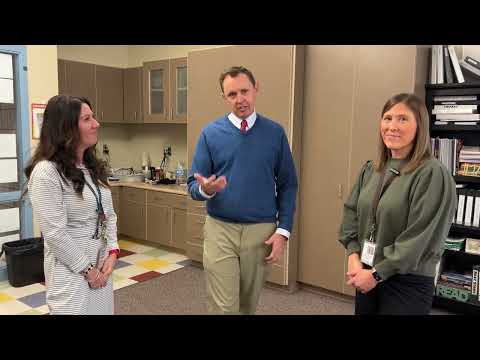
Superintendent Horsley visited Oakwood Elementary to observe literacy and technology coaches Katie Wasson and Wendy Jones demonstrating AI-supported vocabulary and writing lessons for elementary students, including AI-generated images, Adobe Express animations and School AI story projects.
Superintendent Horsley visited Oakwood Elementary to observe literacy and technology coaches working together to integrate artificial-intelligence tools into vocabulary and writing instruction for elementary students. During the visit, the coaches demonstrated 5th-grade flashcard work tied to HMH curriculum, Adobe Express animations with audio for student goal-setting, and School AI narrative-writing projects for lower grades.
The visit showcased classroom lessons in which students used AI to generate images for vocabulary flashcards, prompting them to refine definitions and descriptive language so the tool produced accurate pictures. "I was totally blown away," Superintendent Horsley said after observing the lesson. Katie Wasson, the literacy coach at Oakwood, described the 5th-grade activity: "we went through some of the words that we'd been doing for HMH to 5th grade that week... we talked about multiple meaning words, and then we decided to... make sure the kids really understood what the definition was." Wendy Jones, the technology coach, explained the AI step: "they had to use AI to create the image. So they had to really understand what the word meant."
Coaches said students selected templates for flashcards, wrote definitions, and iteratively edited prompts so the AI produced the intended images. Wasson and Jones said the requirement to be descriptive helped students deepen their vocabulary understanding: if a generated image did not match the intended meaning, students revised the description to clarify the sense of the word. Jones said students could further edit images and that the variety of templates and art styles increased engagement.
Beyond vocabulary, the coaches described other classroom projects. Jones said 5th graders created animations with audio in Adobe Express to present beginning-, mid- and end-of-year learning goals; each student recorded a short narration and shared links with parents. For younger grades, the coaches used School AI to scaffold narrative writing—teachers prompted first graders through a topic sentence, three details and a conclusion, and students used a microphone feature to hear prompts aloud and respond. "They were thoroughly engaged," Wasson said, adding that even kindergarten students showed improvements in comprehension and spelling when using the tools.
Superintendent Horsley said he plans to share samples of student work districtwide and praised the coaching collaboration. He also thanked district staff, including a shout-out to Chris Larson. The coaches said the work ties into district literacy frameworks (reading and writing ropes) and EdTech badge initiatives that support teacher development.
The classroom visit was presented as a demonstration and celebration of instructional practice; no district policy changes or formal decisions were announced during the visit. Coaches said they frequently collaborate with teachers to design and support lessons like those shown at Oakwood.