Get Full Government Meeting Transcripts, Videos, & Alerts Forever!
Get email alerts on the State Land Management topic
No spam. Unsubscribe anytime.
Panel advances bill to preserve tax-exempt status for some state-owned lands after Supreme Court ruling
Summary
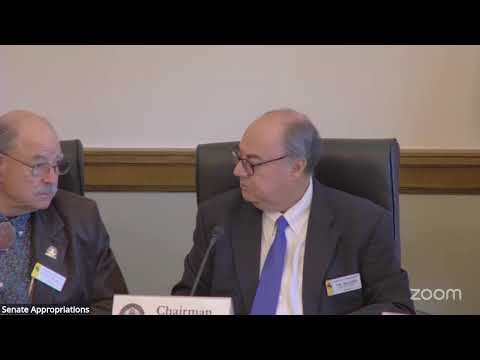
The Appropriations Committee advanced Senate File 81 to exempt certain state-owned property from property taxes; discussion cited a recent state Supreme Court ruling and an estimated fiscal impact of about $1.9 million on local taxing authorities.
The Appropriations Committee voted to advance Senate File 81, a bill intended to preserve property tax exemption for certain state-owned lands that a recent state Supreme Court ruling had placed at risk.
Senator Hicks described the bill as a response to a court decision involving state institutional lands in Bridger County, saying the ruling created broad implications that could require state lands to be taxed unless the Legislature acts. Hicks said revenues affected by the ruling would otherwise flow to beneficiaries such as the state hospital and that the bill would “revert back to the status quo” so state-leased private operations would not trigger local property-tax assessments for those lands.
Committee members asked about fiscal effects. Senator Hicks and others referenced the fiscal note, which the committee discussed as roughly $1,900,000 in potential impact to the school foundation program and local ad valorem receipts; speakers cautioned that figure was an estimate. Senator Driscoll characterized the number as a “wild swag” and described complexities in accurately forecasting the effect. Committee members agreed the issue is complex and merits further study, but voted to advance the bill; the roll call recorded 5 ayes and the bill was reported do pass from the committee.
Committee discussion also raised the procedural question of whether bills that have fiscal impacts but do not appropriate money should be referred to the Appropriations Committee. That broader referral-policy question remained unresolved at the hearing.