Get Full Government Meeting Transcripts, Videos, & Alerts Forever!
Get email alerts on the Traffic Calming topic
No spam. Unsubscribe anytime.
Littleton staff present draft traffic-calming toolbox; residents press for clearer data and outreach
Summary
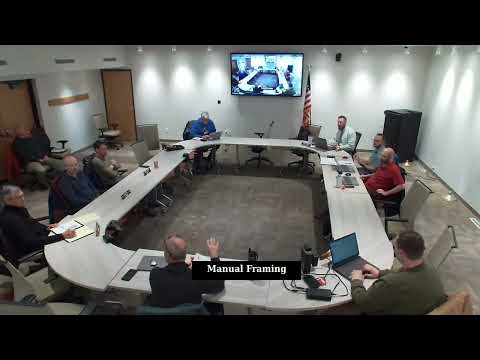
City of Littleton transportation staff presented a draft neighborhood traffic-calming evaluation and an eight-treatment toolbox at the Transportation Mobility Board meeting on 2025-02-11, laying out preferred designs and five location concepts for testing.
City of Littleton transportation staff presented a draft neighborhood traffic-calming evaluation and an eight-treatment “toolbox” at the Transportation Mobility Board meeting on 2025-02-11, laying out preferred designs and examples for slowing vehicles on local streets and at trail crossings.
The draft, presented by Kyle Morris, an engineer with the Transportation Group, recommended eight preferred treatments — including speed cushions, raised pedestrian crossings (speed tables), traffic circles, curb extensions, chicanes and pinch points, pedestrian refuge islands, pedestrian hybrid beacons/RRFB-style beacons for mid-block crossings, and diverters — and included design guidance, pilot examples and five early location designs to test the toolbox on Littleton streets.
Morris said the evaluation grew out of an existing-infrastructure assessment, peer-review of Denver and Boulder practices and pilot projects the city has installed. “This project is aimed at fostering safety and reducing speeds on priority roadways, specifically local streets and neighborhood connectors,” Morris said. He told the board the city has more than 80 traffic-calming features installed since 1997 (the consultants’ count was 79 before recent pilots) and that staff used a phone-data service called Urban SDK to screen for locations needing follow-up speed studies.
Why it matters: staff and the board tied the toolbox to the city’s Safer Streets initiative and the pending Transportation Master Plan (TMP) update. Board members and residents pressed staff for clear before-and-after data on pilot projects, for accessible design features for people with disabilities, and for a robust public outreach plan before wider rollouts.
Key elements and technical details - Toolbox and pilots: Morris said the toolbox includes both vertical-deflection treatments (speed cushions, speed tables/raised crossings) and horizontal-deflection treatments (chicanes, pinch points, curb extensions). David Evans and Associates is developing five location designs applying the toolbox on corridors including Irving Street, Hailey Avenue, Stern Parkway and several trail crossings in Lee Gulch. - Existing inventory and data: Morris reported the inventory at “over 80” installed features and said staff uses Urban SDK speed data as an initial screen, then conducts targeted, more precise collections where warranted. He told the board that last year the city collected “about a half a million dollars” in multimodal impact fees that are earmarked for multimodal projects; staff also noted a $100,000 line item in 2026 for bike-and-ped planning. - Design specifics discussed: presenters described speed cushions with emergency-vehicle cutouts, and noted typical speed-cushion height of about 3 inches; speed tables/raised crossings were described as about 4 inches over 10 feet to accommodate emergency vehicles and accessibility. Morris said traffic-circle design guidance recommends a larger inside radius than some existing Littleton circles to make them feel more rotary and to create greater deflection of vehicle paths.
Board and public discussion Board members, city staff and members of the public engaged in detailed technical discussion and several policy-level points: - Accessibility and blind/low-vision users: board members and residents asked how new designs would accommodate people with vision impairment and mobility devices. Morris said the toolbox recommends directional curb ramps and refuge islands and noted that some current diagonal “apex” curb ramps will be replaced with directional ramps in future designs. - Traffic circles and bike lanes: several members asked whether traffic circles are appropriate where bike lanes exist. Staff replied traffic circles would generally not be used on streets with bike lanes; Denver’s guidance was cited as an example where traffic circles are applied on low-volume neighborhood bikeways. - Chicanes, pinch points and emergency access: the board questioned whether pinch points could create conflict if two vehicles arrive simultaneously. Staff emphasized that treatments are intended to be installed in series and in context (spacing of a few hundred feet) rather than as isolated measures, and that South Metro Fire participated in design discussions and signed off on reduced widths in many cases. - Drainage, maintenance and durability: members asked how curb extensions and refuge islands would interact with the city’s drainage and snowplow operations. Staff acknowledged drainage and snowplow impacts are a constraint and that some island noses and sloped designs have been used on capital projects to reduce damage and maintenance needs.
Public comments and follow-up requests Residents raised related transportation concerns during the meeting’s public-comment period and during the toolbox discussion: - Robin Bernstein, a Littleton Crossing resident, urged improved pedestrian crossing signals and specifically asked staff to replace the flashing yellow beacons at Main Street and Alamo with more effective flashing red or hybrid beacons, saying she has “almost been killed” near the light rail crossing and that flashing yellow lights do not reliably stop drivers. - Pam Chadbourne, a resident and TMP commenter, said the TMP update process needs stronger public engagement and clearer communication of results from existing pilot projects so residents can judge whether measures worked. “We need to show what we learned from the pilots — this is what reduced speeds, this is what didn’t,” she said.
Next steps and staff commitments Staff said they will finalize the toolbox design guidance and continue to develop the five location designs with David Evans and Associates. They also committed to sharing the draft speed-data analysis for existing traffic calming features once it moves beyond draft format; board members requested that speed and pilot project before/after data be released to the board and the public. Staff framed the toolbox as an input to the 2026 Transportation Master Plan update and said the toolbox can be used for neighborhood-calming grant requests, development review on neighborhood connectors, and as part of larger capital projects and the pavement management program.
No formal votes were taken during the presentation; the meeting’s action items were limited to staff follow-ups and requests for additional data and outreach. The board scheduled further sessions to consider TMP priorities and to review the toolbox and location designs in greater depth.
Ending Staff recommended staged implementation tied to pilot results, and the board emphasized outreach and clearer documentation of what the city has learned from existing speed-reduction measures before pursuing further installations. The next technical deliverables include the five corridor designs from David Evans and Associates and a finalized speed-data memo staff said would be circulated to board members.