Get Full Government Meeting Transcripts, Videos, & Alerts Forever!
Get email alerts on the Criminal Justice topic
No spam. Unsubscribe anytime.
Committee advances bill tightening registry rules for certain sex offenses, shifting check‑in frequency
Summary
House Bill 280, sponsored by Representative Chris Knapp, would move certain first- and second-degree sex-related offenses into a non-removal registry category and shorten registration check‑in intervals. The House Judiciary Committee approved the bill 9–0 after testimony from the Attorney General's Office and advocacy groups.
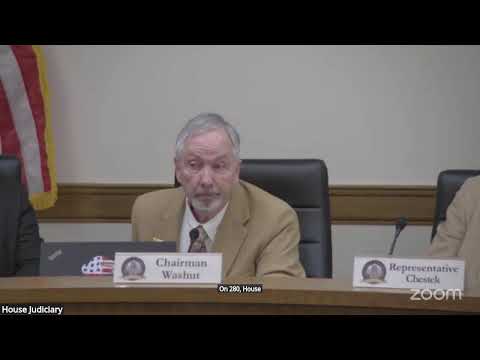
The House Judiciary Committee voted unanimously to advance House Bill 280, a measure to change how higher-level sexual offense convictions are classified in Wyoming's offender registry and to alter registration requirements.
Representative Chris Knapp, sponsor, said the bill moves specified first- and second-degree sexual offense convictions into a category that prevents petition-based removal from the registry and shortens required check-ins (the committee was told from six-month to three-month intervals for higher-risk classifications). Knapp said the change is intended to provide public notice and reduce recidivism risk by ensuring certain offenders remain in the registry indefinitely and are monitored more frequently.
Kara Chambers of the Wyoming Attorney General’s Office confirmed the AG’s office reviewed the draft and had no concerns with the proposed reclassification as written. Committee members asked whether the proposal complied with SORNA and DCI administration; a DCI representative, according to committee testimony, did not raise concerns about compliance.
Representative Knapp presented data the committee heard showing a higher recidivism rate after five years among offenders who reoffend; the sponsor said the registry change is intended as a tool to give potential future victims information. Sarah Burlingame of Wyoming Equality testified in support, citing research on victimization rates for certain populations and urging protections for vulnerable youth.
After brief public comment, the committee moved the bill (moved by Representative Lane, second by Representative Feiler) and approved it on a roll-call vote of nine ayes.