Get Full Government Meeting Transcripts, Videos, & Alerts Forever!
Get email alerts on the Attorney General topic
No spam. Unsubscribe anytime.
Committee approves bill to make Wyoming Attorney General an elected office after wide debate
Summary
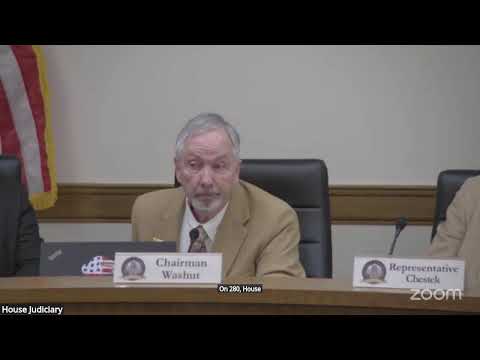
The House Judiciary Committee on February 5 approved House Bill 102 by a 6–3 vote, moving forward a proposal to make the Wyoming Attorney General an elected office beginning with the 2026 general election.
The House Judiciary Committee on February 5 approved House Bill 102 by a 6–3 vote, moving forward a proposal to make the Wyoming Attorney General an elected office beginning with the 2026 general election.
Majority Floor Leader Scott Heiner, sponsor of the bill, told the committee the change would make the state’s chief legal officer "the people's attorney," arguing election would make the office more accountable to voters and enable Wyoming to participate alongside other states in multistate litigation. "We are often referred to as the People’s Chamber," Heiner said in his presentation.
Committee members extensively debated the policy and practical implications. Opponents warned the switch would politicize an office that currently provides legal advice across the executive branch and could create conflicts between an elected attorney general and the governor. Representative Chastick asked who would represent the governor if the elected attorney general disagreed; Heiner said the governor could hire outside counsel and that the bill preserves avenues for the three branches to request actions. Representative Kelly, who supported the bill, said electoral accountability and a diversity of views can be positive checks on the governor.
Witnesses from multiple perspectives testified. Gail Simmons, speaking for Civics 307 and WhyVote, said an elected attorney general could "introduce political bias undermining the objectivity needed for sound legal advice" and warned of higher costs and politicization. Philip Rijeski, a private citizen, also opposed the measure, stating that big out-of-state donors frequently influence attorney general races in other states. Betsy Anderson, Deputy Chief of Staff and General Counsel to Governor Gordon, testified the governor opposes the bill, saying an appointed AG is better able to focus on legal concerns without campaign pressures and that an elected AG often requires larger legal staffs across the executive branch. Jenny Desaro of the Equality State Policy Center testified the change would increase partisanship and urged opposition.
Heiner walked members through specific statutory changes in the draft, including conforming amendments to multiple statutes, language that would permit (rather than require) the attorney general to commence actions when requested by another branch, and a provision setting the Attorney General’s salary at $175,000. The bill also specifies eligibility — four years of practicing law and good standing in Wyoming courts — and sets the commencement of duties for the elected office after the 2026 general election.
After about two hours of testimony and questioning, committee members called the question. The committee recorded six ayes and three noes on the bill; the sponsor said he will carry the bill to the House floor.