Get Full Government Meeting Transcripts, Videos, & Alerts Forever!
Get email alerts on the Sudan Humanitarian Crisis topic
No spam. Unsubscribe anytime.
UN says famine confirmed in parts of Sudan as conflict uproots millions
Summary
A United Nations briefing to the Security Council warned that famine conditions are present in multiple areas of Sudan, that fighting and access constraints are driving widespread displacement, and that UN agencies are seeking billions in additional funding to respond.
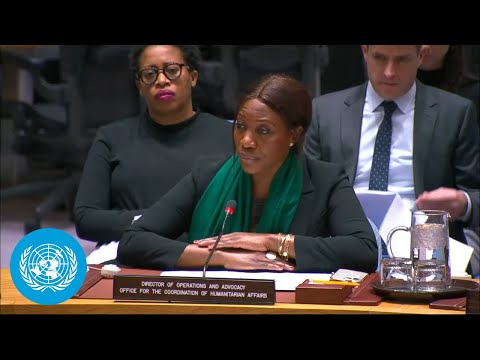
Edem Mozzon, a United Nations official, told the Security Council during a briefing that famine conditions have been confirmed in several parts of Sudan and that more than 11.5 million people are internally displaced amid ongoing fighting.
Mozzon said the crisis has deepened since April 2023 and described the situation as “close to half the country's population,” noting that humanitarian agencies are aiming to support about 21,000,000 people inside Sudan in 2025. She said fighting and administrative restrictions are preventing relief from reaching the worst-affected areas.
The briefing identified Zamzam camp and parts of North Darfur among locations where famine conditions have been confirmed. Mozzon told the council that “this is the only place in the world famine has been confirmed” and that the Integrated Food Security Phase Classification (IPC) analysis projects additional areas at risk between now and May. She said the main drivers are conflict and forced displacement and described the crisis as “man made.”
Mozzon reported recent access milestones and setbacks. She said a convoy of 28 trucks arrived in Khartoum from Port Sudan on Dec. 25, the largest UN convoy to reach the capital since the crisis began, and that a separate World Food Programme convoy delivered food to Abujaibha in South Gezira. At the same time, she said additional inspection procedures for trucks bound for conflict-affected areas in North Darfur and tighter restrictions inside Darfur are creating new bottlenecks. She also said visas for humanitarian personnel are “not being granted swiftly enough.”
The briefing referenced attacks on humanitarian workers. Mozzon told the council that on Dec. 19 “three of our World Food Programme colleagues were killed by an airstrike on their compound in Yabous in Blue Nile State.” She urged the council to press parties to comply with international humanitarian law and to protect civilians and humanitarian assets.
On funding, Mozzon said the 2025 Sudan Humanitarian Needs and Response Plan will require $4,200,000,000 to support roughly 21,000,000 people inside Sudan, and an additional $1,800,000,000 to assist about 5,000,000 refugees in seven neighboring countries. She appealed for an “unprecedented mobilization of international support.”
Mozzon asked the council to press for three immediate priorities: (1) that parties comply with international humanitarian law and allow relief operations to proceed, (2) that all routes across conflict lines and borders be opened for relief supplies and personnel and that bureaucratic impediments, permits and visas be lifted, and (3) rapid, scaled funding to meet the record needs she outlined. No formal council decision or vote on the briefing was recorded in the transcript.
The briefing emphasized differential impacts within the population, noting heightened risks for women and girls, young children and the elderly. Mozzon said accessing famine-affected locations remains a “fundamental challenge” and called for establishment of humanitarian hubs, including implementation of an agreement to create a hub in Zalindji in Central Darfur to serve the region.
The Security Council briefing contained firsthand operational details from UN agencies and referred to the IPC Famine Review Committee’s recent findings on famine risk and confirmation. Mozzon closed by urging “real and inclusive steps towards the lasting peace that the people of Sudan so desperately need.”