Get Full Government Meeting Transcripts, Videos, & Alerts Forever!
Get email alerts on the Housing Zoning topic
No spam. Unsubscribe anytime.
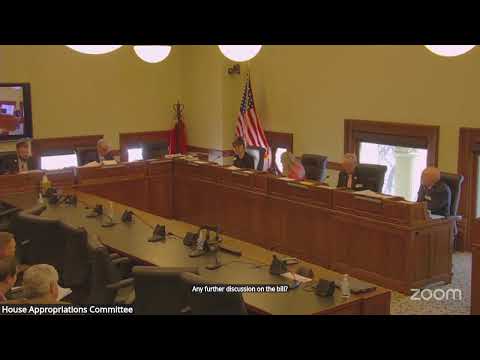
House Appropriations advances changes to zoning protest petitions in Senate File 40
Summary
House Appropriations voted to advance Senate File 40 with amendments tightening who may file post‑approval zoning protest petitions and lowering the vote threshold to approve contested changes. The committee voted 5–1–1 to pass the bill with amendments after testimony from developers, municipal leaders and policy groups.
CHEYENNE — The House Appropriations Committee on Monday voted to advance Senate File 40, a bill that revises Wyoming’s zoning protest petition process, sending the measure to the House floor with committee amendments after public and expert testimony.
Senate File 40, originally proposed by the Regulatory Reduction Task Force and managed in the House by Representative Feiler, would change who may file a post‑approval protest petition, the notice radius for eligible petitioners and the vote threshold required to override a valid petition. The committee approved the bill with amendments by a roll call of five ayes, one no and one excused (Aleman, Angelos, Harrelson, Pendergraft and Chairman Bair voted yes; Sherwood voted no; Smith was excused).
The legislation narrows the class of property owners who may file a protest by requiring a showing of “concrete and particularized harm,” raises the ownership share needed for a valid petition (from 20% in some drafts to roughly the 33% level discussed in the committee), and ties notice to property within 300 feet of a project. Committee amendments replaced a two‑thirds override requirement with a simple majority on the governing body for overturning a valid petition and added language limiting the ability of local governments to impose fees or conditions on development related to workforce or affordable housing unless state law expressly authorizes those measures.
Why it matters: supporters said the changes reduce developer uncertainty, speed housing production and help address statewide housing shortfalls; opponents said the process protects neighboring property owners’ rights and that repeal or significant weakening risks undermining community input.
What lawmakers said
Representative Feiler, who brought local examples to the committee, said the existing protest petition can be used as an anti‑growth tactic that delays projects after lengthy municipal review. “It just creates uncertainty for the developer, and also the landowners,” Feiler said, arguing that repeated delays increase costs that ultimately pass to homebuyers.
Representative Mike Yenn, who assisted in presenting the bill, described the measure as the product of the Regulatory Reduction Task Force and said the task force sought to put “guardrails around the zoning protest petition process” to prevent what he called repeated, post‑approval delays.
Senator Mike Garew, co‑chair of the Regulatory Reduction Task Force, told the committee the task force considered full repeal but instead recommended narrowing who may file and how large the petitioning class must be. “They say you had to demonstrate a real threat,” Garew said, referring to language the task force adopted to focus petitions on demonstrable harms rather than general opposition.
Mayor Patrick Collins of Cheyenne told the committee how his city applies the petition rule and described a timeline in which the petition applies at third and final reading of a zoning change. “We notice everybody within 300 feet of a project,” Mayor Collins said. He said the change from a supermajority to a lower threshold in the bill would make it easier to develop projects in Cheyenne after the municipality’s multi‑step review is completed.
Josh Dorel, CEO of the Wyoming Business Council, tied the measure to broader workforce and economic concerns, telling the committee Wyoming faces youth out‑migration and a housing shortage that he said can be exacerbated by post‑approval delay. “Anything that we can do as a state to make that easier and make that so that housing can get done in the state is really critical,” Dorel said.
Public testimony included a developer who said a multifamily infill project in Cheyenne failed on third reading after a protest petition and that the petition process had allowed misrepresentations to influence signers. “I believe it’s wrong that a couple of individuals that live near a project are able to go ahead and put a petition together” and derail projects, developer Jason Steven said.
Mark Miller, an attorney with Pacific Legal Foundation, urged repeal, saying only 20 states retain a statutory post‑approval protest petition and calling the process “a second bite at the apple.” He said the bill’s “concrete and particularized harm” language would limit who could validly petition but testified he preferred complete repeal.
How the committee amended the bill
- Representative Pentaglia’s amendment replaced a two‑thirds override with a simple majority for the governing body to overturn a valid protest petition; the committee approved that change. - Representative Pendergraft’s amendment added language prohibiting a governing body from imposing monetary fees or nonmonetary conditions on residential or commercial development related to workforce or affordable housing unless state law explicitly authorizes such fees or conditions; the committee approved the amendment. - Representative Harrelson moved to repeal the relevant statutory provision (filed as a test‑the‑waters motion); that repeal motion failed on a tie vote.
Outcome and next steps
The committee voted to pass Senate File 40 with amendments. The motion to advance the bill was made by Representative Angelos and seconded by Representative Sherwood. The committee’s roll call on the final motion recorded five ayes, one no and one excused; the measure will proceed to the House floor for further consideration.
Context and open questions
Lawmakers and witnesses debated whether the state should retain any uniform protest petition framework or let municipalities set rules locally; several municipal and housing organizations that testified supported the bill or said they would accept repeal. Some committee members and witnesses urged that, if the state keeps any post‑approval petition process, a statutory time limit should be added so petitions cannot be raised indefinitely after construction begins — the transcript records the question but no statutory time limit was added.
Votes at a glance
- Motion: Move Senate File 40 to pass with amendments. Mover: Representative Angelos; seconder: Representative Sherwood. Roll call: Aleman (aye), Angelos (aye), Harrelson (aye), Pendergraft (aye), Sherwood (no), Smith (excused), Chairman Bair (aye). Tally: 5 ayes, 1 no, 1 excused. Outcome: passed out of committee.
(Committee action does not mean the bill is law; further floor action and potential conference committee work remain possible.)