Get Full Government Meeting Transcripts, Videos, & Alerts Forever!
Get email alerts on the County Land Use Plan topic
No spam. Unsubscribe anytime.
Pulaski County planning board reviews countywide land-use study as justices of the peace raise concerns
Summary
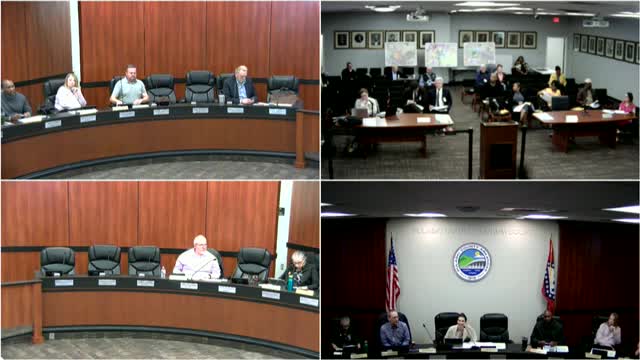
Pulaski County planning officials and several justices of the peace met in a special session to review a draft countywide land use study presented by Garver planning consultant Juliet Ritchie.
Pulaski County planning officials and several justices of the peace met in a special session to review a draft countywide land use study presented by Garver planning consultant Juliet Ritchie.
The study, which Garver and planning staff said is a policy document and not a regulatory code, maps existing and potential future land uses across West, North and Southeast Pulaski County and recommends implementation steps that could — if the Quorum Court later chooses — lead to zoning or other regulations. "Everything that we're going to talk about today is on the website," Juliet Ritchie said during her presentation.
Why it matters: The study is intended as a blueprint for future decisions about infrastructure, development and conservation in the unincorporated county. Residents and several justices of the peace said they fear a move from a policy plan to mandatory land-use regulations that would affect property rights and local character.
Garver described the study's methodology as a compilation of existing conditions, utility and transportation capacity, and public input gathered through three in-person visioning sessions and an online survey that produced 342 responses. The consultant presented separate future-land-use maps and goals for three subareas: West Pulaski (emphasis on conserving rural character and conservation-neighborhood approaches), North Pulaski (higher existing density and multifamily development pressures) and Southeast Pulaski (industrial and extraction nodes, flooding and sewer concerns).
Planning board vice chair Anna Morchetti opened the meeting and introduced Ritchie; Director Van McClendon and other planning staff also took part. The presenters emphasized that the study would serve as a starting point for any future regulatory work, not an immediate change to property rules. Ritchie said the plan documents community input and infrastructure analyses down to parcel-level review in places where development pressure is concentrated.
Public comments and questions focused on three recurring concerns: - Scope and next steps: Several justices, including Rebecca Davis (JP 1, West Pulaski) and Aaron Robinson (JP 11, north Pulaski), said constituents oppose countywide zoning and asked that any regulatory follow-up be limited to targeted areas near city edges or high-development corridors. - Outreach and representation: Community members and JP Christina "KG" Gulley urged more proactive outreach (mailers, yard signs and broader notice) so property owners in affected areas have opportunities to participate. - Infrastructure and approvals: Developers and legal counsel asked how the plan would affect large projects. Brian Rosenthal of Rose Law Firm, speaking for INVinergy, asked whether adoption of the plan would trigger ordinances that could block or require rezoning for a planned large energy project. McClendon and staff replied that the document before the board is a plan only; site plan reviews and existing subdivision code processes remain the immediate path for development approvals. McClendon said if a project were already under construction, it could be treated as a nonconforming use if future ordinance changes occurred.
Several Justices of the Peace and residents urged that, if the Quorum Court moves toward regulatory implementation, the county consider a tailored approach rather than a single "one-size-fits-all" ordinance. Planning board members and the consultant said the study already differentiates future land-use categories and community nodes so implementation could be area-specific. Ritchie suggested adding clearer implementation language and graphics to the plan to identify which subareas may be appropriate for near-term regulatory study and which should remain guidance-only.
Outcome and next steps: No final action on the land use study was taken at the meeting. Planning board members noted that the Quorum Court currently has the draft plan tabled; multiple speakers recommended the Quorum Court either untable the plan and provide written guidance or send targeted recommendations back to the planning board within a set period to allow focused revisions. The planning board did not vote to change the draft. The special meeting closed on a motion to adjourn (mover identified in the meeting as Barbara; second identified as Eric); the motion carried.
The planning board and staff said that if the Quorum Court ultimately adopts the study and later pursues regulations, staff would likely engage consultants to draft ordinances and then hold additional public hearings in affected subareas before any regulatory changes were adopted.
Planning staff and the consultant pointed attendees to the full plan document, appendices and interactive maps posted on the county website for parcel-level details and the study's appendices.