Get Full Government Meeting Transcripts, Videos, & Alerts Forever!
Get email alerts on the Zoning Housing Affordability topic
No spam. Unsubscribe anytime.
Cambridge committee debates ending exclusionary zoning; experts urge paired design rules, subsidies to secure affordability
Summary
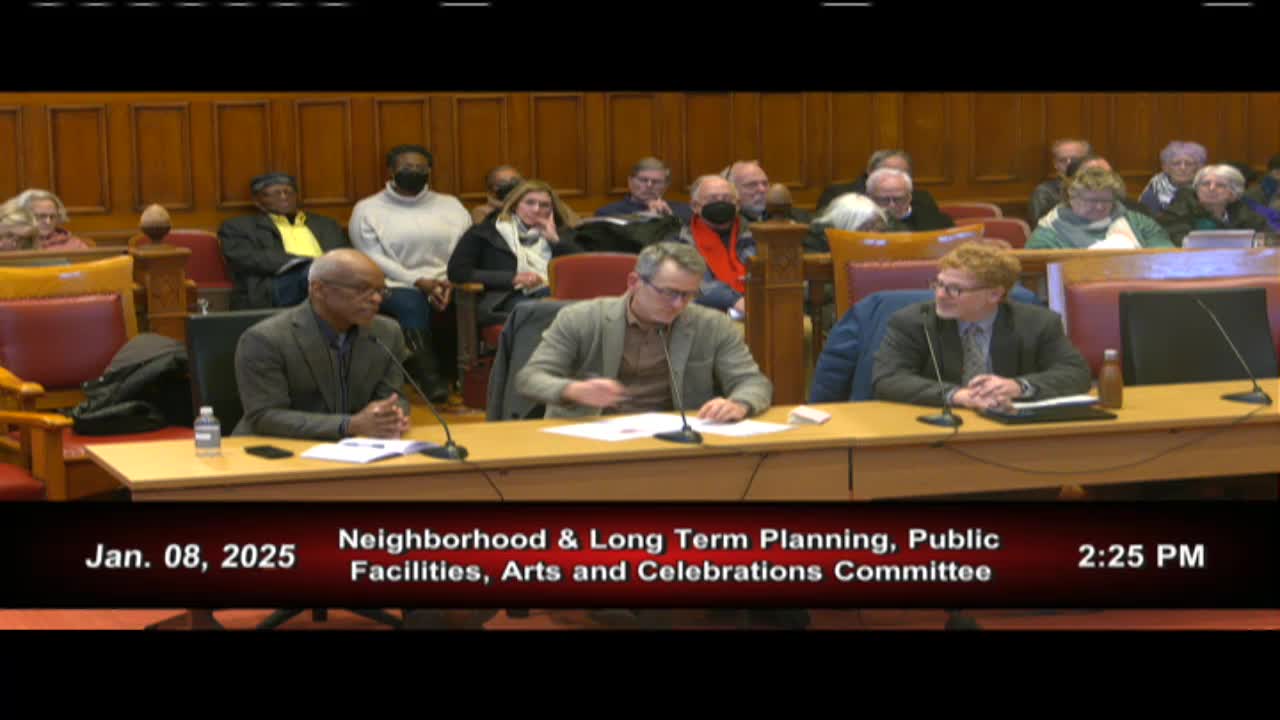
At a City of Cambridge committee meeting, councilors and housing experts discussed a proposal to end single‑family exclusionary zoning, debating pace, inclusionary percentages, subsidies and design rules. No zoning vote was taken; the meeting was extended and later adjourned by unanimous procedural votes.
At a City of Cambridge committee meeting, councilors and housing-policy experts debated a proposal to end exclusionary single‑family zoning and expand allowed housing types — a change proponents say could increase housing supply but that several speakers said will require accompanying design standards and public subsidy to secure affordable units.
The discussion focused on how quickly to proceed, what an inclusionary requirement should look like, and what tools the city would need to preserve affordability in already‑expensive neighborhoods. Committee members did not take final legislative action on zoning text during the session; the only formal outcomes recorded were two procedural votes to extend and then adjourn the meeting.
Why it matters: Cambridge faces a constrained housing market and a stated goal of adding thousands of units over the coming years. Committee members and invited academics agreed that zoning reform can broaden housing options, but several experts warned that high inclusionary percentages tend to require public subsidy or alternative financing to be feasible in strong markets.
Key points and expert input
- Pace and strategy: Several speakers urged the council to adopt a bold policy change to end exclusionary zoning while simultaneously committing to a clear, iterative implementation program that includes visualization, parcel‑level work and community engagement. One academic advised adopting change and then using design guidelines, form‑based code and overlays to refine outcomes over time so that the community can “course correct” as real projects move through permitting.
- Inclusionary requirements and subsidy: Panelists pointed to Portland’s 2020 example, where a voter referendum raised an inclusionary requirement from 10% to 25%, and noted that many projects have required public subsidy or low‑income housing tax credit financing to meet higher targets. An example cited was Chicago’s five‑year, $1.2 billion bond program that commits roughly $250 million a year for housing affordability; speakers said local economic development bonds allow a city to set affordability parameters that federal programs do not.
- Ensuring affordability in high‑cost areas: Experts advised that delivering affordable units in more expensive neighborhoods typically raises per‑unit public costs and often requires legal tools such as deed restrictions or land banking to preserve units through sales, foreclosures or refinancing. The panelists said Cambridge’s existing experience with deed restrictions is an asset but that middle‑income and workforce affordability will be harder to guarantee without targeted public investment.
- Design standards, site plan review and protections: Council members asked about setbacks, open‑space requirements and whether site plan review or special permits should be used to shape design. Panelists recommended clear, context‑sensitive standards and form‑based approaches that let staff and developers know what is expected; they warned that discretionary special permits can lengthen or invite litigation, and that thresholds for special permit review are policy choices that affect predictability.
- Community engagement and implementation sequencing: Witnesses and councilors discussed two approaches: slow, deep engagement before adopting change versus adopting a policy now and following with rigorous, visible engagement and visualization (maps, parcel‑level examples, design pattern books). Several panelists recommended treating early implementation as a pilot phase with committed follow‑up steps and measurable timelines to preserve political momentum while continuing public outreach.
Formal actions recorded
- Motion to extend meeting by 15 minutes (to 3:15 p.m.): passed; recorded votes in favor included Councillor Zim, Councillor Nolan, Councillor Siddiqui, Councillor Sabrina Wheeler and Councilor Susie (tally: 5 yes). No mover/second listed in the public transcript.
- Motion to adjourn / closing vote: passed; recorded votes matched the extension vote (5 yes). No legislative zoning decision was taken during the session.
What remains unresolved
Councilors asked staff and panelists for concrete recommendations about an inclusionary percentage (examples debated included continuing incentives that allow taller buildings where more affordable units are provided and alternate mixes such as “3+3” versus “4+2” height/incentive tradeoffs). Experts emphasized that numerical targets alone are insufficient without modeling, parcel‑level identification of likely development sites, and funding commitments to make deeper affordability feasible.
Context and next steps
Speakers repeatedly said the zoning change is the first step in a multi‑stage implementation: adopt a policy framework, build form‑based regulations or design guidelines, identify target parcels, and pair the regulatory change with finance tools (local bond authority, deed restrictions, land banking, or leveraging federal state tax credits) to lock in affordability where needed. Committee members signaled continued work on outreach and technical refinement ahead of any formal zoning votes.
Ending: The committee concluded the session after the procedural votes; substantive debate will continue at future meetings as the council examines the draft zoning approach, its tradeoffs and the financing and legal mechanisms needed to preserve affordability.