Get Full Government Meeting Transcripts, Videos, & Alerts Forever!
Get email alerts on the Budget topic
No spam. Unsubscribe anytime.
WSSC Water proposes $1.833 billion FY2026 budget, seeks 9.8% revenue increase; emphasizes lead-line replacements and customer aid
Summary
WSSC Water on Thursday presented a preliminary fiscal year 2026 budget request of $1.833 billion and asked the public to weigh in on a 9.8% revenue enhancement that staff said would raise the average quarterly water and sewer bill for a three-person household to $295.86.
WSSC Water on Thursday presented a preliminary fiscal year 2026 budget request of $1.833 billion and asked the public to weigh in on a 9.8% revenue enhancement that staff said would raise the average quarterly water and sewer bill for a three-person household to $295.86.
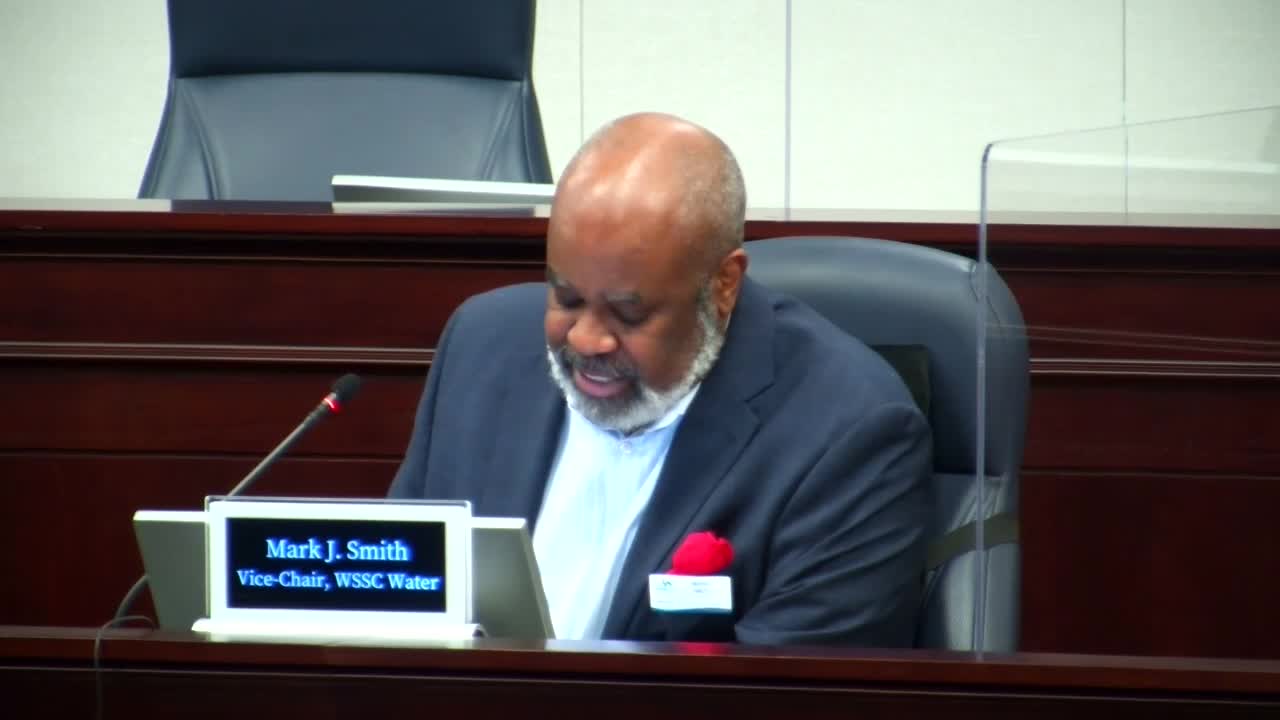
The budget presentation, delivered by Chief Financial Officer Timothy Masar and Chief Engineer Ayad Mizzian and opened by Vice Chair Mark Smith, outlined a $715.5 million capital budget for FY2026, an operating budget of roughly $1.136 billion and a multi-year capital improvement program totaling $4.88 billion from FY2026–FY2031. Staff said the six-year CIP is funded principally with bonds ($3.3 billion), ‘‘PayGo’’ operating funds ($1.0 billion) and other external sources (about $570 million).
Masar told the commission the FY2026 request includes a 9.8% proposed revenue enhancement after management identified increased nonrate revenues and other adjustments that reduced an earlier 12.2% base case. He said those changes reduced what otherwise would have been a 16.2% increase if all new funding requests were included. Masar presented projected bill impacts as $8.80 per month, $26.41 per quarter and $105.64 per year for the average household scenario shown in the materials.
Why it matters: officials said the budget is built to maintain regulatory compliance, preserve a long water-quality record, and reduce future borrowing costs by increasing PayGo. Masar and Mizzian emphasized investments tied to federal and state regulatory requirements including the Lead and Copper Rule, forthcoming federal PFAS limits, and Clean Water Act obligations.
Key budget priorities and figures cited by staff include: - Total FY2026 request: $1.833 billion (all funds). - FY2026 operating budget: about $1.136 billion (an increase of $116 million over FY2025). - FY2026 capital budget: approximately $715.5 million (about $95 million less than FY2025). - Six-year CIP (FY2026–FY2031): $4.88 billion, funded by $3.3 billion in bonds, $1.0 billion PayGo and ~$570 million from external sources. - Mandated projects within FY2026 capital: roughly $209.8 million. - Proposed increase in customer-assistance funding: $1.1 million over FY2025 levels, and staff said the budget provides more than $98.9 million in financial assistance-related funding across programs. - Private-side lead service line replacement support: nearly $34 million requested to help customers replace customer-owned lead service lines. - New staffing: 77 new work years requested (29 for regulatory requirements, 29 to enhance operations, 28 converting contract positions to employees; 23 of the 77 budgeted for six months).
Capital priorities described by Chief Engineer Ayad Mizzian include water distribution and large-diameter pipe rehabilitation, sewer reconstruction and trunk-sewer lining, upgrades at Potomac Water Filtration Plant, pump station and force-main improvements, treatment-plant upgrades (including Piscataway and Western Branch work), a PFAS management program, energy-performance projects and depot and support-center facility work. Mizzian said the CIP includes both county-specific projects (with tabs in the budget book by county) and smaller-diameter projects that the public utilities code defines as ‘‘information-only’’ in the presentation materials.
Staff framed PayGo (operating dollars used to fund capital) as a strategy to improve debt ratios and reduce future debt service costs. Masar said increasing the PayGo allocation over time helps protect the utility’s triple-A bond rating and stabilizes long-term rates.
Customer affordability elements in the proposal include expanded Promise Pay plans, the customer assistance subsidy enhancements, continued waivers of certain fixed fees for eligible customers, a plumbing repair assistance program administered with Habitat for Humanity, flexible payment plans up to 48 months, and a $5 million expansion of a laboratory for PFAS monitoring. Staff said the proposal increases allocations for customer-side leak and repair programs and boosts funding for bill-adjustment policy updates and leak inspection services.
Public comment illustrated customer concern about bills and fixed fees. Gail Harris Berry, a Prince George’s County resident, said her bill ‘‘has tripled’’ and questioned why maintenance-related fixed fees in Prince George’s County are higher than nearby jurisdictions. CFO Masar explained the utility uses a cost-of-service study and two fee types—an infrastructure investment fee and an account maintenance fee—and said fee levels attempt to reflect revenue needs and industry practices. General Manager and CEO Keisha Powell responded to a separate question about street leaks, saying, “you’re not being charged when we have a leak in the street,” and directed customer-service staff to follow up on Berry’s account.
Record and next steps: Vice Chair Mark Smith said the hearing record will remain open through close of business on Wednesday, Feb. 14; the preliminary budget and hearing transcript will be transmitted to the county executives and councils of Montgomery and Prince George’s counties on March 1. Fareya Babar, operating budget section manager, said no written correspondence had been received as of the hearing date but explained that written comments submitted by Feb. 14 will be included in the record and in the next commission packet.
No formal commission votes or final budget actions occurred at the hearing. The meeting was a staff presentation and public comment opportunity on the preliminary proposed FY2026 budget.