
Bayonne council designates St. Andrew the Apostle Church historic after heated public hearing
Get AI-powered insights, summaries, and transcripts
Subscribe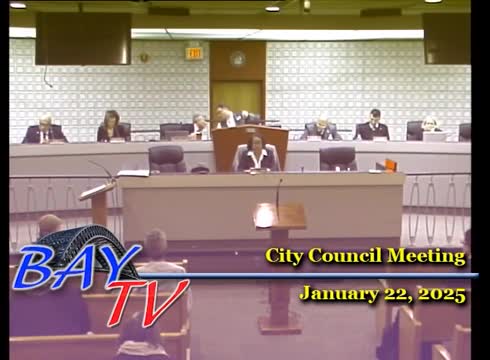
Summary
The Bayonne Municipal Council voted unanimously Jan. 22 to adopt a historic-preservation ordinance for St. Andrew the Apostle Church following a public hearing that featured parish leaders, parishioners and the parish—s attorney opposing the designation and preservation advocates urging protection.
The Bayonne Municipal Council voted unanimously Wednesday to adopt an ordinance designating St. Andrew the Apostle Church as a historic property, closing a months-long local debate over the fate of the downtown landmark.
The ordinance, described by council staff as an amendment to Chapter 37 (Historic Preservation) of the Bayonne Revised General Ordinances, was the subject of a public hearing that drew more than a dozen speakers. Supporters praised the church's architecture and stained-glass windows; opponents, including parish leaders, warned designation would impose unaffordable costs and prompt litigation.
Adam Faiella, an attorney with the law firm Sils, Comas & Gross representing Blessed Miriam Teresa (BMT) Parish, told the council his client had filed a formal protest and argued the city had not met procedural and substantive requirements for landmarking. "The historical property report ... was an insufficient attempt to check the boxes for the requirements," Faiella said during the hearing. He also warned the measure would "substantially burden the parish and violate its rights under state, federal and constitutional law."
Father Philip Sanders, pastor of Blessed Miriam Teresa Parish, said the parish corporation — not the Archdiocese of Newark — is financially responsible for parish properties and said parish revenues are insufficient to pay both operating costs and the estimated $7.5 million in needed capital repairs across the parish's two churches. "For the fiscal year ending June 2024 ... the deficit was $12,000. This fiscal year's projected deficit is $45,000," he said, adding that facility-condition assessments estimated repairs for St. Andrew would range from $3.5 million to as much as $5.4 million once additional work and cost increases were included.
Parish trustee Patrick Castello told the council designation would not lead to restoration by a third-party developer and predicted protracted and costly litigation if the ordinance passed. "By adopting this ordinance, the city council picks at the scale of a wound that our parish is trying to heal from," he said.
Advocates for preservation countered that the church meets the city's ordinance criteria for architecture, integrity and historical association. Joe Ryan, staff to the Bayonne Historic Preservation Commission, said the commission's recommendation was based on multiple factors beyond the windows, including the building's architecture and its association with the city's history. "There may be other possibilities for the future of the St. Andrew's church building," Ryan said.
Council members closed the hearing by voice vote and then adopted a resolution ordering final passage; recorded votes on the final passage were unanimous in favor. The ordinance text states the designation applies to the church exterior and cites the municipal preservation criteria. The council did not adopt any detailed financial mitigation measures at the meeting.
The measure had been introduced previously and was postponed from a December public hearing. The council president and other members repeatedly said they would "stick to the facts" at the hearing and that financial disputes between the parish and the archdiocese were separate from the municipal land-use decision.
Council action does not by itself resolve parish plans for the closed church; parish representatives said canonical appeals and other internal church processes remain underway. Parish counsel said they will consider additional legal steps available to protect parish interests.
The council—s action closes the local legislative step to landmark St. Andrew's and will be followed by the administrative and legal processes required under the ordinance and municipal code.