Get Full Government Meeting Transcripts, Videos, & Alerts Forever!
Get email alerts on the Business Personal Property topic
No spam. Unsubscribe anytime.
Senate committee advances bill to raise business personal property exemption and phase out 30% floor; vote 8‑2
Summary
Senate Bill 443, advanced by the committee on an 8‑2 vote, would raise the business personal property de minimis exemption to $160,000 and phase out the state’s 30 percent valuation floor over three years.
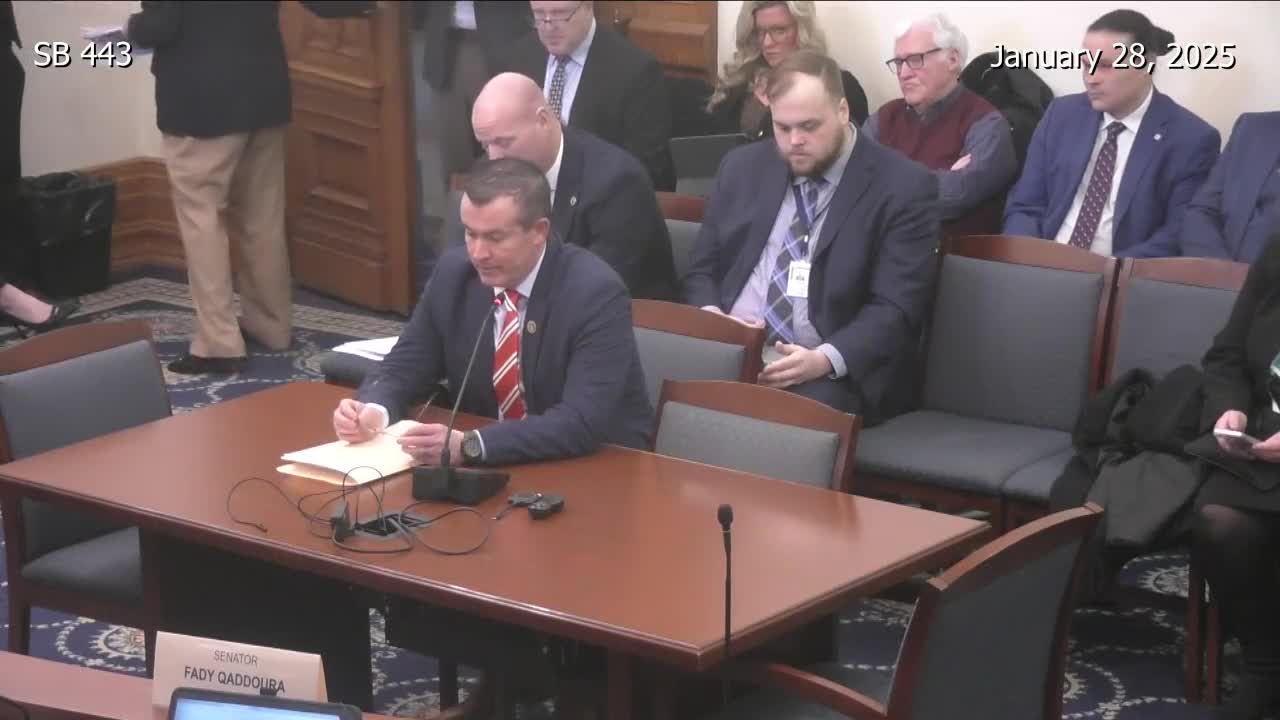
Senator Freeman presented Senate Bill 443, which increases the acquisition‑cost exemption for business personal property from $80,000 to $160,000 and phases the 30 percent valuation floor down to zero over three years. The bill drew extensive testimony from industry groups, local governments, school officials and public‑sector associations.
Supporters including the Indiana Manufacturers Association, National Federation of Independent Business (NFIB), Indiana Chamber and many business leaders said the bill reduces a tax bias against investment and helps small and mid‑sized manufacturers. "The growth in this tax is a straight line upwards," Andrew Berger of the Indiana Manufacturers Association said, arguing the floor is unusually high and depresses investment. Business groups also supported raising the de minimis threshold, which they said would remove paperwork burdens from very small firms.
Opponents voiced fiscal concerns for local units. The Indiana State Teachers Association, school superintendents and county representatives said the proposed changes would reduce local revenue and require replacement dollars to avoid cuts to education and services. Gerald Blakely of ISTA cited LSA fiscal estimates that showed multi‑hundred‑million dollar impacts to school funding over the next three years and urged lawmakers to identify replacement revenue or mechanisms to prevent reductions in teacher pay or programs.
Local finance officials and municipal leaders urged the committee to consider phased approaches and replacement mechanisms such as a state tax credit, local options for replacement revenue, or targeted mitigation for particularly affected counties. After more than an hour of testimony, the committee voted to advance the bill to the floor by roll call: 8 in favor, 2 opposed (Senators Kidora and Miskaski cast recorded no votes).