Get Full Government Meeting Transcripts, Videos, & Alerts Forever!
Get email alerts on the Neighborhood Planning topic
No spam. Unsubscribe anytime.
Consultants lay out phased small-area plans for four Syracuse neighborhoods; board debates trade-offs
Summary
Consultants from CZB presented halfway findings of small-area neighborhood plans for Tippill, Salt Springs, Eastwood and Elmwood, estimating multi-year costs, recommending phased interventions and stressing coordination with code enforcement and partner agencies; board members debated priorities, equity and sequencing.
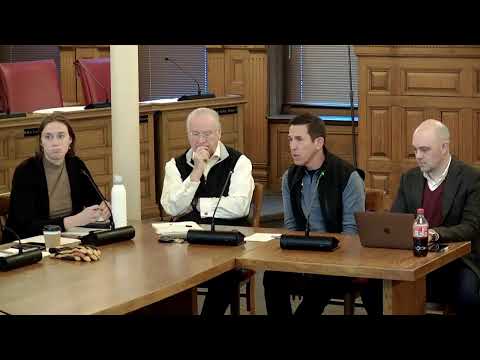
Charles Buki, a consultant with CZB, presented a mid-project update on small-area neighborhood planning for four Syracuse neighborhoods — Tippill, Salt Springs, Eastwood and Elmwood — and outlined the program design choices the Syracuse Housing Strategies Corporation will face as it moves from strategy to implementation.
Why it matters: The small-area plans translate a citywide housing strategy into neighborhood-level phasing, cost estimates and program designs that will guide grant and low-interest loan programs, targeting both owner-occupied and rental properties. The plans also identify where code enforcement, land-banking and capital projects will need to be coordinated to get results.
Charles told the board the figures are “highly qualified” estimates based on a condition analysis of residential structures. He summarized the scale this way: “It comes into about 6.8 a year, and then if we divide again by 4 it looks like it's about 1,200,000.0 a year that on HSC's shoulders, right, for about a decade,” language he used to indicate per‑neighborhood average annual expectations if every proposed intervention were pursued. He also said the team has “penciled in” about $70,000,000 to move the four target areas over a 10‑year horizon.
The consultants described a parcel‑level mapping and a four‑tier typology used to prioritize work: areas “ready now” for reinvestment, code‑enforcement‑heavy areas, “ready soon” areas for investment, and parcels better suited for redevelopment or land assembly. The plan presents sequenced options so staff and the board can choose phased work that matches available capital.
Program design: Consultants and staff said the corporation would primarily offer conditional grants and low‑interest loans to property owners — both homeowners and rental owners. The board heard that program eligibility and conditions will be crafted to move the market while addressing individual needs. Charles said exterior improvements are a baseline expectation: “Any dollars spent on a property must include exterior work,” a standard he argued was needed to change block‑level market perceptions. At the same time, board members sought clarification that interior capital repairs (foundations, roofing, plumbing, HVAC) would also be eligible where they are necessary to make a property marketable.
The board discussed “sweat equity” requirements as part of grant conditions. Charles and other speakers said sweat equity would be scaled to participants’ abilities — for elderly owners that might mean community participation or hosting neighborhood meetings rather than physical labor. Michelle (staff member) reiterated that the corporation’s approach should be a partnership with property owners, balancing program standards with residents’ circumstances.
Several council members raised concerns about sequencing and equity. Councilor Cogwell asked who decides what the exterior “should look like” and cautioned against appearing to dictate homeowners’ tastes; Councilor Caldwell and others voiced worry about leaving the most distressed areas behind. Charles and Michelle responded that the approach is intentionally additive: the corporation will not replace existing city code enforcement or other programs, and where a neighborhood‑wide problem (for example, stormwater flooding) is identified, it would be prioritized and coordinated with City capital planning and DPW rather than relying solely on housing‑program dollars.
Consultants emphasized “building on strengths” as a strategy for stretching limited funds: prioritize blocks or corridors where modest investment can catalyze private reinvestment and yield a higher public return. They also flagged that some necessary supports — more robust code enforcement, land‑banking activity and police or public‑safety coordination — are not currently funded within the corporation’s draft budget and will require additional city resources to amplify the housing corporation’s impact.
Next steps: Consultants said they will deliver detailed costed plans for each neighborhood in four to six weeks, and staff will move to program design, loan/grant terms, and contractual arrangements in the subsequent 90–120 days. Michelle said staff will coordinate with affected departments and bring recommended program rules back to the board for adoption.
Ending: The presentation laid out concrete options and trade‑offs: implement quickly in market‑ready places to leverage private funds or frontload work in the most distressed blocks at higher public cost. Board members emphasized transparency and community engagement as the staff and consultants finalize the program design.