Get Full Government Meeting Transcripts, Videos, & Alerts Forever!
Minnesota Senate Taxes Committee hears hours of testimony on converting data-center sales-tax refunds to upfront exemption
Summary
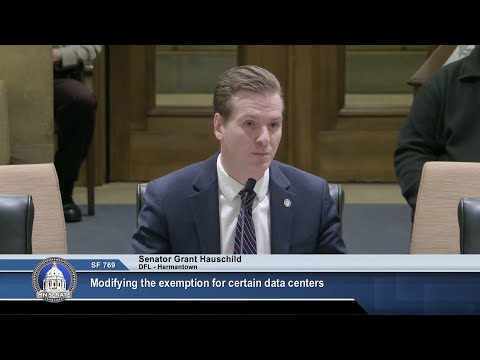
Senator Hauschild, sponsor of Senate File 769, told the Minnesota Senate Taxes Committee on Feb. 25 that the bill would make two principal changes: create a separate "large-scale" data-center category and convert the current refundable sales-and-use tax treatment into an upfront exemption for qualifying projects.
Senator Hauschild, sponsor of Senate File 769, told the Minnesota Senate Taxes Committee on Feb. 25 that the bill would make two principal changes: create a separate "large-scale" data-center category and convert the current refundable sales-and-use tax treatment into an upfront exemption for qualifying projects.
The measure would add a large-scale definition (projects of at least 25,000 square feet and roughly $250 million in investment), require DEED certification of qualified large-scale projects, direct DEED to notify the Department of Revenue within 30 days, and require the department to notify applicants within 10 days. The bill would also extend the program's sunset for these large-scale projects to 2050 and includes prevailing-wage and green-building requirements, plus a repayment provision if a project later fails to qualify.
Why it matters: converting the sales-tax refund process into a point-of-sale exemption would remove much of the public'facing accounting that currently exists when companies pay taxes up front and then apply for refunds. Supporters argued the change would reduce administrative burdens, align Minnesota with neighboring states and increase the state's competitiveness for large data-center investments; opponents said it would reduce transparency and could significantly increase costs to the state general fund.
Supporters' case: testimony favoring SF 769 focused on jobs, local economic activity and competitiveness. Barbara Comstock of NetChoice said similar incentives in other states produced large capital investment and local tax revenues, and urged Minnesota to adopt the exemption rather than lose projects to neighbors. "We…
Already have an account? Log in
Subscribe to keep reading
Unlock the rest of this article — and every article on Citizen Portal.
- Unlimited articles
- AI-powered breakdowns of topics, speakers, decisions, and budgets
- Instant alerts when your location has a new meeting
- Follow topics and more locations
- 1,000 AI Insights / month, plus AI Chat