Get Full Government Meeting Transcripts, Videos, & Alerts Forever!
Get email alerts on the Literacy Education topic
No spam. Unsubscribe anytime.
Presenters urge Tulsa commissioners to treat third-grade reading as a civic-engagement issue
Summary
Teach For America and partners briefed the Human Rights Commission on Tulsa third-grade reading rates, linking literacy to civic engagement and offering volunteer, resource and advocacy steps to increase reading-on-grade-level outcomes.
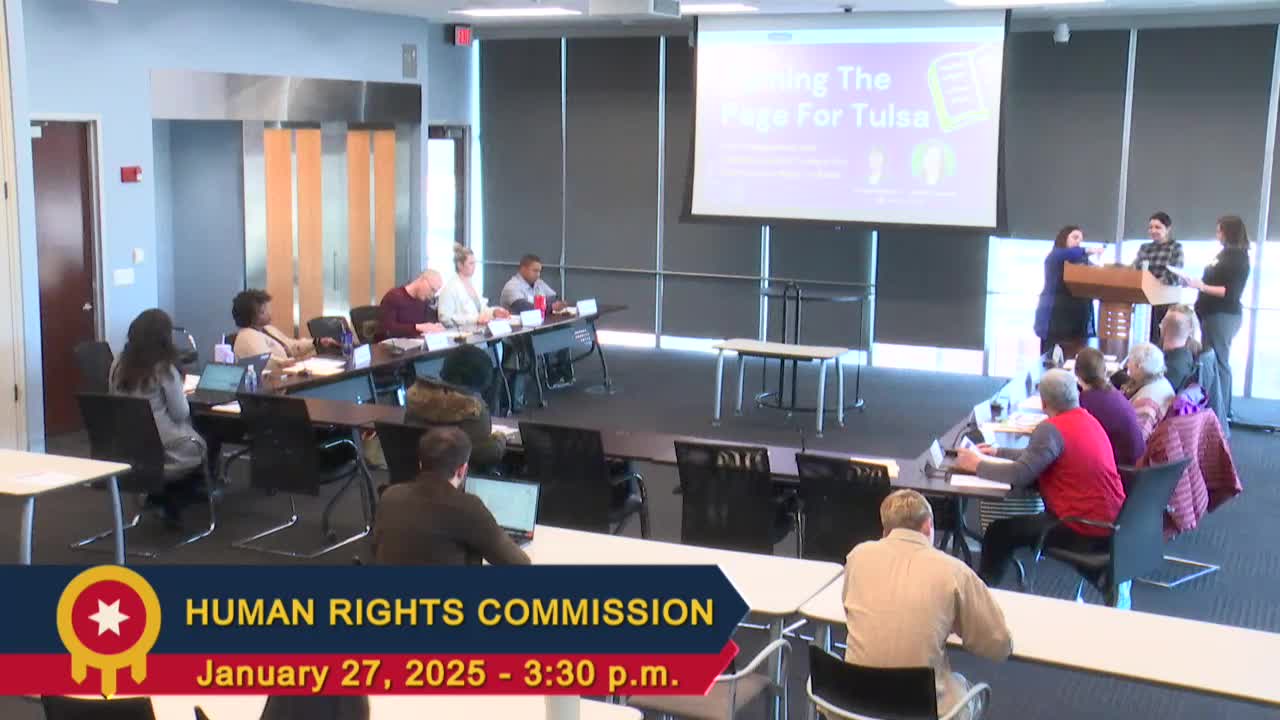
Presenters from Teach For America and partner organizations urged the Tulsa Human Rights Commission on Jan. 25 to prioritize literacy — particularly third-grade reading — as a civic-engagement and equity issue.
Amber Masters, vice president of leadership and partnerships at Teach For America, and a co-presenter outlined local data and community actions. Masters said 26% of Tulsa County third graders were reading on grade level at the end of 2023 and called that result “concerning” for students’ future outcomes.
The presenters linked early-grade literacy to long-term outcomes and civic participation, noting research that students who are not reading at grade level by the end of third grade face higher risks for later school failure. The speakers framed literacy as cross-cutting: they told commissioners the issue affects housing, disability services, criminal-justice outcomes and voter engagement.
Presenters summarized evidence-based resources and recent policy context. They cited state-level progress on reading policy, saying Oklahoma has 17 of 18 nationally recommended literacy policies on the books but that only about 11 of those 18 were being implemented with fidelity. When asked which policy was missing, the presenters identified a teacher assessment aligned to the science of reading as the primary gap.
The presenters offered four community actions: recruit volunteers for tutoring programs, including Reading Partners (which the presenters said had about 250 volunteer openings); recruit substitute teachers to address district shortages; use and share evidence-based resources (they recommended the documentary Right to Read and a podcast identified in materials); and incorporate literacy components into existing community events and programs.
Commissioners and audience members asked for details about implementation and policy gaps; presenters acknowledged that implementation requires funding, instructional coaches and local leadership and said community awareness and volunteer mobilization were immediate levers available to the commission and partners.
No formal commission vote or motion was recorded. The presenters provided a handout with QR codes linking to resources and a state-policy analysis.
Speakers identified Reading Partners volunteer vacancies and pointed to state policy items as implementation priorities; commissioners discussed convening cross-commission collaboration on literacy and chronic absenteeism in follow-up committee work.