Get Full Government Meeting Transcripts, Videos, & Alerts Forever!
Get email alerts on the Tax Commission Property Tax topic
No spam. Unsubscribe anytime.
Utah Tax Commission stresses separation of adjudicative and administrative roles, warns of cyber threats; property‑tax briefing highlights truth‑in‑taxation and
Summary
Commission Chair John Valentine and staff explained the Tax Commission’s constitutional role as an adjudicative body, described cybersecurity and litigation spending needs, and property‑tax staff outlined how truth‑in‑taxation and new growth drive local property‑tax revenues.
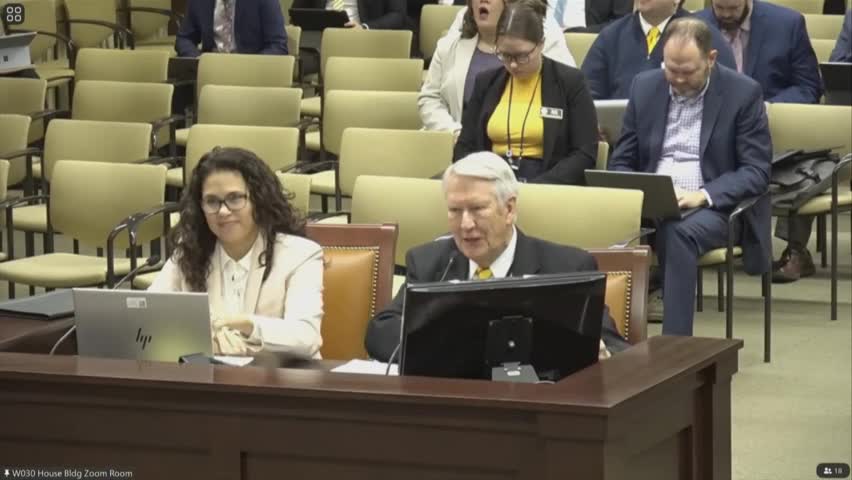
Commission Chair John Valentine told the Joint Appropriations Subcommittee that the Utah State Tax Commission is a constitutionally established body with a distinctive adjudicative role that requires separation between appeals and administrative operations.
“As a further protection, taxpayers who appeal their cases have a right to go to district court and start all over if they want to,” Valentine said, describing the commission’s original‑jurisdiction appellate function under Article 13, Section 6 of the Utah Constitution.
Deanna Herring, the commission’s acting executive director, briefed members on the agency’s operations, including the executive director office’s oversight of tax systems, records and security, and customer service. The commission emphasized that cybersecurity is an ongoing concern: Valentine told the committee the commission experiences more than a million attempted intrusions against commission systems each month and has already used approximately $600,000 of carry‑forward authority in the current year to respond to security incidents.
Valentine and staff asked the committee to continue non‑lapsing carry‑forward authority for certain funds to permit rapid response to cyber incidents and to retain litigation funding that the commission and counties use to defend tax assessments. The commission said it had used carry‑forward funds to engage expert witnesses in large central‑assessed cases and that the ability to respond quickly was important to protect the state tax base and ensure parity between counties and large taxpayers.
The commission’s property‑tax director, Joshua Nelson, briefed the committee on how property taxes are assessed and levied. Nelson stressed that local taxing entities’ revenue needs drive tax rates, and he described the state’s truth‑in‑taxation process — the public hearing and notification system that obliges taxing entities to justify increases to taxpayers. Nelson said truth‑in‑taxation promotes transparency and can deter some taxing entities from raising rates because of the political and administrative cost of holding a hearing.
Nelson and colleagues also described two drivers that have raised statewide property‑tax billing in recent years: new growth (new construction and additions) and tax‑rate increases approved through local budget processes. The commission’s slide deck showed that billed property taxes rose from roughly $250,000,000 in 2010 to just under $5,000,000,000 in 2023 across all taxing entities, driven by these combined factors.
Committee members asked about the license‑plate distribution changes that move plate production to a central process. Senior DMV director Mike Lee said rental‑car companies have the option to retain inventories of standard plates and that, to date, major rental companies have chosen to do so. That choice, Lee said, reduces the risk of immediate revenue loss tied to distribution delays.
Next steps: the Tax Commission requested continued authority to carry forward non‑lapsing funds to address cybersecurity responses and litigation costs; staff said they would continue to work with the committee on details.