Get Full Government Meeting Transcripts, Videos, & Alerts Forever!
Get email alerts on the Insurance Budget Autism Complaints topic
No spam. Unsubscribe anytime.
Utah Insurance Department requests one consumer‑service analyst, flags rising mandated autism costs and complaint backlog
Summary
The Utah Insurance Department told the Joint Appropriations Subcommittee it needs one additional full‑time employee for the Health and Life Division to handle an 83% increase in complaints and independent reviews over five years, and described growing retrospective state payments for a legislatively mandated autism insurance benefit.
The Insurance Department asked the Joint Appropriations Subcommittee for one new full‑time consumer‑service analyst for the Health and Life Division, citing a large increase in complaints and independent review requests and a backlog that has stretched the agency’s target processing time.
“Health and Life Division, this past fiscal year, we had approximately 2,500 complaints and independent review requests,” Deputy Commissioner Tangie Northrop told the committee. She said the division’s target is to process cases within 45 days but that a backlog has pushed typical processing time to roughly 90 days.
Department leadership described the agency’s overall fiscal picture and several budget drivers. A department presenter said the Insurance Department’s total budget is roughly $32,000,000 and that the department administers a legislatively mandated insurance benefit for autism spectrum disorder that operates as a pass‑through to insurers. The department characterized the autism administration line as a program‑level expense rather than a growth in core departmental operating costs.
Officials told the committee the autism benefit is significant: the department said the line item has been described in presentations as on the order of tens of millions of dollars and that costs have increased. During the hearing the agency gave multiple figures when describing the program’s scale; the department told legislators the program is “about $10–12 million” and that additional appropriation will be needed to meet retrospective payment obligations created by the benefit.
The department also discussed the fee structure that funds most of its operations and the fact that fee collections have exceeded the statutory cap in recent years. A legislator asked whether retained fee revenue could be used to fund the requested FTE; the commissioner’s office answered that, if the statutory cap on spending from certain fee accounts were raised or removed, those dedicated revenues could be used to support the position.
As context for insurers’ cost pressures, the commissioner’s office told the committee the state saw roughly $27,000,000,000 in written premiums in 2023 and that premium tax transfers to the general fund have grown substantially in the last five years. The department said it aided consumers in recovering roughly $4.41 million in fiscal year 2024 through enforcement and consumer‑assistance work.
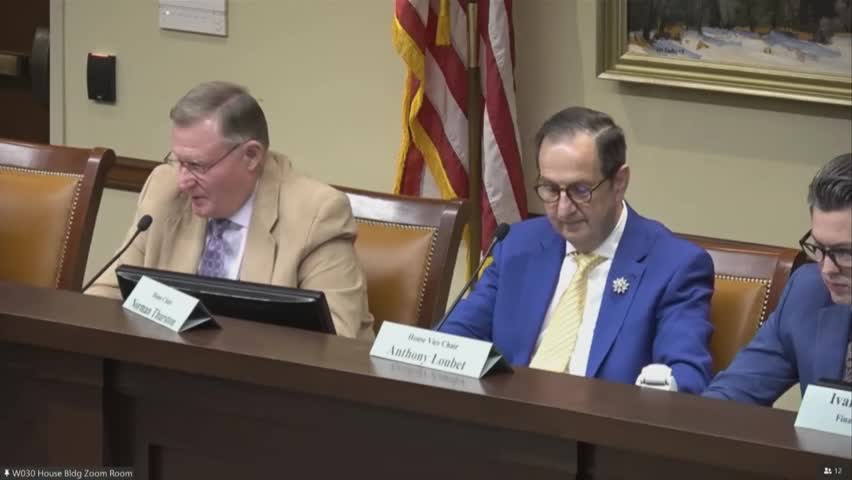
Committee members pressed department staff on capacity and budgets. Representative Thurston asked whether fee collections that have resulted in an excess to the general fund might instead be retained to cover staffing; department staff said the cap in statute currently constrains how much of those fees the department can retain and spend, and that the department would welcome a statutory adjustment.
The Insurance Department also described challenges driving costs statewide: rising losses (for example, wildfire exposure), specialty pharmaceuticals and chronic‑disease treatments that drive health costs, and other trends that flow into premium increases for consumers.
Next steps: the department requested funding consideration for a consumer‑service analyst position and said it would work with sponsors and fiscal staff on statutory and fee‑cap changes that would allow it to retain more fee revenue for operations.