Get Full Government Meeting Transcripts, Videos, & Alerts Forever!
Get email alerts on the Ballot Initiative Notice topic
No spam. Unsubscribe anytime.
Public comment and RFA focus committee on proposed change to statewide-initiative notice; advocates urge protecting ballot access
Summary
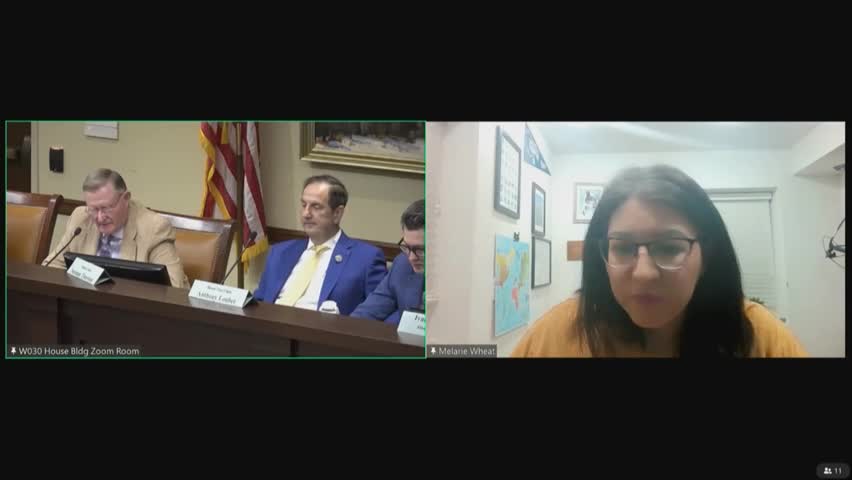
Mallory Wheat, representing Mormon Women for Ethical Government, told the Joint Appropriations Subcommittee that Utahns strongly support retaining easy access to the ballot-initiative process and urged lawmakers not to use taxpayer funds to make it harder.
Mallory Wheat, representing Mormon Women for Ethical Government, told the Joint Appropriations Subcommittee that Utahns strongly support retaining easy access to the ballot-initiative process and urged lawmakers not to use taxpayer funds to make it harder.
“We have 40% Republicans in our membership, 34% Democrats, and 26% unenrolled, independent, or third party,” Wheat said, introducing herself from Draper. “Utahns are very protective of our right to the ballot initiative…we urge you not to spend our taxpayer funds to make our citizens’ rights harder to access against our will.”
Wheat’s public comment came during the committee’s public-comment period and tied directly to an item later on the agenda: an RFA — the committee term for a funding request — connected to a proposed constitutional amendment about statewide initiatives. Senator Fillmore presented that RFA to the committee and said the fiscal note for an amendment would be driven primarily by the cost of required public notice advertising.
“The Supreme Court decision from last year,” Fillmore said during his presentation, “means every constitutional amendment proposal will generate an RFA because of the cost associated with advertising in a print newspaper in every county in the state for 60 days.” He and other members discussed a preliminary fiscal estimate tied to that requirement; Fillmore said the advertising-related fiscal note attached to a single amendment would be roughly $140,000.
Committee members asked whether statutory or constitutional language could be changed to allow electronic notice instead of print advertising. Representative Lou Bey said he is drafting a resolution to permit electronic methods and expects to present language in the near term. Senator Weiler disputed Fillmore’s reading of the court ruling, saying the advertisement requirement can be satisfied by posting at least 60 days before a vote rather than publishing in a newspaper for 60 days; she and Fillmore said they would clarify the legal reading with counsel.
No formal committee vote was recorded on the proposed amendment or the RFA during this meeting. The discussion closed with multiple legislators saying staff and sponsors would follow up on legal interpretation and on possible alternatives such as a statutory notice regime or a separate constitutional amendment to authorize electronic notice.
Next steps: the RFA was presented for information and fiscal review; sponsors said they would return with clarifications from legal counsel and with any statutory or constitutional language changes they plan to pursue.