Get Full Government Meeting Transcripts, Videos, & Alerts Forever!
Get email alerts on the Child Protection Records topic
No spam. Unsubscribe anytime.
Committee advances bill to exempt DFCS staff from prosecution for possession of child sexual‑abuse images when acting in official duties
Summary
Rep. Matt Ballenger introduced House Bill 435, a proposal to create an explicit exception in the criminal code for Division of Family and Children Services staff who come into possession of indecent images of children in the performance of official duties.
Rep. Matt Ballenger introduced House Bill 435, a proposal to create an explicit exception in the criminal code for Division of Family and Children Services (DFCS) staff who come into possession of indecent images of children in the performance of official duties.
"The substantive parts of the bill are actually on page 2," Ballenger said, describing the change as an expansion of existing exceptions for law enforcement and prosecutorial personnel so DFCS employees who handle evidence in abuse investigations are not criminally prosecuted for possessing such material when it is part of their official work.
Graham Younger, representing the Georgia Association of Criminal Defense Lawyers, urged caution and recommended the committee consider training and chain‑of‑custody procedures if the exception is broadened. He said DFCS personnel turnover and varying training levels raised concerns about evidence handling.
Several committee members voiced concerns about the statute's breadth. One lawmaker asked whether "any staff member" should be covered, noting the graphic nature of the images and the risk of unintended release. The sponsor said existing statutory exceptions for law enforcement are similarly broad and that narrowing the exception could be practically infeasible when frontline DFCS workers encounter evidence at scenes.
The sponsor agreed to consider narrower language and to work with committee members on drafting. He also said he would continue to refine language as the bill moves to the Senate.
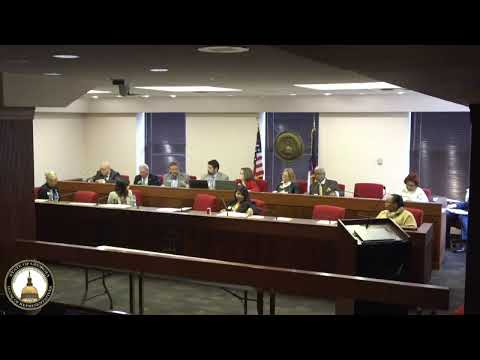
After discussion and public testimony, the committee moved and seconded a motion to pass HB 435. The committee carried the measure by voice vote; no roll‑call tally was recorded in the transcript. The chair announced, "None opposed. So the motion carries and the bills move past committee."