Get Full Government Meeting Transcripts, Videos, & Alerts Forever!
Get email alerts on the Gaza Health Crisis topic
No spam. Unsubscribe anytime.
WHO says Gaza health system ‘severely’ damaged, medevac capacity far short of needs
Summary
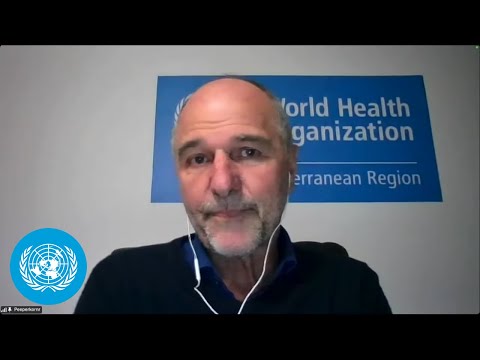
World Health Organization representative Dr. Rick Pieperkorn told a U.N. correspondents briefing that many Gaza hospitals and clinics are partly or nonfunctional, medevac transfers remain limited and slow, and mental-health needs are widespread.
Dr. Rick Pieperkorn, the World Health Organization representative for the occupied Palestinian territory, told a briefing to the United Nations Correspondents Association that Gaza’s health system has been “severely” damaged, with many hospitals and primary-care centers partly or completely nonfunctional and medevac operations far below estimated needs.
Pieperkorn said WHO counts about 18 of 36 hospitals as partly functional, 55 of 143 primary health-care centers partly functional and 11 field hospitals operational. He said current total bed capacity in Gaza is about 1,900 compared with more than 3,500 before the crisis, and that intensive-care and neonatal capacity is “very few.” “The functional health facilities … are scarce,” he said.
The WHO representative described “wide-scale destruction” across northern Gaza neighborhoods such as Jabalia and in parts of Rafah, and said critical infrastructure tied to health care — generators, desalination and oxygen plants — has been damaged in many areas. Pieperkorn said WHO and partners have set up trauma stabilization points and are expanding inpatient and intensive-care capacity where possible, and that surgical teams and emergency medical teams are operating in some hospitals that have resumed partial services.
Mental health is a major concern, Pieperkorn said, with “literally everyone” in Gaza affected by prolonged conflict and extreme stress. He said mental-health services were already limited before the current crisis — noting only two psychiatrists in the north — and that WHO and partners have trained personnel in psychological first aid and begun integrating basic mental-health support into primary-care points and hospitals.
On medical evacuations, Pieperkorn said traditional referral pathways to hospitals in East Jerusalem and the West Bank and other regional destinations must be restored to meet demand. He said that since the Rafah crossing closed earlier in the year, only about 480 patients have been medevaced out of Gaza, “all managed and supported by WHO,” and that under a ceasefire trial the Rafah crossing was set to allow up to 50 critical patients per day but actual daily transfers have been far lower. “If we continue like that, at that pace we will be medevacing for the next five to 10 years,” he said, adding WHO estimates that between 12,000 and 14,000 patients need medevac and that at least about 5,000 of those are children.
Pieperkorn described the screening and transfer process as slow and complex. He said one group transfer of about 37 patients and their companions took seven to eight hours at the border processing point, and called for expedited procedures and additional medical corridors — including reestablishing referrals via East Jerusalem and the West Bank — to speed lifesaving transfers.
He also reported data WHO has verified on attacks on health care in Gaza, saying the agency had recorded 670 attacks that resulted in 886 fatalities and 1,355 injuries and affected 122 health facilities and 170 ambulances. “We are mandated to report on attacks on health care,” he said, adding that WHO does not conduct criminal attribution or investigation.
On supplies and logistics, Pieperkorn said WHO and partners have prepositioned stocks and facilitated convoys. He described an overall improvement in food deliveries but said shortages remain for essential medicines, medical imaging equipment (CT, MRI), large hospital generators and spare parts, dialysis support, oncology supplies and certain trauma and surgical supplies. Fuel remains a persistent constraint, he said; partially functional hospitals have fuel but supplies are not sufficient.
Pieperkorn warned that many specialized clinicians left Gaza early in the crisis; he estimated prewar Gaza had roughly 25,000 health workers, including about 5,000 medical doctors and 10,000–12,000 nurses and midwives, and said a disproportionate share of senior specialists had departed. He said WHO is trying to mobilize national and international emergency medical teams, and that specialists in the West Bank and East Jerusalem have expressed willingness to support referral treatment if corridors are restored.
He addressed vaccination and surveillance: Gaza historically had high routine-immunization coverage, he said, and available data suggest measles coverage has declined from prewar levels but remains “better than expected,” roughly in the 80–85 percent range; WHO is working to strengthen surveillance and cold-chain capacity. WHO is continuing polio surveillance after detecting poliovirus in wastewater and has carried out vaccination campaigns and ongoing monitoring.
Asked about the announced U.S. decision to withdraw funding from WHO, Pieperkorn said the agency hoped the move would be reconsidered and stressed that U.S. institutions are long-standing partners in global public health. He said U.S. contributions have been substantial in past emergency operations in the region and that the loss of major donors would affect both emergency response and longer-term recovery, rehabilitation and reconstruction of health services.
The briefing did not produce any formal decisions. Pieperkorn urged faster and expanded medical evacuation procedures, the opening of additional medical corridors and continued donor support to avoid further indirect deaths from untreated noncommunicable diseases and disrupted chronic-care services.
Pieperkorn concluded by reiterating WHO’s operational priorities: maintain and expand trauma and surgical care where possible, scale up disease surveillance and mental-health services, stockpile essential supplies (including large generators and imaging equipment), and restore referral pathways for specialized care outside Gaza.