Get Full Government Meeting Transcripts, Videos, & Alerts Forever!
Get email alerts on the State Legislation topic
No spam. Unsubscribe anytime.
Oakland Park legislative liaison outlines March start of session, flags condo and insurance priorities
Summary
Russ Clinet, the city’s legislative liaison, told the City Commission that the Florida Legislature begins its biennial March session and that lawmakers are expected to address condominium sale thresholds and property-insurance pressure; he urged realistic expectations about local budget wins.
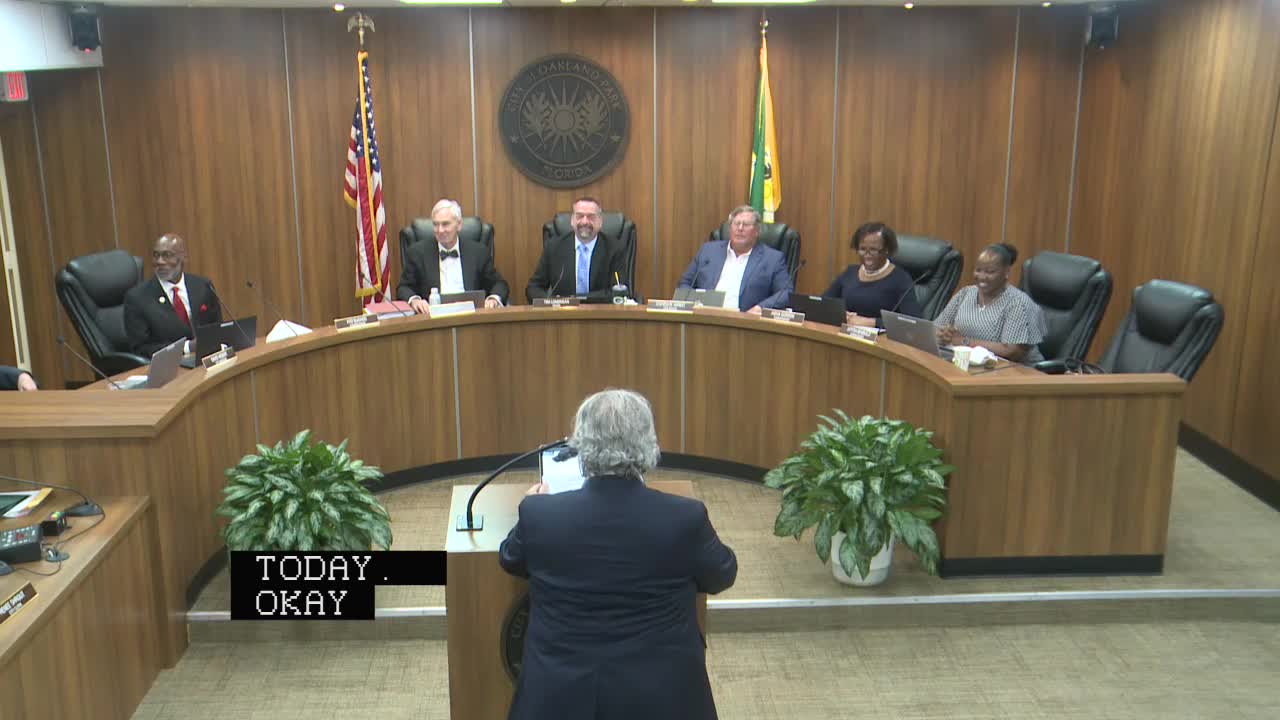
Russ Clinet, the City of Oakland Park’s legislative liaison, told the City Commission on Feb. 5 that the Florida Legislature will begin its biennial session in March and that major statewide issues likely to affect local residents include property insurance and condominium governance.
Clinet said the governor’s recent call-back to Tallahassee over immigration drew attention but produced little policy change, and that the session’s top priorities will include property-insurance relief and bills prompted by condominium failures such as Surfside. “The legislature is going to pass a bill this session that reduces the number of residents in a condominium necessary to sell the whole building,” Clinet said, adding that the threshold likely will move from 80% to 60% of owners.
The nut of the update: why it matters to Oakland Park. Clinet advised commissioners that legislative timing and politics make direct wins difficult for Broward County projects and local asks. He said the Legislature will shift into budget work in April, with a final budget vote typically in early May and implementation details not visible until summer.
Clinet reviewed other priorities. He said recent bills are “relief bills” (claims bills) that seek legislative approval for awards exceeding state sovereign-immunity caps, and he noted that federal COVID-era recovery funds that previously supported many projects are largely gone. He urged commissioners and staff to expect modest success on local budget requests and to narrow asks to one or two priority projects.
On local issues, Clinet said the city’s efforts on the school mitigation fee and a long-running push about a nearby postal facility remain active. “We’re taking another effort to get to Postmaster General DeJoy,” he said, describing “some movement” at the U.S. Postal Service on consolidating assets but warning the process is slow.
Commissioners raised questions about whether the session will be a preemption year for local home-rule matters and about Medicaid expansion. Clinet said he did not see broad preemption on this short session and expressed skepticism about state-level Medicaid expansion, calling loss of coverage for vulnerable residents “a travesty.”
Clinet closed by reminding commissioners his office reads all filed bills and will send updates and “love letters” during the session when items may affect Oakland Park. He invited commissioners to contact him for briefings or to discuss how city priorities align with bills under consideration.