Get Full Government Meeting Transcripts, Videos, & Alerts Forever!
Get email alerts on the William Penn High School Restoration topic
No spam. Unsubscribe anytime.
Two competing redevelopment proposals aim to restore William Penn High School as vocational, arts and mixed‑use campus
Summary
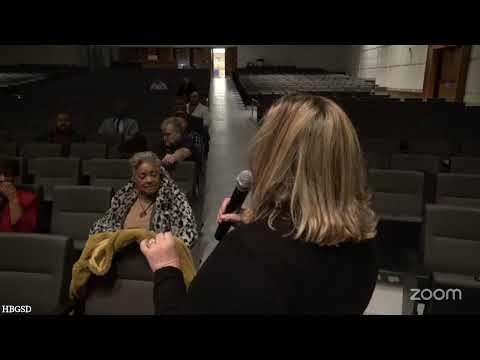
Two teams offered plans for restoring William Penn High School and reusing the campus during a William Penn Task Force meeting on Dec. 17 in Harrisburg.
Two teams offered plans for restoring William Penn High School and reusing the campus during a William Penn Task Force meeting on Dec. 17 in Harrisburg.
Brett Peters, presenting for the Pennsylvania Social Equity Investment Fund, described a phased renovation that would begin with the rear “shop” wing to house Tri‑County OIC (Opportunities Industrialization Centers) vocational programs and build out classroom space and maker labs. Peters said the back wing’s shop work and equipment are estimated at about $20,000,000 and that a full, furnished restoration of the entire building is estimated at about $70,000,000. "We can actually get the rental rates that we get using 100% debt," Peters said, describing a financing scenario based on a USDA community facilities loan.
Christina Johnson, executive director of Tri‑County OIC, said OIC provides workforce and reentry programs, serving about 750 adults and young adults with courses that include GED/HiSET, forklift training, nursing assistance and a recently completed solar installation course. "We empower individuals and we transform communities," Johnson said. She described OIC’s intention to run day‑time and evening programming on a single consolidated campus rather than at multiple offsite locations.
A second team, led by Gary Gilliam of Bridge Eco Village, proposed a broader community‑driven redevelopment. Gilliam described mixed uses including maker spaces, an auditorium restored for public performances, housing (with an emphasis on senior units), retail, vertical farming/aquaponics in infilled courtyards, and a “JEDI Innovation Center” (justice, equity, diversity and inclusion) to coordinate wraparound social services. Architect Benedict of Murray Associates showed design concepts including infilled courtyards, restored auditorium balconies and rooftop solar. Tom Jones (project execution lead) and Russell Jenkins (Banneker Financial, risk management) outlined capital‑stack strategies and risk governance the team says will support phased financing and long‑term operations.
Both teams said the proposal’s viability depends on site control and a long‑term lease with the Harrisburg School District. Peters described a 40‑year land lease as his preferred structure; Gilliam’s team said they had considered both 99‑year and public‑private partnership models and said they would work with the district on terms that limit district liability. Peters and the Bridge team said they are exploring historic tax credits, new markets tax credits, low‑interest loans and grant funding. Peters said a full project could generate an approximately $11,000,000 endowment from tax credits, which he said would produce about $440,000 a year at a 4% draw to help operating budgets.
Task force members raised repeated questions about how programs would serve current students in the Harrisburg School District, and how adult reentry programs would be kept separate from minors enrolled in district programs. Melanie (task force member) asked how district students would access vocational programming; Peters replied, "The school district I I'm happy for the school district to bring any of that programming to me, and we can put it in the building. We have space. So you give me the program, we'll put it in the building." Multiple members pressed for clearer contingency plans if tenants left, for detailed pro formas, and for explicit commitments on local, minority and women‑owned business contracting and bonding capacity. The Bridge team said Whiting‑Turner is committed as construction partner and noted Whiting‑Turner’s stated DBE/WBE programs; the presenters said they will provide more detailed contractor participation plans and schedules.
The task force also discussed prior task force work and public engagement that produced many of the ideas in both presentations. At least one member objected that ideas developed by the task force and residents were being presented without attribution; Peters and Gilliam replied that many concepts came from public engagement and prior task force input. Dr. Lori Suskey (Harrisburg School District) said the district and partners had also pursued a separate EPA Community Change grant application and that the district is listed as a partner in that submission; she said the grant could be worth $10–20 million and that a decision is expected within weeks.
No formal action was taken at the meeting. The task force chair said members will receive a Google Docs questionnaire for written feedback that will be shared with the school district and that the group will reconvene in January for additional discussion.
Ending: The presenters supplied preliminary capital‑stack outlines and said they can provide more detailed pro formas, phased construction schedules, DBE participation plans and term sheets to the district and the task force on request. Task force members repeatedly requested those documents and emphasized student access, safety, contractor inclusion, and financial sustainability as priorities for follow‑up review.