Get Full Government Meeting Transcripts, Videos, & Alerts Forever!
Get email alerts on the Wildlife Management Otters topic
No spam. Unsubscribe anytime.
House committee advances bill to remove river otters from protected list to give Game and Fish conflict tools
Summary
The House Travel, Recreation, Wildlife & Cultural Resources Committee voted to advance House Bill 45, which would remove river otters from the state's protected-wildlife list and reclassify them as nongame wildlife so Wyoming Game and Fish can use permits and other measures to address local conflicts.
The House Travel, Recreation, Wildlife & Cultural Resources Committee voted to advance House Bill 45, which would remove river otters from Wyoming's list of protected wildlife and reclassify them as nongame wildlife so the Wyoming Game and Fish Department can use permits and other tools to address localized conflicts.
Chairman Byron, the bill's sponsor and the committee chair, said the bill "removes the word otter from statute 231‑101" and is intended to "allow the game and fish the tool to manage that animal, if and when appropriate." The committee voted 6‑2 to move the measure out of committee.
Why it matters: Supporters say the change would give the agency the authority to respond to complaints from private landowners and anglers — including using chapter 56 permits for case‑by‑case relocation or, if necessary, lethal removal — without creating an open hunting season. Opponents say scientific data on population size and distribution are insufficient and worry delisting could reduce long‑term recovery.
Agency and supporter testimony: Angie Bruce, director of the Wyoming Game and Fish Department, told the committee the bill "removes the protected status of otters in the state" and would classify them as nongame under chapter 52. Bruce said that classification "still would remain not part of a hunting or trapping season" and that the department would use chapter 56 permits in conflict situations to try mitigation, relocation or, as a last resort, lethal removal.
Representative Mike Schmidt, a co‑sponsor from Sublette and Lincoln counties, said complaints came from private landowners with stocked ponds and from anglers who have seen increasing otter activity in western drainages. Schmidt said regional Game and Fish offices had reported receiving more complaints.
Opposition and scientific testimony: Retired veterinarian Donna O'Toole testified she opposed the bill as "premature," urging reliance on scientific data from the Wyoming Diversity Database before changing protections. Marav Ben David, a researcher who has led multi‑year otter surveys in Wyoming, also urged caution: "I oppose the bill because I believe it's very much premature to open river otters to removal," he said, citing survey results that showed activity at latrine sites down to roughly 25% of counts from a decade earlier in some places.
Several conservation groups also testified. Anna Kaufman of the Wyoming Wildlife Federation said her group supported the bill and "believe[s] wholeheartedly in the agency's ability...to use the tools in their toolbox wisely." By contrast, the Wyoming Wildlife Protection Group urged more systematic inventories before permitting take.
Key details from the hearing: - The committee debate focused on management authority and process. Agency staff said any removal would occur only under permits and after attempts at mitigation and landowner coordination, and that permits are handled on a case‑by‑case basis rather than through an open season or a general trapping license. - Scientists reported limited distribution across the state: department materials and testimony noted otters had been documented in roughly 14 of 28 surveyed segments; Ben David reported long‑term declines in measured activity at some monitoring sites. - Incidental take by trappers historically has been low; agency and fur‑bearer group estimates discussed at the hearing put incidental bycatch at roughly three to four otters per year on average.
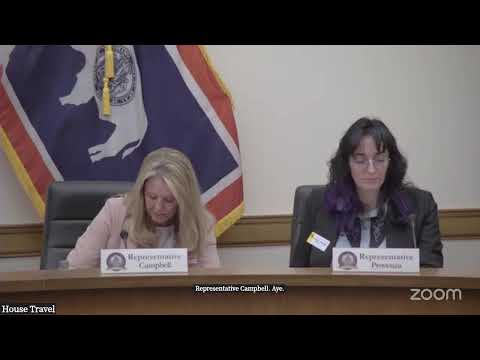
Votes and next steps: Representative Connolly moved the bill and Representative Campbell seconded. The roll call produced six ayes and two no votes (one member excused); the bill was advanced from committee. Committee members discussed amendments and the potential for additional data collection before the measure proceeds further in the legislative process.
The discussion made a clear distinction between: (a) discussion — questions about population status, genetics and monitoring; (b) direction — staff described the permitting and mitigation process the agency would use under chapter 52/56; and (c) decision — the committee's formal vote to advance the bill out of committee.