Get Full Government Meeting Transcripts, Videos, & Alerts Forever!
Get email alerts on the Gaza Humanitarian topic
No spam. Unsubscribe anytime.
UN warns Gaza humanitarian operations at ‘breaking point’ as aid convoys come under attack; UNRWA probe ongoing
Summary
The United Nations warned that humanitarian operations in Gaza are severely constrained after aid sites and convoys were hit, with the Under‑Secretary‑General for Humanitarian Affairs saying efforts face ‘mounting obstacles.’ The UN reiterated calls to protect civilians and humanitarian workers and defended UNRWA staff oversight amid allegations.
The United Nations said humanitarian operations in Gaza are under severe strain after makeshift sites and aid convoys were hit and essential infrastructure was damaged, putting relief efforts and civilians at increased risk.
The UN spokesperson said partners carrying out rapid needs assessments found tents and other shelters destroyed at makeshift sites in Yafa and Al Samud in Derral Bala — sites that host about 190 families — and that “essential infrastructure, including water, sewage and solar power systems, were affected, with three learning spaces also damaged.” Humanitarian partners provided emergency shelter materials and food aid, and another partner mobilized to provide water and sanitation services, the spokesperson said.
The UN cited a statement from Under‑Secretary‑General for Humanitarian Affairs Tom Fletcher, saying: “Despite the determination to deliver food, water, and medicine to survivors in Gaza, our efforts to save lives are at a breaking point.” The spokesperson added that attacks on clearly marked UN vehicles, including a recent World Food Programme convoy incident on Jan. 3, have raised acute safety concerns for aid workers and impeded deliveries.
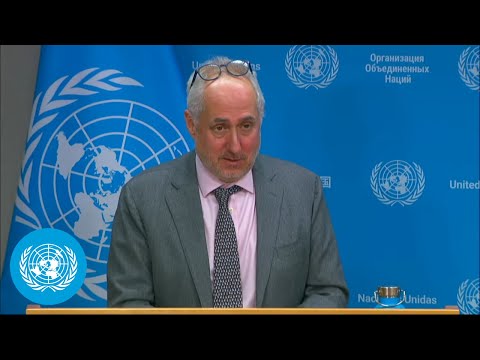
The spokesperson said more than 200 UN colleagues have been killed in Gaza since the start of hostilities and described a pattern of incidents that is hampering humanitarian operations. “What motivated a sniper to shoot at them? I don't know. Was it a mistake … or direct orders? Those are answers that I think the World Food Programme wants,” the spokesperson said, adding that the UN is not getting sufficient answers from some parties and that the organization is struggling to keep people and convoys safe.
On allegations that UN agencies have links to armed groups, the spokesperson responded to a recent media report about UNRWA by saying the organization has been transparent in cooperating with inquiries into the conduct of a small number of staff and that UNRWA continues to provide humanitarian, educational and medical services “mandated by the General Assembly of the United Nations.” The spokesperson encouraged direct sharing of information with the UN rather than public media releases.
Why it matters: Disruption to aid deliveries and attacks on humanitarians threaten delivery of food, water and medical supplies to civilians in need and risk further reducing access to life‑saving assistance in Gaza.
Details and context: Rapid assessments in the makeshift sites reported injuries from an airstrike, dozens of destroyed tents and damaged community infrastructure. Humanitarian partners on the ground have provided immediate relief where possible, but the spokesperson and Fletcher emphasized that continued attacks on aid and on humanitarian workers reduce the capacity to reach vulnerable people across the Strip.
The spokesperson reiterated the UN position that civilians must be protected at all times and that essential needs for survival must be met.