Get Full Government Meeting Transcripts, Videos, & Alerts Forever!
Get email alerts on the Elections topic
No spam. Unsubscribe anytime.
Committee narrows signature requirements for independent candidates, aligns filing deadline
Summary
Lawmakers amended and advanced House Bill 173 to revise independent candidate petition thresholds and filing deadlines; the committee reduced proposed signature rates and adopted several edits after testimony from the Secretary of State and public commenters.
The Appropriations Committee voted to advance House Bill 173 with amendments that change the petition signature threshold and the filing timetable for independent candidates.
The bill’s original draft amended several election statutes (22-5-301(a), 22-5-304 and 22-5-307) to clarify that independent candidates must be unaffiliated and to raise required petition signatures from 2% to 5% of votes cast, and to require petitions be filed 81 days before the general election (bringing independent filing in line with the filing window for major-party candidates). The committee debated two core policy choices: the percentage threshold and whether deadlines should align with major-party filing dates.
Secretary of State Chuck Gray testified in support, saying the change would curb what he described as post-primary “gamesmanship” in which candidates file as independents after a primary result. “You shouldn’t be able to watch a primary unfold and then jump in the next week,” Gray said. Joe Rubino, counsel to the Secretary of State, provided comparative information from the National Conference of State Legislatures showing states use a mix of approaches — flat numbers, percentages of registered voters, or percentages of votes cast.
Opponents at the hearing, including the Equality State Policy Center’s Jenny Desaro and Marissa Carpio, urged the committee not to create additional barriers for independent and nonpartisan candidates. “This bill creates unnecessary hurdles for individuals seeking to participate in our democratic process,” Desaro said.
Committee debate focused on balancing ballot access against preventing opportunistic candidacies. Representative Sherwood noted the practical difference in signature counts: in the 2024 general election he cited, 2% of voters would have required roughly 5,420 signatures while 5% would require about 13,550 — a change he said would be “a lift” for prospective statewide independent campaigns.
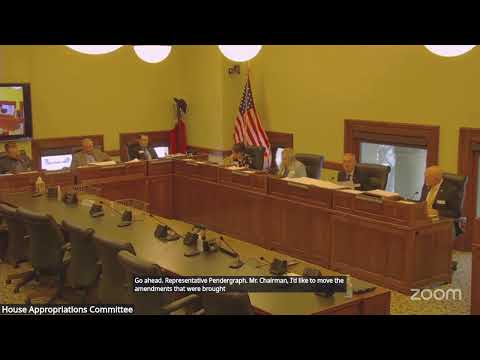
Members adopted several amendments in committee. Representative Pendergraft successfully moved to add the phrase “or minor” after the word “major” in party references to account for minor-party nominees. The committee then amended the percentage thresholds: statewide and countywide petition requirements were reduced from the sponsor’s proposed 5% to 3%; the district-level threshold was retained at 5% to ensure a higher bar for smaller districts where raw signature counts had been unusually low (the sponsor and counsel had argued district raw counts as small as 60–80 were too low to be a meaningful threshold).
After amendments, the committee passed House Bill 173 on a roll call. The final vote was 6 ayes, 1 no (Representative Sherwood opposed). The committee’s action sends the bill forward with the adopted changes: clarification that independent candidates must be unaffiliated, filing 81 days before the general election, and adjusted signature thresholds (statewide/countywide at 3%, district at 5%).
Votes at a glance: House Bill 173 — Do pass with amendments, 6–1 (Sherwood opposed).
The committee also asked staff to provide a written breakdown of signature-count implications by office and said the sponsor and Secretary of State would provide comparative state examples if requested.
Key statutory references in the bill are to 22-5-301(a), 22-5-304 and 22-5-307; the transcript also referenced the state’s “sore loser” statute and ongoing litigation involving that provision.