Get Full Government Meeting Transcripts, Videos, & Alerts Forever!
Get email alerts on the Whistleblower Program topic
No spam. Unsubscribe anytime.
Whistleblower office reports rising intake, 91% closure rate and plans to increase automation
Summary
The City Services Auditor's Whistleblower Program reported an increase in referrals in 2024–25, a 91% closure rate within 90 days so far for fiscal 24–25, and work on a new case management system and outreach to department liaisons.
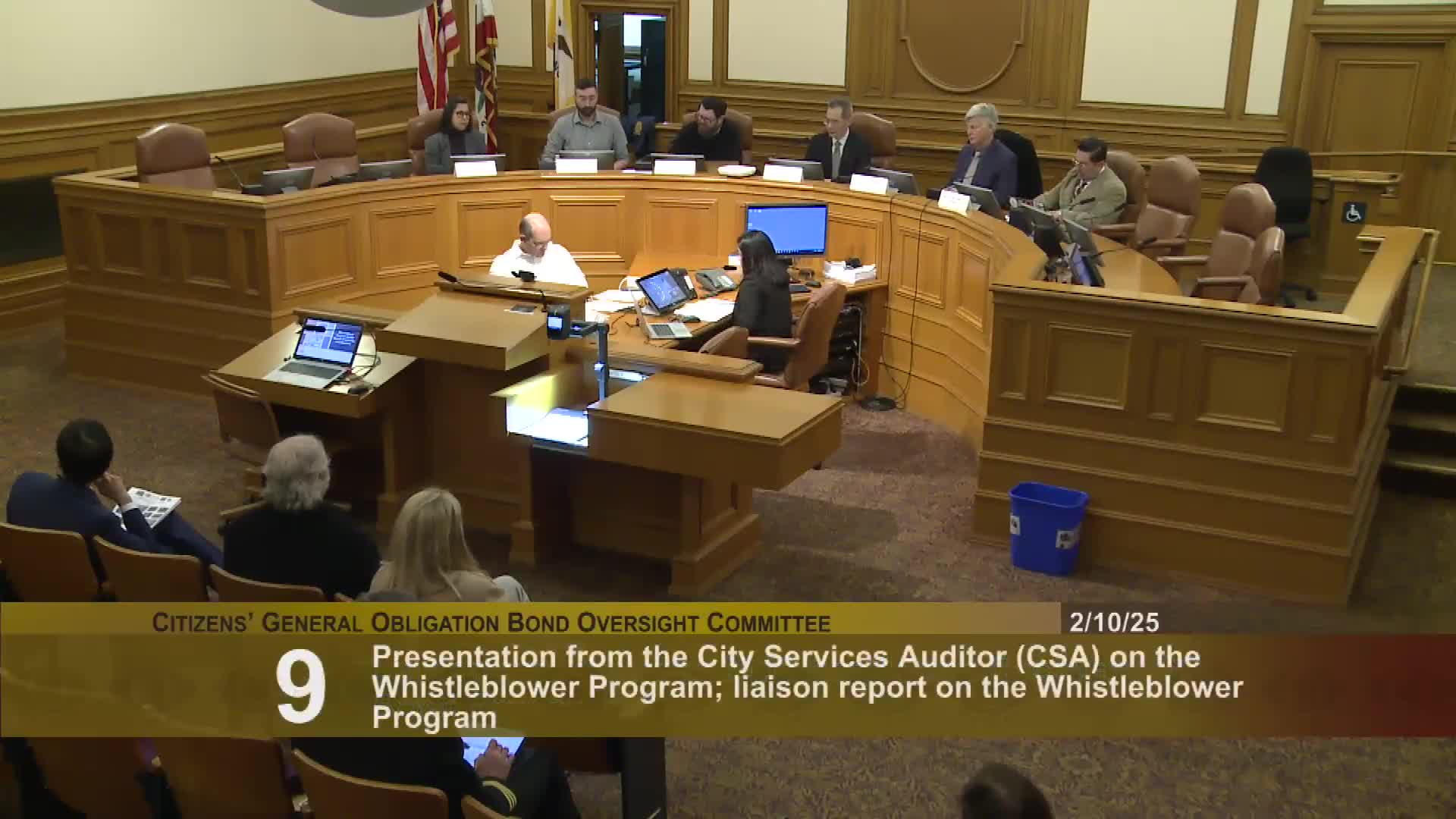
David Jensen, program manager for the city’s Whistleblower Program, briefed the Citizens General Obligation Bond Oversight Committee on Feb. 10 on intake volumes, closure rates and program improvements.
Jensen said the program derives authority from the city charter and state law and described the program’s jurisdiction (misuse of city funds, improper activities by officers and employees, deficiencies in government services, and wasteful or inefficient practices) and what is outside the office’s purview (matters handled by other agencies, union grievance procedures, criminal prosecutions and governmental ethics investigations).
Jensen told the committee that intake volumes remain elevated: "As of about, 15 minutes or so ago now, we received 65 reports for q3," and the office has received 304 reports so far this year and closed out 339. He said the office had 44 open reports as of Dec. 31, a notable reduction from prior quarters. Jensen and staff reported a closure metric improvement: the charter‑mandated target was adjusted and the office is closing 91% of reports within 90 days so far this fiscal year, above a prior target of 80%.
The office highlighted results over its seven months using a new case management system (debuted July 1), which has automated public reporting and improved the office’s ability to report nuanced outcomes when matters are referred to other agencies. Jensen said roughly 30–40% of investigative reports historically result in corrective or preventive action, including personnel discipline or policy changes.
Committee members asked whether whistleblower referrals ever lead to prosecution. Jensen said criminal matters are referred to appropriate law enforcement or prosecutorial offices and can lead to prosecution, but he emphasized those proceedings typically take longer than the office’s 90‑day target. He also credited staff stability and weekly target lists for recent performance gains and noted regular liaison training and public webinars, including an April session on using AI to fight fraud.
The office said it will continue quarterly public reports and is exploring more frequent public updates of lifetime statistics and case‑management outputs.
There were no in‑person public comments during the item.