Get Full Government Meeting Transcripts, Videos, & Alerts Forever!
Get email alerts on the Land Use Infill topic
No spam. Unsubscribe anytime.
Staff outlines ‘site‑plan light’ changes to speed small infill housing; council questions drainage, thresholds
Summary
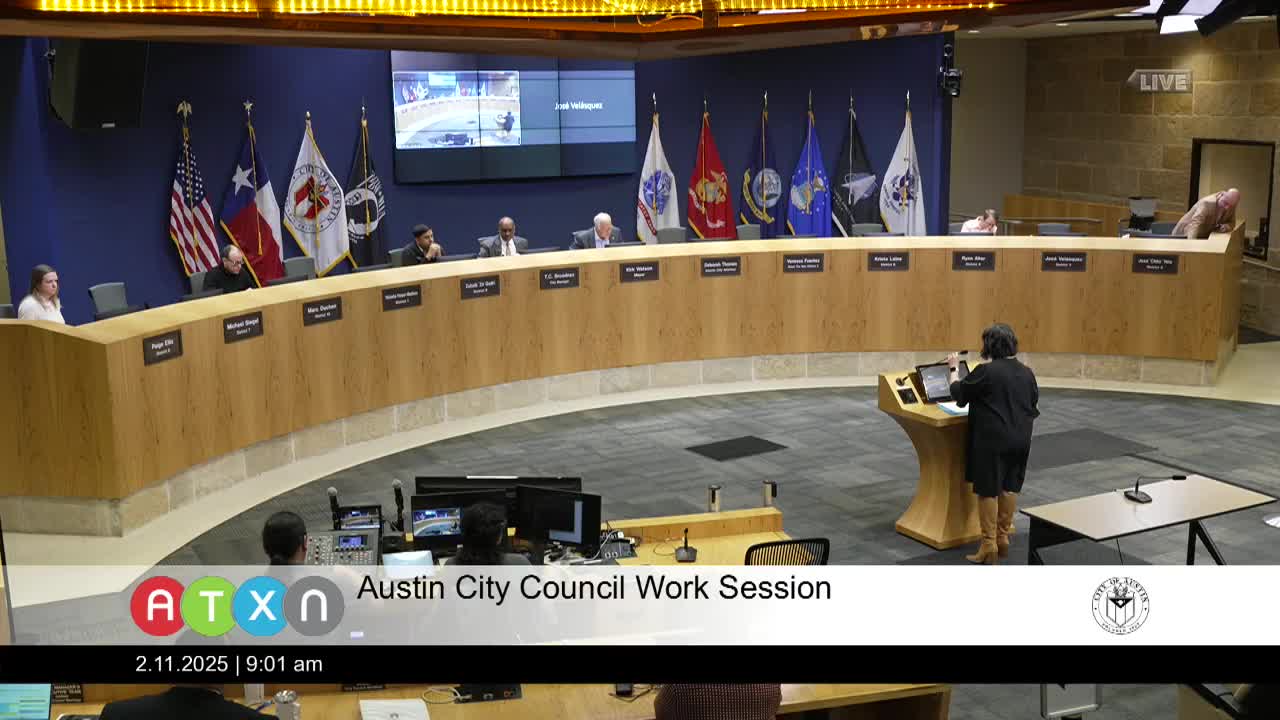
City staff on Tuesday briefed the Austin City Council on a proposal to streamline subdivision and site‑plan review for small infill housing, often called "site‑plan light" or residential infill, that would speed approval for projects of roughly 5 to 16 dwelling units and simplify subdivision of existing lots.
City staff on Tuesday briefed the Austin City Council on a proposal to streamline subdivision and site‑plan review for small infill housing, often called "site‑plan light" or residential infill, that would speed approval for projects of roughly 5 to 16 dwelling units and simplify subdivision of existing lots.
The proposal, presented by Assistant City Manager Veronica Briceno and Keith Myers, assistant director of the Development Services Department, aims to right‑size regulations and administrative processes for infill redevelopment, set a 90‑day target for permitting for eligible projects and change how the city evaluates drainage for smaller projects.
City staff said the changes are intended to match review and requirements to the scale of development, reduce construction costs for small projects and make the process easier for homeowners and smaller developers. "We believe we have a staff proposal that accomplishes a number of things," Myers said, including amendments to drainage rules and administrative procedures. Jorge Morales, director of the Watershed Protection Department, said the package includes both code changes and commitments to change administrative rules around stormwater connection, timing of drainage improvements and greater reliance on stamps and certifications by private engineers.
Why it matters: Staff estimates the recommended approach could reduce construction costs for small infill projects by as much as 30–40 percent and make nearly 80 percent of eligible single‑family lots more likely to use a simplified subdivision process. Council members raised repeated concerns about the risk of localized (lot‑to‑lot) flooding, the effect on the city’s regional stormwater fund and the fairness of sharp size thresholds.
Key proposals
- Two main tracks: a "site‑plan light" process for projects of 5–16 units, and a right‑sized subdivision review for infill subdivisions (staff framed a simplified process for lots 11,500 square feet or less). Myers said 3–4 unit projects already go through a separate residential review and the 5–16 unit band is intended to differentiate small infill from large developments.
- Drainage: staff proposed more flexible drainage calculations, timing drainage requirements later in the process ("right timing") and greater deference to licensed engineers via stamped plans. Morales described the approach as shifting some drainage review from the earliest subdivision step to later stages when roof lines and grading are known. "One of our proposals is looking at a grading plan... when it actually comes time to construct those homes, that we... ensure public safety," Morales said.
- Inspection and certification: staff said they would rely more on professional obligations of licensed civil engineers and stamped surveys, and explore "self‑certification" or third‑party review approaches used in other cities.
- Turnaround and scope: staff committed to a 90‑day turnaround target for permitting on eligible projects and to expanding a "small project" development review path with less notice and a more limited review scope for projects that meet the thresholds.
- Eligibility and scale: staff said 80 percent of single‑family‑eligible lots are smaller than the 11,500‑square‑foot threshold. For 5–16 unit projects, staff said about 90 percent of lots with the applicable zoning are less than one acre and would be eligible for the streamlined process.
Funding and regional stormwater program (RSMP)
Morales and other staff emphasized the RSMP's role in funding larger regional drainage projects and said simplifying fees for small infill would have a modest effect on the program’s revenues. He said the city collects roughly $630,000 into the RSMP fund annually (divided across watersheds) and that staff analysis showed eliminating or reducing RSMP fees for small missing‑middle projects would have an "insignificant impact" on the overall program. Morales said capital projects and bonds will continue to be important sources for larger drainage investments.
Council concerns and questions
- Council Member Natasha Harper Madison asked for specifics about "right timing" and where grading review could be deferred. Morales said grading and drainage direction can be reviewed later, at building permit, when building footprints are known. "It creates more flexibility and agility for those that are gonna develop these sites," he said.
- Mayor Pro Tem Vanessa Fuentes and other council members pressed on localized lot‑to‑lot flooding risk and asked how the proposal maintains protections. Morales said impervious cover limits adopted in prior Council policy (referred to by staff as Home 1 and Home 2) were not changed by this proposal and that the Watershed Protection Department will continue to model and monitor localized flooding. "These changes are really streamlining the process... but not necessarily exacerbating what's already there," Morales said.
- Council Member Paige Ellis and Council Member Ryan Alter raised threshold questions. Alter described a concern that a single square‑foot difference in lot size around the 11,500 cutoff could materially change how many units could be built, and asked whether a buffer or tiered approach (a small plus/minus) had been considered. Staff said the 11,500 number came from benchmarking and stakeholder input (initially near a quarter‑acre figure) and that the simplified process would remain available up to larger sizes through fuller engineering review.
- Utilities and constructability: Council members asked about water/wastewater lines that cannot cross lot lines and whether utility rules could block subdivisions. Staff said utilities and the water utility are examining service extension request procedures and coordination to give applicants earlier certainty about utility costs and feasibility.
- Small detention ponds and maintenance: multiple council members questioned the long‑term viability and maintenance burden of small on‑lot detention facilities. Staff said the proposal looks to reduce small ponds in favor of options such as modular detention or regional solutions where feasible.
Data requests and next steps
Council members asked staff for follow‑up data: supporting analysis for the stated 30–40 percent cost savings, a breakdown of lot size stratification, the share of lots that currently drain to a public street or drainage system, and the legal/statutory remedy for a landowner whose property is flooded by a neighbor (staff agreed to provide those items in the Q&A packet). Several council members said they may still consider asking for additional time to review the full packet before a scheduled adoption vote.
Staff told council the ordinance would be on the Thursday, Feb. 13 agenda for adoption and that the Planning Commission had recommended the proposal in December 2024 after prior hearings.
The briefing closed after extensive questioning and a request from staff to provide additional data before Thursday's vote.