Get Full Government Meeting Transcripts, Videos, & Alerts Forever!
Get email alerts on the Caregiver Crisis And Structured Family Caregiving topic
No spam. Unsubscribe anytime.
Local experts urge policy and community changes as caregiving gap widens
Summary
A panel at the Columbus Metropolitan Club forum outlined policy changes, new Ohio benefits and local programs aimed at supporting unpaid family caregivers, while warning of workforce, technology and equity challenges as the population ages.
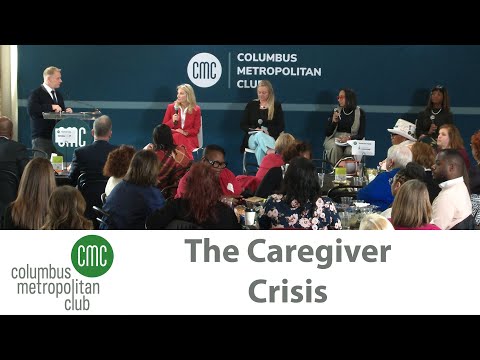
Columbus — Leaders and advocates at a Columbus Metropolitan Club forum on caregiving on Oct. 27, 2025, outlined new policy steps and local programs to support unpaid family caregivers and urged broader public- and private-sector changes as the pool of potential family caregivers shrinks.
"We need to normalize caregiving. It is society's obligation to make sure that we're embracing it," said Jenny Carlson, state director of AARP Ohio, who recommended a three-pronged approach of education, activation and innovation including legislative and workforce changes.
Why it matters: Panelists said demographic trends and rising care needs will increase pressure on families and public programs. Carlson cited AARP figures showing that in 2010 there were about seven potential family caregivers for every person aged 80 and older; that ratio is expected to fall to about four-to-one by 2030 and under three-to-one by 2050. The panelists described steps already underway in Ohio and locally to ease the burden on caregivers and to expand paid and unpaid supports.
Panelists emphasized a recent change to Ohio's home- and community-based waiver services that took effect in October 2024 allowing eligible family members who live with a waiver recipient to participate in "structured family caregiving." "If you're a caregiver and you are caring for and living in the home of someone that's on one of the waiver programs ... you can be not only reimbursed financially for your work, but also you can now have access to ongoing case managers, support, technical training," said Dr. Kathy Wright, associate professor and senior associate dean for faculty affairs at The Ohio State University College of Nursing.
Shonda Wingo, director of the Franklin County Office on Aging, described a related local change: the county office amended contracts with provider partners so family members can serve as paid caregivers through those providers. "We realized that caregivers are doing it for free. They just need a place to plug in so that they can continue to caregive, but also receive some financial relief," she said.
Panelists also discussed federal- and state-level programs and tools. Wright noted a CMS-covered program referred to in the discussion as "GUIDE," which she said supports clinics and outpatient centers in recognizing and responding to memory problems rather than dismissing them as a normal part of aging. The panel encouraged listeners to contact area agencies on aging for concrete help: Katie White, director of the Central Ohio Area Agency on Aging, explained that federal funds flow to county partners and support home health, homemaking, adult day services and Meals on Wheels, and that local levy dollars can supplement those services. "If we don't provide it, we certainly will get you to someone that does," White said.
The panel identified several policy and delivery gaps that panelists urged to be addressed: workforce development and career ladders for professional caregivers, employer flexibility and tax/benefit support for working caregivers, digital equity to enable telehealth and remote monitoring, and data-driven, inclusive planning to address racial and socioeconomic disparities in chronic conditions and dementia prevalence.
On workplace supports, Carlson highlighted a tax-related measure mentioned at the forum that panelists described as intended to help working caregivers recoup out-of-pocket costs; she said the policy would let some caregivers claim up to $5,000 on federal taxes, returning money to workers. Panelists also urged employers to offer flexible schedules, paid time off for caregiving tasks and to share community resources with employees.
Technology and equity were recurring themes. Wright and other panelists said technology such as telehealth, wearable devices and AI-driven supports can help caregivers and people with dementia but stressed the digital divide. "We have many consumers out there that do not have smartphones ... and do not know how to navigate those electronic records," Wright said. Franklin County examples included a gaming and AI initiative that brings seniors together to reduce social isolation and teach digital skills.
Audience members asked about funding uncertainty after a pause in some federal contract activity was reported elsewhere; panelists said they were monitoring the situation and that, as of the forum, advocates had not confirmed widespread pauses in aging-services funding, though some state web services had experienced interruptions. "As of now, no funding is paused," one panelist said while noting advocates were watching developments closely.
Panelists repeatedly stressed that many caregivers do not self-identify and urged family members to recognize caregiving tasks such as making medical appointments, managing medications and regular check-ins as caregiving. "If you are making doctor's appointments, if you are following up on medicine ... those small tasks is where caregiving starts," said Shonda Wingo.
Resources and next steps: Panelists pointed listeners to AARP Ohio materials, county area agencies on aging and local programs. The Franklin County Office on Aging provided a phone contact for local assistance (614-525-6200) and encouraged people to review agency websites and newsletters for events, training and community programs. The forum host also noted that WOSU Public Media plans additional coverage through its Inside Caregiving project.
The conversation included calls for expanding intergenerational programming, building career pathways in aging services, broadening insurance and public programs' flexibility to allow family caregivers to be paid where appropriate, and improving outreach so people learn about supports before a caregiving crisis. "We need each and every person to be active in this with us," White said.
The forum closed with panelists encouraging attendees to connect with local agencies and national organizations such as AARP and the Alzheimer's Association for information, support groups and training.