Get Full Government Meeting Transcripts, Videos, & Alerts Forever!
Get email alerts on the Small Business topic
No spam. Unsubscribe anytime.
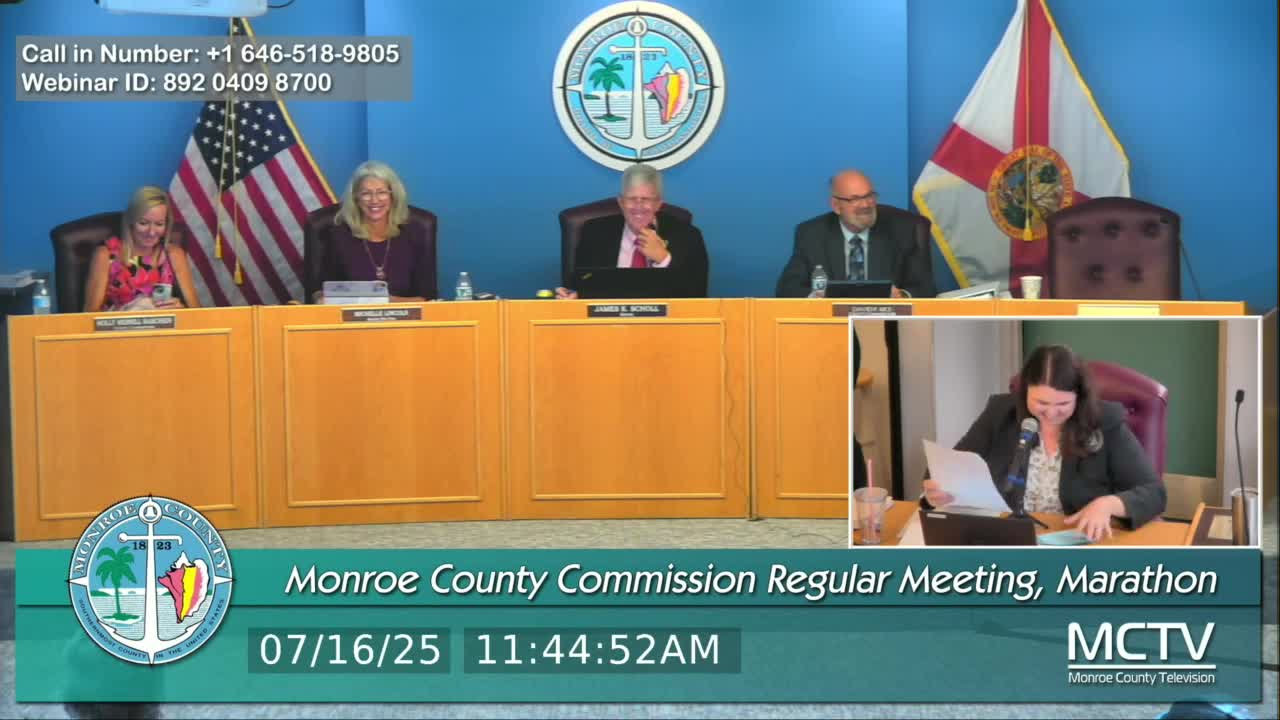
Commission directs staff to craft food‑truck regulations; temporary permits continue during rewrite
Summary
After a lengthy public hearing, the board directed staff to develop land-development-code language specific to food trucks and to continue issuing temporary-use permits under current rules while the county drafts new regulations.
Monroe County commissioners heard hours of public comment Wednesday on proposed language that would limit temporary-use permits for businesses such as food trucks to a single six‑month permit per property and would require longer-term operations to seek standard building‑permit or development approvals.
More than a dozen food-truck owners and supporters described the role the trucks play for residents and visitors, cited state sanitation inspections and said a shift from temporary permits to full building‑permit/regulatory requirements would be financially unworkable for most operators. Business owners and customers said food trucks provide affordable meals for local workers, contribute to the local economy and often donate time and revenues to charity.
Planning staff presented the proposed amendment as a clarification of the county’s temporary‑structure rules, not an outright ban. Staff noted that, under current land‑development code language, restaurant uses that remain at a fixed property for longer than six months are generally required to obtain a “regular” building permit and associated land‑use reviews (parking, trip generation and waste handling). Staff said the proposed text aimed to prevent the repeated successive issuance of temporary permits that nonetheless leave a use on a property for years without permanent-development approvals.
Commissioners said they wanted more targeted, food‑truck–specific rules rather than the immediate ordinance change on the table. Commissioner David Rice and others pointed to municipal models — Marathon and others — and asked staff to study those examples. Commissioner Rice said he supported a tailored approach that would allow continued operations while the county crafts regulations.
The board voted to direct staff to prepare a land‑development code amendment specific to mobile food vendors and similar temporary restaurant uses, and to continue processing temporary permits under existing rules while that code work proceeds. The motion passed on a vote of the board; the chair said staff will return with a draft ordinance after community outreach and stakeholder meetings.
Staff also noted that state law (Chapter 509) preempts local governments from imposing an outright ban on mobile food vendors and said staff will ensure any county rules comply with state preemption.
Public comments and the board’s direction ensure the county will pursue a separate regulatory track for food trucks that aims to balance public‑safety, parking and access needs with the business viability of food‑truck operations, with additional community meetings planned as the draft language is developed.