Get Full Government Meeting Transcripts, Videos, & Alerts Forever!
Get email alerts on the Solid Waste Recycling topic
No spam. Unsubscribe anytime.
Hooksett advisory committee backs rescinding condo trash reimbursement, seeks higher concrete fee
Summary
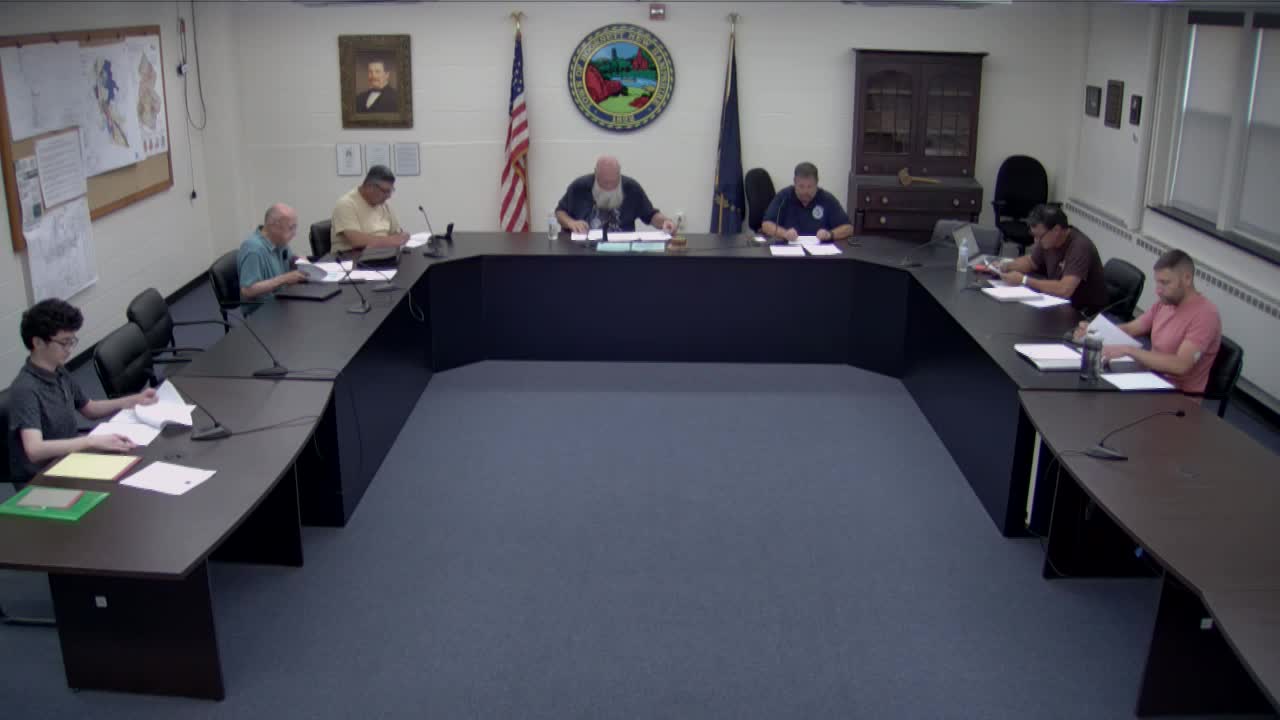
At its July 22 meeting the Hooksett Recycling & Transfer Advisory Committee voted to advise town council to remove a semiannual condominium trash reimbursement and discussed higher fees for concrete disposal and equipment upgrades to close operating shortfalls.
The Hooksett Recycling & Transfer Advisory Committee voted July 22 to advise the Town Council to remove a semiannual reimbursement to condominium associations and discussed raising transfer‑station disposal fees, citing losses on concrete and rising vendor surcharges.
The committee’s recommendation follows presentation of a year‑to‑date product and invoicing report for the transfer station. Committee members said the town paid roughly $4,389 in fuel and environmental surcharges over the year while charging residents only $378 for concrete disposals under the current fee structure. Staff proposed increasing the concrete charge from a $5 per half‑truckload (current town fee) to $50 per ton (about 2.5 cents per pound) to cover disposal and vehicle wear and tear.
Why it matters: committee members said the concrete shortfall, vendor fuel surcharges and other material market changes are straining the transfer station’s revenue fund and that removing the condominium reimbursement could free money for other basic services. The committee also reviewed equipment and capital needs including a new dump trailer and an upgraded horizontal baler, both to be paid from the transfer station’s solid waste disposal revenue fund rather than the town’s operating budget.
Committee and staff statements
Andre (staff member) summarized the town’s ordinance language and the council’s options. He told the committee that "Section 3 of the trash ordinance indicates that condominiums will be required to provide for the collection and disposal of domestic trash within their communities" and that the current reimbursement program was enacted in February 2003. He said council may rescind or amend the section but that the council would need the advisory committee’s advice and, if council pursues an amendment, a public hearing.
Alex Walzick, acting town‑council alternate on the committee, urged rescinding the reimbursement: "I don't think we should necessarily be paying for condos to get rid of their garbage. I'd like to see the committee make a motion to advise the town council to remove the reimbursement." Walzick and other committee members noted the town’s broader default‑budget pressures and the committee’s prior decision not to expand condo pickup.
Formal action
A committee member moved "to discontinue reimbursement to the condo associations for trash," another member seconded, and the motion passed on a voice vote. The committee directed that the advisory vote and the minutes be taken to Town Council; Andre said he would bring both forward and that council would likely schedule a public hearing before any ordinance change.
Rates, vendor changes and financial details
- Current vendor rates discussed: general trash had increased from $93.45 per ton to $98.10 per ton as of July 1; furniture moved to roughly $96.13 per ton; roofing remained about $97.66 per ton. Concrete paid to the processor fell from about $34.50 per ton to $32 per ton, contributing to the shortfall the transfer station experienced. - The committee’s review of invoices showed the transfer station paid about $4,389 in fuel and environmental fees over the year but collected only about $378 from customers for concrete under current town fees. - Staff explained that the processor adjusts concrete prices for contamination (asphalt or visible steel) and that clean concrete receives better rates.
Capital projects and grants
Staff reported they applied for and received a New Hampshire DES used‑oil grant of $2,500 for spill containment pallets, spill kits and signage. The committee also reviewed recent purchases and pending capital items funded from the transfer station’s revenue fund: a 28‑foot aluminum dual‑axle dump trailer (procured for $85,000 after an $87,000 authorization), and a proposed horizontal baler estimated at about $110,000 plus $7,500 for electrical upgrades and transformer work (bringing the project cost to roughly $118,000). Staff said these purchases would not require general‑fund tax dollars; they are to be paid from the solid waste disposal revenue fund.
Operations and public concerns
Staff described other operational changes: electronics and batteries now are charged by weight under a new vendor program; freon units remain $8 per unit for recovery; mixed glass recycling now carries a processing cost; plastics largely break even but remain an important revenue stream. Staff also outlined plans for a new scale‑house building to address flooding and safety issues and the addition of cameras to reduce illegal dumping.
During public comment, Elizabeth Spitzer, a resident and member of the town budget committee, asked why the transfer station’s Saturday hours were reduced under a default budget and whether the staffing and overtime changes had been fully considered against capital purchases. Staff replied that overtime reductions were part of the default‑budget cuts and that reserve revenue funds used for capital projects cannot be applied to regular payroll; staff said the Saturday reduction saves roughly 10 overtime hours per month (five hours for three people). Andre and staff pointed residents seeking more detail to Public Works Director Ben Berthiaume.
What happens next
The committee’s advisory vote will be submitted to the Town Council; if council pursues an amendment to Section 3 of the trash ordinance it must hold a public hearing before rescinding or revising the condominium reimbursement provision. Staff said they will check with the director on timing to place related rate changes and ordinance amendments on the council agenda.
Ending
Committee members and staff emphasized the transfer station’s reliance on its revenue fund to pay for equipment and operations and said they will return with council scheduling and any firm rate‑change language for public review.