Get Full Government Meeting Transcripts, Videos, & Alerts Forever!
Get email alerts on the Stormwater And Emergency Response topic
No spam. Unsubscribe anytime.
Pittsboro reviews emergency response after heavy rains; residents press for stronger stormwater safeguards
Summary
Town of Pittsboro officials described emergency response and damage after a severe July storm; staff outlined immediate repairs and recovery steps while residents blamed development runoff and urged stronger stormwater controls.
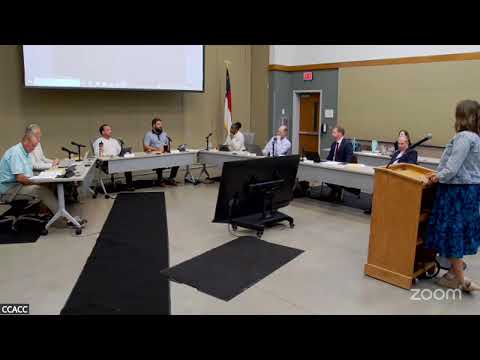
Town of Pittsboro officials described the town’s response to a sudden, severe storm during the July 14 Board of Commissioners meeting and outlined damage assessments and short-term recovery steps. Colby Sawyer, the town’s communications and emergency management official, told the board the event produced far more rainfall than forecast in some locations, overwhelmed local drains and culverts, and moved the walking bridge at Towne Lake Park downstream.
Sawyer said emergency operations began overnight as calls reporting flooded roads and water rescues came in. The town issued frequent briefings to leadership, pushed messages through the county Code Red system and wireless emergency alerts, and deployed public works, police and fire staff to block roads and check structures. By dawn the town had started damage assessment and set up a damage-reporting form for residents. Sawyer also said the Oakwood Drive culvert replacement project remains underway and that the new culvert is being sized to increase capacity by “more than 2½ times” with substantial completion targeted by year-end.
The town reported substantial infrastructure impacts: Sawyer said about half of the Towne Lake Park walking bridge moved roughly 100 feet downstream and is currently a “jumbled mess,” with a bench and bike rack lost; the area has been closed. He and staff described multiple flooded homes and businesses and localized road washouts that public works crews were documenting for insurance and mitigation funding. Multiple local, county and federal alerts were used to urge residents to shelter in place and avoid roads.
Public commenters at the meeting described heavy, localized damage and urged policy changes. Amanda Robertson, a resident in the town’s extraterritorial jurisdiction, told the board she saw significant silt and runoff that she attributes in part to nearby construction at Chatham Park; she said the storm washed “huge couches” of sediment and dirt into Prince Creek, Rebasson Creek and downstream waters. Chad Sarska and Robert Pendergraft, both long-time residents near NC Highway 902, described repeated and worsening backup from a nearby park/pond system and urged the town to pursue engineering solutions for the lake spillway and the downstream channels that funnel runoff into town neighborhoods.
Commissioners and staff acknowledged both the immediate recovery needs and the longer-term policy questions. Staff said the town is participating in the Cape Fear Regional Hazard Mitigation Plan update (required every five years) and will pursue grant opportunities to fund mitigation and resilience projects. Town engineering staff noted limits on local regulatory authority and described how subdivision approvals, retained trees and engineered stormwater controls can reduce downstream impacts; staff promised to continue working with developers earlier in the approval process and to pursue best practices other North Carolina communities have used.
Why this matters: board members and residents said the storm’s impacts highlight both the need to repair immediate damage to public amenities (including Towne Lake Park) and to review stormwater controls, development practices and regional mitigation funding so future extreme rains produce fewer home and infrastructure losses.
Next steps: the town will continue damage assessment, work with insurance and county partners, post damage-reporting resources on its website, pursue state and federal mitigation grants, and evaluate technical options for Towne Lake Park and upstream retention as part of design and grant planning.