Get Full Government Meeting Transcripts, Videos, & Alerts Forever!
Get email alerts on the Homelessness topic
No spam. Unsubscribe anytime.
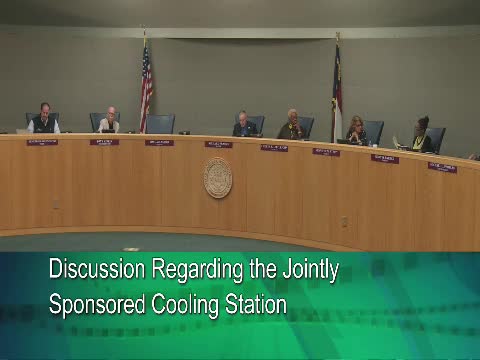
Gastonia council sets temporary cooling-station plan after heated debate over care and shelter
Summary
After extended public comment about homelessness and an often-criticized temporary setup, the council voted to operate outdoor cooling stations when the forecast reaches 90 degrees and to open an indoor cooling site when forecasts exceed 95 degrees; the city will revisit the arrangement in early August and staff must return with a detailed plan.
The Gastonia City Council adopted an interim plan for heat-relief services following intense public testimony about homelessness and an exchange among council members over who had led earlier planning.
City Manager Michael Peoples told council staff had operated a temporary cooling station at 107 South Broad and briefed members on operational costs and options. For indoor operations at 107 S. Broad, staff estimated roughly $1,700 per day for redirected Parks and Recreation staff, police presence and custodial support; outdoor-only operations were projected at about $160 per day. Peoples recommended making the outdoor station a more durable offering (larger tent, extra fans, water) and using partners such as Gaston County, Help Net Gaston and local nonprofits for volunteers and outreach. He estimated the city could purchase supplemental equipment for about $4,000 to $5,000 and reuse those assets after the season.
Council members and public speakers pressed a broader question: is the city’s response to heat a stopgap cooling measure or a step toward a day center or permanent shelter? Several residents — including Pastor Moses Colbert and Sister Carolyn Mary — urged more permanent sheltering options and criticized prior arrangements that advocates said amounted to “two fans on a fence.” Pastor Colbert said the city should do more to prevent deaths among people living on the street. Sister Carolyn Mary said collaborative local shelter planning was long overdue.
Councilwoman Danielle Barber urged collaboration with county and nonprofit partners and repeated that the city’s facilities and staff can supplement community efforts but are not designed to replace permanent shelter operations hosted by established charities.
“We have to partner,” Barber said. “Government will supplement; it will collaborate. We don’t have the nonprofit base that has shelters.”
Council members raised insurance, supervision and liability concerns. The city’s risk consultant flagged typical exposures in opening city facilities to unsheltered populations: premises liability, slip/trip hazards, security and supervision risks, and potential medical and mental-health responses. Staff noted the city’s current insurance program carries a $100,000 deductible.
After discussion, the council approved a time-limited operational plan: when the forecast calls for 90 degrees (outdoors), the city and partners will operate outdoor cooling stations at 107 S. Broad (and promote other staffed public sites such as libraries and community centers); when forecasts exceed 95 degrees, the council directed staff to make indoor cooling available at 107 S. Broad as a cooling station only (no day shelter services). Council asked staff to run the arrangement through a date in early August and return to council at the August 5 meeting with a fully fleshed operational plan including staffing, volunteer roles, liability mitigation, and budget estimates.
Council members said the measure is an interim response while the city and its partners pursue longer-term shelter solutions and better coordination with the Continuum of Care and county emergency services. Several council members repeatedly urged improved communications with county partners and nonprofits to avoid repeating the early-July situation that many speakers said was humiliating for unhoused residents.
Why this matters: The council’s decision creates a near-term cooling safety measure for vulnerable residents during periods of extreme heat while prompting further work to define staffing, liability protections and a strategy for permanent sheltering in Gaston County. The city’s directive asks staff to return with operational details so the council can review costs and assign responsibilities before the cooling strategy continues beyond the August check-in.