Get Full Government Meeting Transcripts, Videos, & Alerts Forever!
Get email alerts on the Soil Management Fund topic
No spam. Unsubscribe anytime.
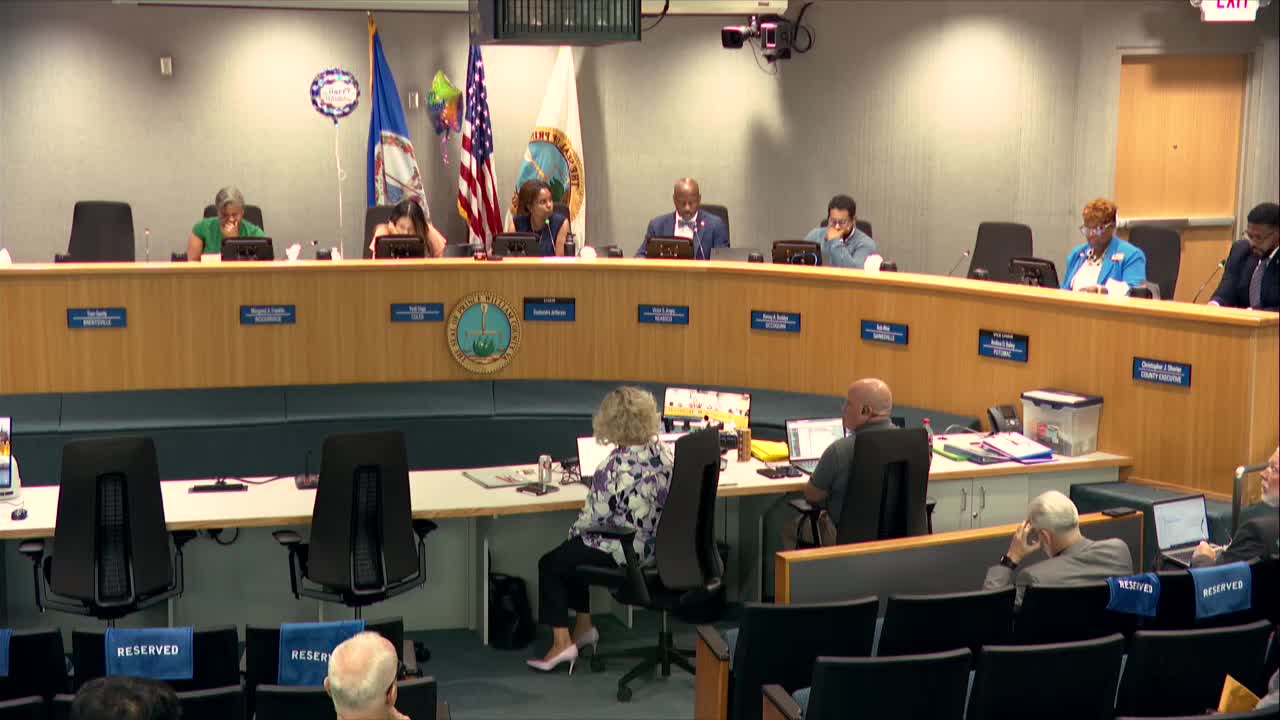
Prince William supervisors authorize public hearing on local soil management fund after tense debate
Summary
The Board of Supervisors voted 5–3 to authorize a public hearing on an ordinance to create a local foundation and soil management fund intended to help homeowners and associations pay for foundation repairs caused by problematic soils; supervisors disagreed on eligibility, funding and potential liability.
Prince William County supervisors voted 5–3 on July 8 to authorize a public hearing on an ordinance to establish a local foundation and soil management fund intended to help homeowners and condominium/HOA communities with foundation repairs linked to problem soils.
The measure, requested under new Virginia law (HB 1659), would allow the county to create a program and application process to provide grants or loans to eligible property owners for repairs related to expansive or otherwise problematic soils. The board authorized advertising the proposed ordinance and holding a public hearing at a future meeting; the authorization itself does not create the fund or commit long-term funding.
Why this matters: Supervisors and staff described repeated homeowner complaints and complex cases — notably in Potomac Club, River Oaks and Newport Estates — where latent soil-related foundation failures surfaced years after original construction. County staff and the building official said state law and standard warranties provide limited consumer protection for latent defects, and existing local processes sometimes leave homeowners without recourse when original construction records are unavailable.
County staff said they will meet individually with supervisors during July to refine details before the public hearing, and that implementation timing and long-term funding would come back to the board as part of the budget or through subsequent ordinances and administrative procedures.
Key points from the discussion
- Scope and legal basis: Staff said the ordinance is consistent with HB 1659 from the General Assembly and allows localities the discretion to create a fund; the state did not provide direct funding. (Transcript: item 10 b introduction.)
- Eligibility windows: The draft ordinance language discussed during the meeting would limit eligibility to properties where foundations are at least 10 years old but not older than 20 years; the draft also requires that the property no longer be encumbered by county bond obligations. Supervisors and staff repeatedly flagged that the 10–20 year window is a policy judgment and could exclude some homeowners. (Source: discussion citing draft ordinance language.)
- Funding and fiscal uncertainty: Staff noted an initial, one-time transfer of $200,000 from contingency had been discussed, but long-term funding was not settled. The county executive said detailed funding strategy would be developed during the budget process and that staff would return with application procedures and fiscal impacts after one-on-one meetings with supervisors.
- Consumer-protection limits: Eric Mays, the county building official, described state-required warranties (a one-year general warranty and a five-year foundation warranty under state law as explained in the meeting) and limits on the county’s ability to enforce remedies after certificates of occupancy are issued. He said many foundation problems are latent and can appear a decade or more after construction, and that determining responsibility and funding for repairs is often the most difficult part of remediation.
- Disagreement among supervisors: Several board members urged moving forward to give affected residents a forum to be heard; others warned the proposal could create costly new county liabilities and encroach into private civil matters between homeowners and developers. Supervisor Franklin moved to authorize the public hearing; the motion passed 5–3. Supervisors Gordy, Vega and Weir cast the dissenting votes.
What the authorization does and does not do
- Does: Authorize advertisement of the proposed ordinance language and schedule a public hearing so residents can testify about their experiences and the draft ordinance. - Does not: Create the fund, appropriate ongoing funding, or adopt the ordinance. Any final ordinance would require a separate vote after the advertised public hearing and might require additional advertisements if the board changes the text.
Next steps and outstanding questions
Staff said they will (1) meet individually with supervisors in July to refine language, (2) produce application procedures and implementation details, and (3) bring back fiscal estimates during the budget process. Board members asked staff to analyze the likely number of eligible properties, the risk of opening the county to large liabilities, and whether developer or other contributions could be required; staff said some of those questions require further legal and fiscal review.
Residents in affected neighborhoods told supervisors they have faced sudden, costly foundation issues and want the county to create a mechanism to help when private contractual remedies are unavailable. Board members who voted to move the public hearing said they wanted affected homeowners to be heard before the board takes final action.
Ending: The board’s authorization only begins a public process. Supervisors and staff said the ordinance could still be revised substantially before any final vote, and several members requested a possible work session to dig into technical, fiscal and legal details prior to final adoption.