Get Full Government Meeting Transcripts, Videos, & Alerts Forever!
Get email alerts on the Workforce Development topic
No spam. Unsubscribe anytime.
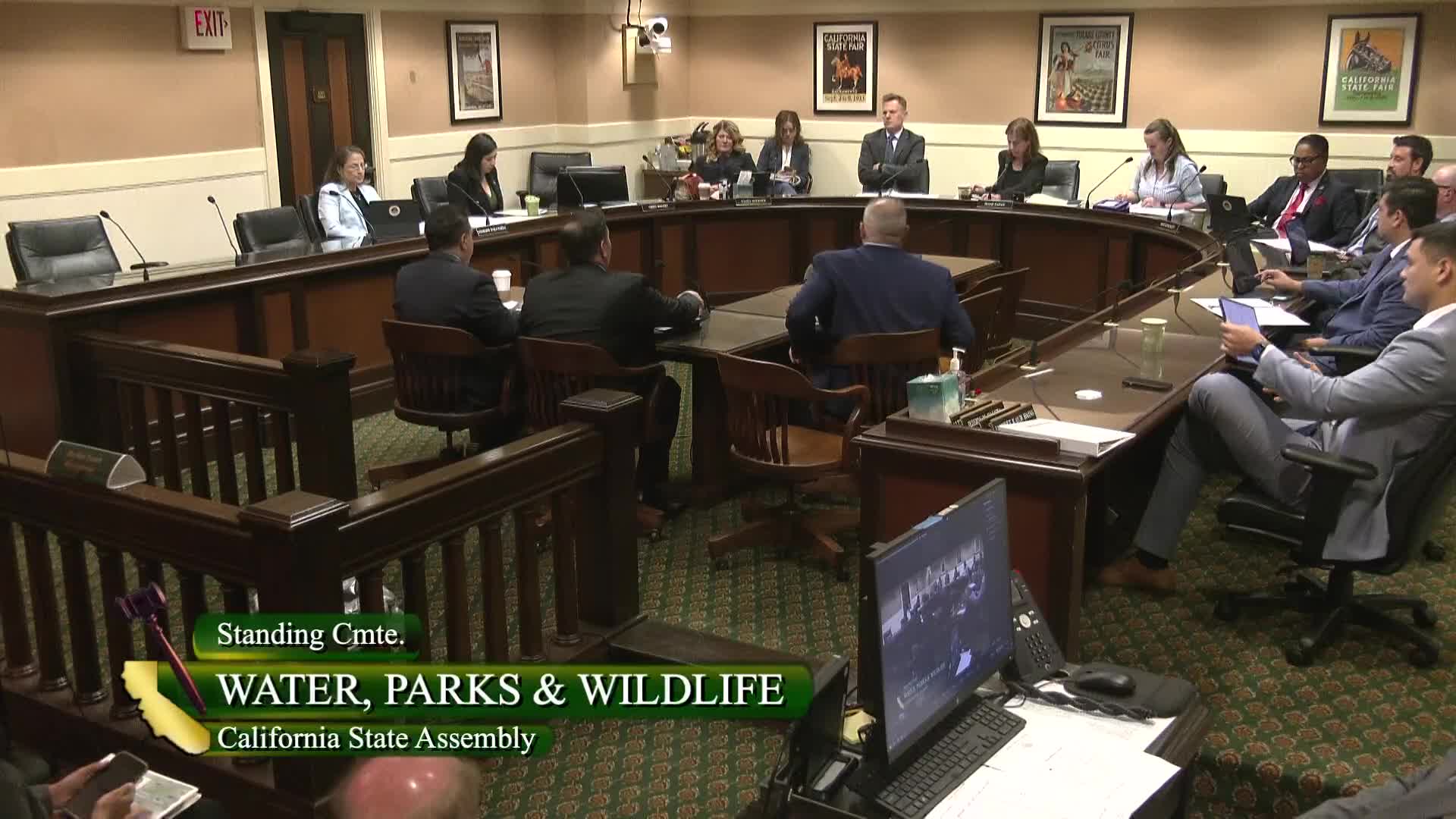
Committee sends SB 369 forward to require local skilled-and-trained workforce on Salton Sea restoration projects
Summary
SB 369 would codify skilled-and-trained workforce requirements for all Salton Sea restoration work to protect workers, expand local hiring and create apprenticeship pipelines; the committee approved the measure and referred it to the Labor and Employment Committee.
Senator Padilla presented SB 369 to the committee and asked for an aye vote. The bill would statutorily require the use of a local skilled-and-trained workforce on all Salton Sea restoration projects, ensuring a portion of workers are graduates of state-registered apprenticeship programs, receive prevailing wages and benefit packages, and create a pipeline of trained local workers for long-term restoration work.
Padilla told the committee the Salton Sea’s receding shoreline has increased salinity and exposed toxic lakebed dust, worsening regional air quality and public-health risks. “Workers performing restoration projects face exposures at high levels to toxic substances because of their proximity and their interaction with the lake bed,” she said, adding the Imperial Valley has high unemployment and that codifying workforce protections would provide stable, higher-quality jobs while protecting workers.
Union and trades representatives testified in support. Matthew Kremens of the California-Nevada Conference of Operating Engineers, a sponsor, cited the region’s 17.4% unemployment rate and described restoration projects as an opportunity to build apprenticeship pipelines and middle‑class careers. Keith Dunn of the State Building Trades said skilled-and-trained requirements ensure safety on complex, high-risk projects and provide career pathways with training, retirement and benefits.
Supporters from a range of unions, local governments and contractors also spoke in favor. The author and sponsors told the committee that state agencies currently require skilled-and-trained labor on certain design-build procurements administratively, and SB 369 would extend that protection by statute to all restoration contracts regardless of procurement method.
No witnesses registered opposition during the hearing, and committee members — including the vice chair who represents areas near the Salton Sea — praised the job and public-health rationale and emphasized the need for generational jobs in the region.
A motion carried to refer SB 369 to the Assembly Labor and Employment Committee. The clerk announced the motion as “due passed to Labor and Employment.” The roll-call recorded ayes from Pappen; Jeff Gonzales; Alvarez; Avila Farias; Banes; Bennett; Berner; Colosa; Hart; Macedo; Celeste Rodriguez; Rogers; Tongipa. SB 369 will next be considered by Labor and Employment, where implementation details and fiscal effects will be reviewed.
If enacted, the bill would codify protections supporters say are already applied administratively to design-build projects, extend them to all project procurement methods and aim to ensure local hiring, training and workplace safety for Salton Sea restoration work.