Get Full Government Meeting Transcripts, Videos, & Alerts Forever!
Appropriations committee reviews wildfire funding, staffing after historic 2024 season
Summary
State foresters and county fire chiefs told the Joint Appropriations Committee that Wyoming's decentralized wildfire model strained resources in the record 2024 season and urged rule changes, staffing increases and targeted funding to improve preparedness and initial attack capacity.
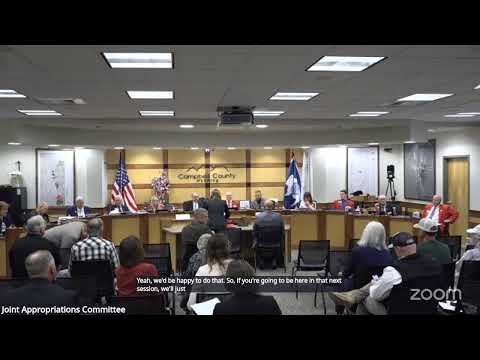
At a June meeting of the Wyoming Legislature's Joint Appropriations Committee in Gillette, state forestry officials and county fire wardens reviewed the state's response to the record 2024 wildfire season and outlined near-term changes and resource gaps they say are needed to speed initial attack and limit the expense of large, multi-jurisdictional fires.
The discussion centered on three tasks identified by presenters: improving capacity for initial attack and sustained response, expanding fuels mitigation, and clarifying funding mechanisms so local fire districts do not hesitate to act. "Wildfires in Wyoming is largely a decentralized operation," said Elizabeth Martineau, senior fiscal analyst with the Legislative Service Office, summarizing her white paper for the committee. She told the panel that the state provided a mix of appropriations, contingency funds, borrowing and other mechanisms that together totaled $176.9 million for wildfire suppression, mitigation and recovery in the 2025-26 biennium.
Why it matters: Presenters said most Wyoming wildfires remain small and are handled locally, but the relatively few very large incidents last year drove most suppression costs and exposed gaps in staffing, aviation and hand-crew availability. Committee members were told those gaps raise the risk that future large fires will again outpace local capacity and produce heavier costs and longer recovery periods.
State and county officials described last year as unusually severe: Kelly Norris, Wyoming state forester, said the state recorded more than 2,000 fires that burned more than 850,000 acres in 2024, and the current suppression cost estimate remains about $55 million. She and county fire wardens said most fires were handled by local mutual aid and that 98% of the incidents were lower-complexity (Type 3'5) responses; a small number of complex fires generated the bulk of costs and work.
"Not a singl…
Already have an account? Log in
Subscribe to keep reading
Unlock the rest of this article — and every article on Citizen Portal.
- Unlimited articles
- AI-powered breakdowns of topics, speakers, decisions, and budgets
- Instant alerts when your location has a new meeting
- Follow topics and more locations
- 1,000 AI Insights / month, plus AI Chat