Get Full Government Meeting Transcripts, Videos, & Alerts Forever!
Get email alerts on the Water Supply topic
No spam. Unsubscribe anytime.
Assembly committee advances SB 72, setting 9 million-acre-foot water supply target to plan for climate impacts
Summary
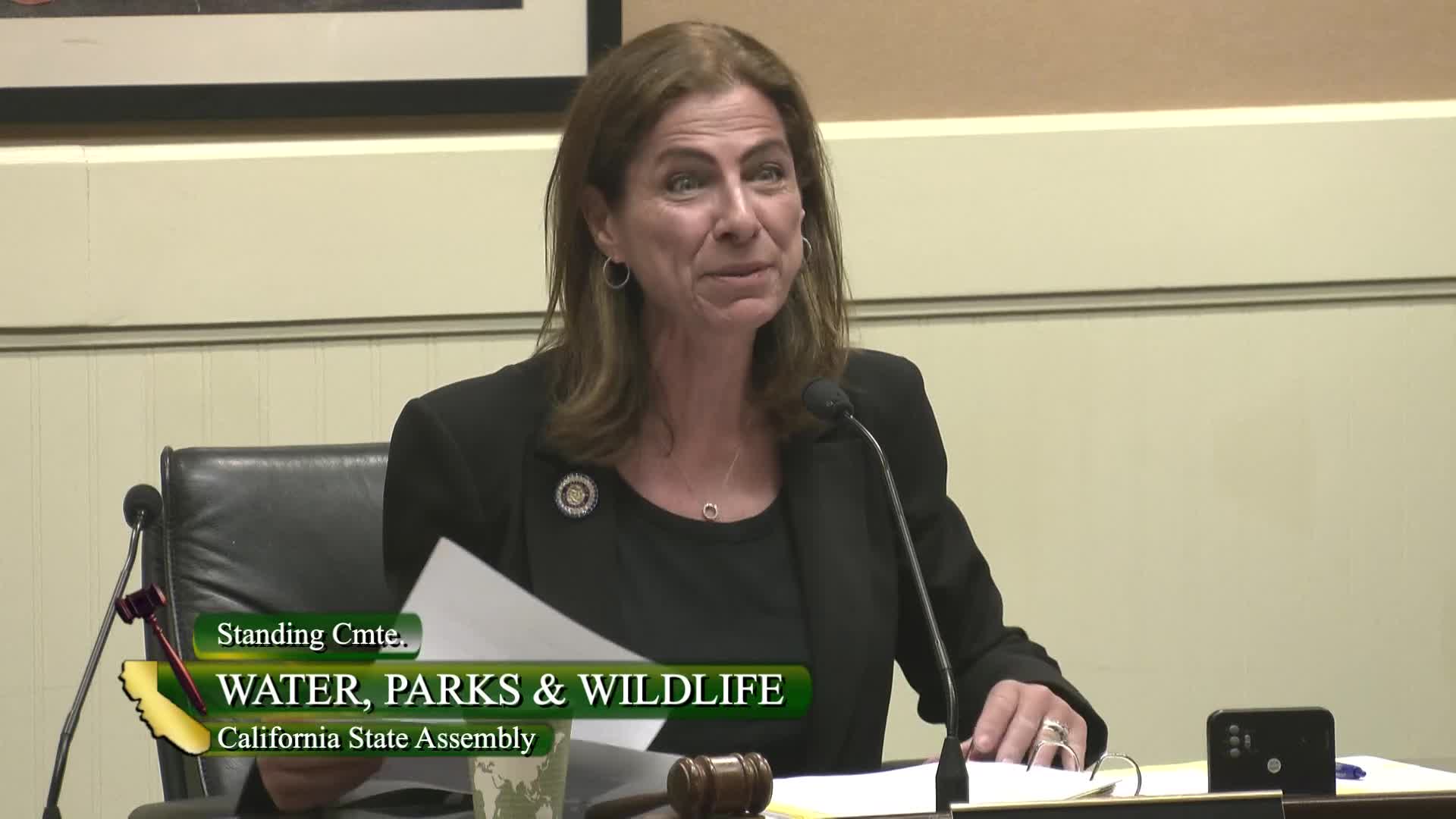
SB 72, introduced by Senator Caballero, won committee approval and was sent to the Assembly Appropriations Committee after testimony from water managers, environmental groups and others; the bill would set an interim target of 9,000,000 acre-feet of additional water supply by 2040 and require updated statewide planning.
SB 72, introduced in committee by Senator Caballero, won committee approval and was sent to the Assembly Appropriations Committee after nearly two hours of testimony and questions. The bill would modernize the California Water Plan, set an interim statewide target of 9,000,000 acre-feet of additional water supply by 2040, and require the Department of Water Resources to develop further long-term targets and planning steps to address climate-driven variability.
The legislation’s author told the committee the goal is to “drought proof” the state. “That’s the key to this water plan — a drought proof future,” Senator Caballero said, describing the California Water Plan as the state’s strategic document for managing water and saying meaningful revisions have not been made in two decades. The bill, she said, reflects research and aims to employ “all of the tools in the toolbox” including desalination, recycling and reuse, groundwater recharge and demand management.
Supporters included water utility managers and regional water agencies who told the committee they face rapidly changing supply conditions. Craig Miller, general manager of Western Municipal Water District and then-president of the California Municipal Utilities Association, described recent swings in state allocations and the risk that insufficient planning would force cutbacks to major employers in his service area. “That’s not resilience. That’s taking on a huge risk if we don’t move forward,” Miller said, adding the bill sets “real world goals and planning requirements to ensure reliability.” Paul Helliker, general manager of San Juan Water District, described “weather whiplash” in recent years and said SB 72 would both set a target and create a strategic plan to meet it.
Opponents and some environmental groups cautioned the committee about potential harms from overestimating future supply. Dennis O’Connor of the Mono Lake Committee said the bill “is actually going backwards,” arguing that earlier water‑plan processes focused on matching forecasted demand with available supply and that an oversized target risks overbuilding infrastructure and raising costs. The Planning and Conservation League’s Natalie Brown and representatives of Defenders of Wildlife and the Golden Gate Salmon Association registered opposition as well, warning about stresses on instream flows and ecosystems.
Committee members pressed the author on the source of the 9,000,000-acre-foot figure and on ecological protections. Senator Caballero said a legislatively commissioned review of existing studies landed on the 9 million figure after peer review of the literature; she also emphasized the bill does not prescribe where additional water would come from and “doesn’t pick winners or losers.” Assemblymember Rogers asked how the bill would account for local ecology and minimum flows; Caballero replied the statute would set targets and planning requirements but would not specify allocation decisions in statute.
The committee record included several quantitative estimates cited in testimony: a University of California literature review cited during the hearing estimated an annual future supply shortfall of roughly 4,690,000 acre-feet and economic risks from inaction up to about $14.5 billion per year and the potential loss of about 67,000 jobs. Testimony also cited projections that Central Valley agricultural acreage at risk could range from about 1,000,000 to 3,000,000 acres without additional water planning and infrastructure. Those figures were presented to illustrate the bill’s policy rationale.
After discussion, committee members moved and seconded the measure. The committee clerk announced the motion as “due passed to Appropriations” with no committee amendments; the roll call registered the following members voting aye: Pappen; Jeff Gonzales; Alvarez; Avila Farias; Banes; Bennett; Berner; Colosa; Hart; Macedo; Celeste Rodriguez; Rogers; Tongipa. The committee noted there would be further opportunities for stakeholder input as planning and targets are developed.
SB 72 advances the Legislature’s ongoing debate over how to balance infrastructure investment, environmental protections and cost. The bill now proceeds to the Appropriations Committee, where its fiscal details and potential funding mechanisms would be reviewed.