Get Full Government Meeting Transcripts, Videos, & Alerts Forever!
Get email alerts on the Municipal Budget topic
No spam. Unsubscribe anytime.
Lewiston officials outline preliminary FY26 budget, propose $413,000 in new property-tax revenue
Summary
City finance staff presented a preliminary FY26 budget that would add $413,000 to the property-tax base to balance non-general funds, while reallocating existing capital taxes and using reserves and grants for transportation, parks, cemetery and library projects.
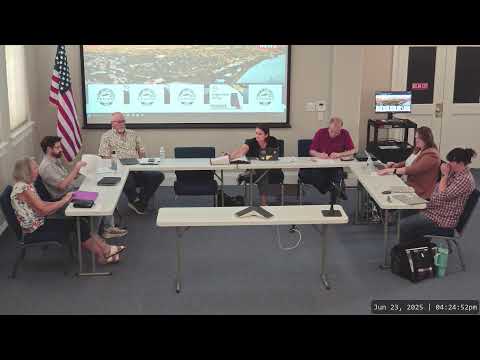
Lewiston City finance officials presented a preliminary fiscal year 2026 budget at a special City Council meeting that would add $413,000 to the property-tax base to balance multiple funds, while relying on a mix of reserves and grant dollars for capital projects.
The presentation by Amy Gordon, city treasurer and finance director, laid out spending plans for internal service funds, capital projects and four non‑general governmental funds. "The amount that would need to go into the property tax base, in addition to the new construction and annexation dollars, is $413,000," Gordon said.
Gordon told council members the capital transportation program would continue to receive $2.7 million in property-tax support in the preliminary plan. Of that amount, $231,000 is earmarked for street preservation, $50,000 for sidewalks and ADA improvements and roughly $2.2 million for reconstruction projects. Gordon said the $2.2 million is intended to be combined with about $3.1 million in fund reserves and approximately $3.9 million in grant funding to complete an estimated $9.2 million in projects.
Gordon described the parks capital program as receiving $100,000 annually in property taxes. She said one ready-to-build parks item is a Pioneer Park shelter, and council appropriated $20,000 from park reservation fees and $70,000 from reserves to fund construction in FY26; Gordon said the park reservation account holds roughly $280,000 in reserves.
On cemetery finances, Gordon explained the perpetual-care structure and a capital request: "Perpetual Cares... it's called the Perpetual Care Cemetery Fund. So every time we sell a piece of inventory... there is a portion of that fee... it's 10%." She said the city programs a $50,000 annual transfer of earnings from the perpetual-care fund into the cemetery operating fund. The FY26 budget shows a planned draw of about $277,000 from cemetery reserves to cash‑fund a $230,000 columbarium project; Gordon said the use of reserves is intended and that the fund will retain a meaningful balance after the work.
Gordon told the council the library has drawn on reserves for several years and the FY26 plan adds $60,000 in property-tax support to reduce reliance on reserve balances; she warned library reserves may still fall below 20 percent and could require additional support next year.
Transportation and transit were a focus. Gordon said the transportation fund would face a $334,000 reserve draw if no additional property-tax support were added; the proposed budget includes a $150,000 property‑tax increase to partly replenish that shortfall. She and other speakers warned the city lost roughly $330,000 a year when the county chose not to levy a road-and-bridge property tax in recent years, and that loss has tightened the city’s options.
Shannon Grove, community development director, and Dustin Johnson, public works director, described how federal grants and regional allocations affect transit and capital projects. Johnson said of the Main Street design work under discussion, "Main Street, that's the full design, and I don't think we wanna do a full design without actually having funding on that project either." Council members discussed whether to fund design work now or hold funds in a reserve until projects and funding partners are clearer.
On revenues and reserves, Gordon reported the city finished FY24 with $10.3 million in unassigned general-fund reserves, equal to about 116 days cash on hand. The preliminary FY26 plan would use about $967,000 of those reserves; council was told the city used $1.3 million of reserves in the FY25 budget. Gordon also noted that interest income helped offset state shared-revenue volatility in recent years but projected lower investment returns than FY24 actuals.
Gordon described a recurring item labeled a "utility judgment" linked to state revaluations of centrally assessed utility property. She said the FY26 projection includes an $112,000 levy related to Avista after a successful challenge to the state's prior assessments; last year the city levied $67,000 related to Lumen and Avista.
Councilors and the mayor discussed alternatives for revenue, including franchise fees and local-option taxes. The mayor said he would not support lowering a current franchise fee if asked by a large utility or network provider: "If I have to vote, the answer is no because it's an important source of revenue for us," he said, adding that franchise fees help pay for right‑of‑way impacts and street upkeep.
Gordon outlined the schedule for the budget-adoption process: the city will publish public‑hearing notices the week of Aug. 3 and again on Aug. 10, hold the public hearing and first reading on Aug. 11, the second reading on Aug. 18 and the third reading and adoption on Aug. 25. She reminded council that after the hearing council can reduce the proposed budget but cannot increase it above the published amount.
The meeting included a brief public-introduction of Justin Glynn, the city’s new parks and recreation director. Glynn said, "Hi. My name is Justin Glynn, new citizen to the area. I'm the new parks and recreation director, coming from Fort Bragg, North Carolina." Gordon noted Glynn will return for the regular council meeting later that evening.
No ordinance or tax increase was adopted at the special meeting. The council adjourned by motion from Councilor Forsman, seconded by Councilor Schroeder; the motion carried after an aye vote.
Going forward, council members asked staff for clearer project-level breakouts showing how property-tax dollars versus reserves and grants would be applied to specific reconstruction and design projects, especially for the Main Street corridor and other transportation priorities.