Get Full Government Meeting Transcripts, Videos, & Alerts Forever!
Get email alerts on the Gaza Humanitarian Crisis topic
No spam. Unsubscribe anytime.
UN warns Gaza lifelines at risk as fuel blockade, displacement orders and denied convoys reduce aid
Summary
United Nations briefers said fuel deliveries and shelter supplies remain blocked into Gaza, putting water, health services and humanitarian operations at immediate risk and prompting warnings from UNICEF and WHO about child deaths and mental health emergencies.
A United Nations spokesperson warned on Monday that life-saving services in the Gaza Strip are at risk as fuel and shelter supplies remain largely blocked, humanitarian movements are being denied and new displacement orders affect tens of thousands of people.
The spokesperson said that fuel stored in Rafah was accessed and allocated to run critical services in the south, “thereby buying us some more time,” but stressed that unless fuel is delivered inside Gaza, “these lifelines were very quickly shut down.” The statement noted that fuel is essential “to produce and to treat and to distribute water to more than 2,000,000 people living inside Gaza.”
The briefing relayed warnings from UNICEF that if the more-than-100-day blockade on fuel does not end, “children may begin to die of thirst.” The World Health Organization (WHO) also described a mounting mental-health emergency and said it has trained hundreds of frontline workers in psychological first aid.
The spokesperson said there are reports of people coming under fire near non-U.N. militarized distribution sites or on routes designated by Israeli authorities for U.N. trucks carrying aid. The mission reported that an attempt to coordinate 14 humanitarian movements was made; six were denied, including convoys carrying fuel, water and efforts to retrieve bodies and damaged trucks.
The briefing also said the Israeli army issued a displacement order affecting three neighborhoods in the north, and that at least 30,000 people were assessed to be in those areas. Humanitarian partners noted most of Gaza remains subject to displacement orders while shelter materials have been banned for more than 16 weeks, at the same time hundreds of thousands of people have been newly displaced.
The U.N. spokesperson added that partners in Khan Younis are recycling wooden pallets from food shipments to rehabilitate temporary sites and reminded participants that if fuel and shelter supplies are not allowed into Gaza, “our life-saving operations shut down, people will not be able to survive.”
The briefing combined operational updates, appeals for safe passage and requests for immediate access and permissions from the relevant authorities to deliver fuel, water and shelter materials across the strip.
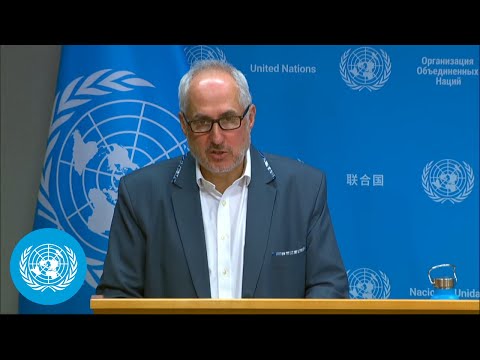
The spokesperson’s remarks occurred during a regular U.N. press briefing at U.N. Headquarters and were followed by questions from journalists about the ceasefire developments between Israel and Iran and related diplomatic prospects.