Get Full Government Meeting Transcripts, Videos, & Alerts Forever!
Get email alerts on the Hazard Mitigation Buyout topic
No spam. Unsubscribe anytime.
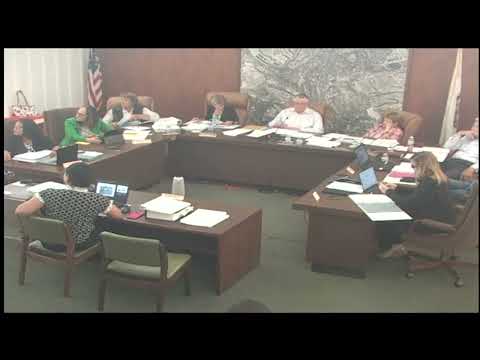
City Council weighs voluntary FEMA buyout program, directs staff to collect homeowner data
Summary
Council heard a detailed presentation from state hazard mitigation staff about voluntary buyouts tied to FEMA and Cal OES funding, discussed changing federal discount-rate rules and local feasibility, and directed staff to gather targeted homeowner data for a preliminary cost–benefit analysis.
The Rolling Hills Estates City Council on Tuesday received a presentation on voluntary property buyouts administered by the California Governor’s Office of Emergency Services (Cal OES) and funded in part through FEMA’s Hazard Mitigation Grant Program, and directed staff to work with Cal OES to collect homeowner data and run preliminary cost–benefit checks.
The discussion followed a presentation by Samantha Crew, the city’s management analyst, and Robin Fenig, assistant director for hazard mitigation at Cal OES. Fenig laid out how reimbursement normally works under HMGP, including FEMA’s 75% federal share of appraised home value and eligible expenses, and noted a recent return to a higher federal discount rate that reduces the present value of long-term benefits used in FEMA’s benefit–cost analysis.
“This change effectively reduces the calculated value of future benefit in the benefit cost analysis,” Fenig said, describing how the Office of Management and Budget’s discount‑rate change from about 3.1% back to 7% makes many buyout projects harder to meet FEMA’s cost‑effectiveness threshold. She added that the state and federal hazard‑mitigation landscape has been shifting rapidly and that some grant programs have been scaled back or reallocated nationally.
Why it matters: buyouts permanently remove structures at risk from future hazards (flooding, landslide/land movement) and place deed restrictions on the property for open‑space use, but they can require up‑front local administration costs and supporting geological and appraisal work. Crew said Rancho Palos Verdes (RPV) had moved quickly on a similar program and provided local lessons: the RPV program received roughly $42 million in state funding for its effort, drew 85 notices of interest and awarded 23 buyouts, and set aside $10 million in local funds to front several properties while seeking FEMA reimbursement.
Council members and residents probed details including who bears upfront costs, what constitutes eligibility, and whether properties must already be red‑tagged to qualify. “A lot of the crucial piece of information that RPV has is what imminent risk looks like,” Fenig said, noting that benefit–cost analyses are sensitive to both the discount rate and to the probability that a structure will experience a catastrophic failure during the analysis period.
Residents from Centring and Quail Ridge described recent pipe breaks, hillside movement and flooding at properties on Century and Quail Ridge roads and asked the council to pursue buyouts. Resident Matthew Fournier said multiple pipe failures dumped tens of thousands of gallons under his property and that his family relocated after damage and safety concerns.
Council direction and next steps: without making any commitment to a full program, the council voted to receive and file the presentation and instructed staff to work with Cal OES to identify the narrowest set of homeowner data needed to run preliminary “back‑of‑the‑envelope” benefit–cost calculations. Staff said Cal OES can run straw analyses if homeowners provide necessary appraisal, damage and geologic information; council members asked staff to limit initial outreach to a small set of properties to avoid unnecessary expense.
Formal action: A motion to receive and file the state presentation passed (motion seconded; vote recorded as unanimous on the record). The council did not approve any program funding, and staff said any further steps—fronting consultant or demolition costs—would require separate council action and clear agreements about reimbursement risk.
Context and constraints: Fenig cautioned that FEMA requirements vary by hazard type and by property: HMGP typically reimburses 75% of appraised pre‑event fair market value and 75% of eligible transaction and demolition costs, while the applicant (city or subapplicant) must provide the 25% nonfederal cost share (cash or allowable in‑kind contributions). She also advised that projects involving preexisting, mapped landslide footprints are more complicated to document and that precise appraisal dates and geological evidence matter to FEMA’s reviewers.
What the council asked staff to collect (examples): current appraisals or assessor values; any geology or slope‑stability reports homeowners have; whether a structure has been red‑ or yellow‑tagged; approximate dates of observed damage; and owner willingness to share documents with Cal OES for screening. Councilmembers emphasized starting small — one to a few properties — to see whether any plausible path to funding exists before committing significant local resources.