Get Full Government Meeting Transcripts, Videos, & Alerts Forever!
Get email alerts on the Education Staffing Nepotism topic
No spam. Unsubscribe anytime.
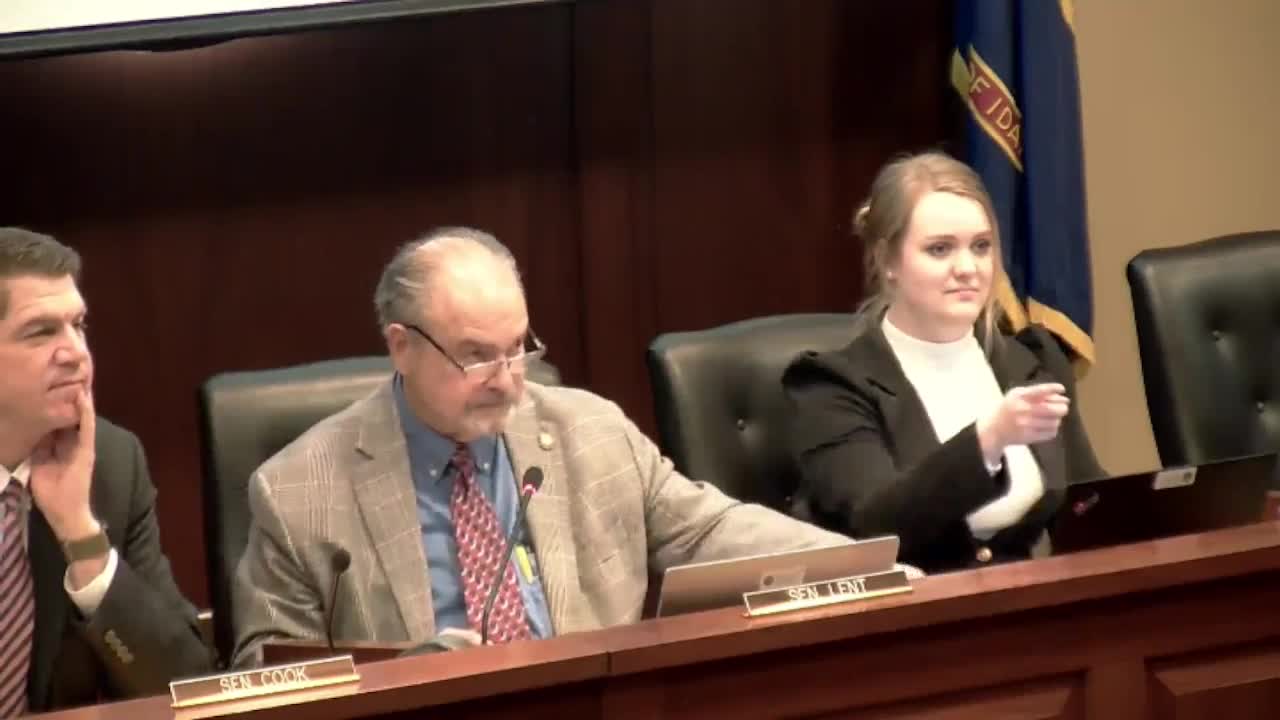
Senate panel advances bill easing restrictions on trustee spouses in very small school districts
Summary
The Senate Education Committee voted to send Senate Bill 10-45 to the floor with a due-pass recommendation. The bill would relax Idaho Code 33-507 for school districts with 400 or fewer students, allowing trustee spouses who are certificated staff to receive multi‑year contracts under specified safeguards and a five‑year sunset.
The Idaho Senate Education Committee voted to send Senate Bill 10-45 to the full Senate with a due-pass recommendation after testimony that small rural districts struggle to recruit and retain staff.
Quinn Perry, deputy director of the Idaho School Boards Association, told the committee the bill would carve out a narrow exception to Idaho Code section 33-507 for districts with a fall enrollment of 400 students or less. "My name is Quinn Perry, and I'm the deputy director for the Idaho School Boards Association," Perry said. She said the measure would allow a trustee's spouse who is a teacher or pupil‑service staff member to be employed under a category 2 contract in those very small districts while preserving limits on trustee involvement.
The bill's supporters said the current statute requires trustees whose spouses work for the district to abstain from any conversation or decision related to that spouse's employment. Under current practice, Perry said, small districts often give the spouse a category 1 contract — a one‑year contract that carries no due‑process protections — and are then required by statute to post the position for 60 days each year. "These communities ... are extremely small," Perry said. "When they go to post that position every year, they're getting zero applicants, which essentially means that that limitation is moot." She said the change is intended for a limited set of districts and would not apply to administrators or charter schools; it would include a sunset date of June 30, 2030.
Jake Michie, a school board trustee from the Moonville School District, testified in support of the bill. He said long‑serving board members seeking to step down had sometimes been blocked because a prospective replacement became ineligible after the prospective replacement's spouse was hired by the district. "For small school districts like mine, this bill is particularly beneficial," Michie said, describing difficulty filling both board seats and staff positions.
Committee members asked about specifics of the statute and safeguards. Senator Cook asked where the sunset appears; Perry pointed to the bill language showing the provision would expire on June 30, 2030. She also explained the difference between category 1 and category 2 contracts, saying category 1 contracts expire at the end of the school year and give no due‑process protections, while category 2 contracts provide the due process typical for certificated staff. Perry said trustees must abstain from payroll votes, contract negotiations, promotion or discipline discussions, trip approvals and any other employment matters involving the spouse.
Perry said the change would roughly affect about 40 Idaho school districts that have fall enrollments of 400 students or fewer, though not all of those districts currently employ a trustee's spouse.
Senator Nichols moved that the committee send Senate Bill 10-45 to the floor with a due-pass recommendation. The motion carried on a voice vote; committee minutes record an affirmative "aye" and no recorded opposition.
The bill sponsor and supporters emphasized the change is limited, temporary and accompanied by abstention requirements. Opponents did not mount a formal opposition during the committee vote; several senators expressed cautious support while noting concerns about potential local nepotism and the need for the sunset to allow evaluation.
What happens next: The bill will go to the Senate floor for further consideration and possible amendment.