Get Full Government Meeting Transcripts, Videos, & Alerts Forever!
Get email alerts on the School Safety topic
No spam. Unsubscribe anytime.
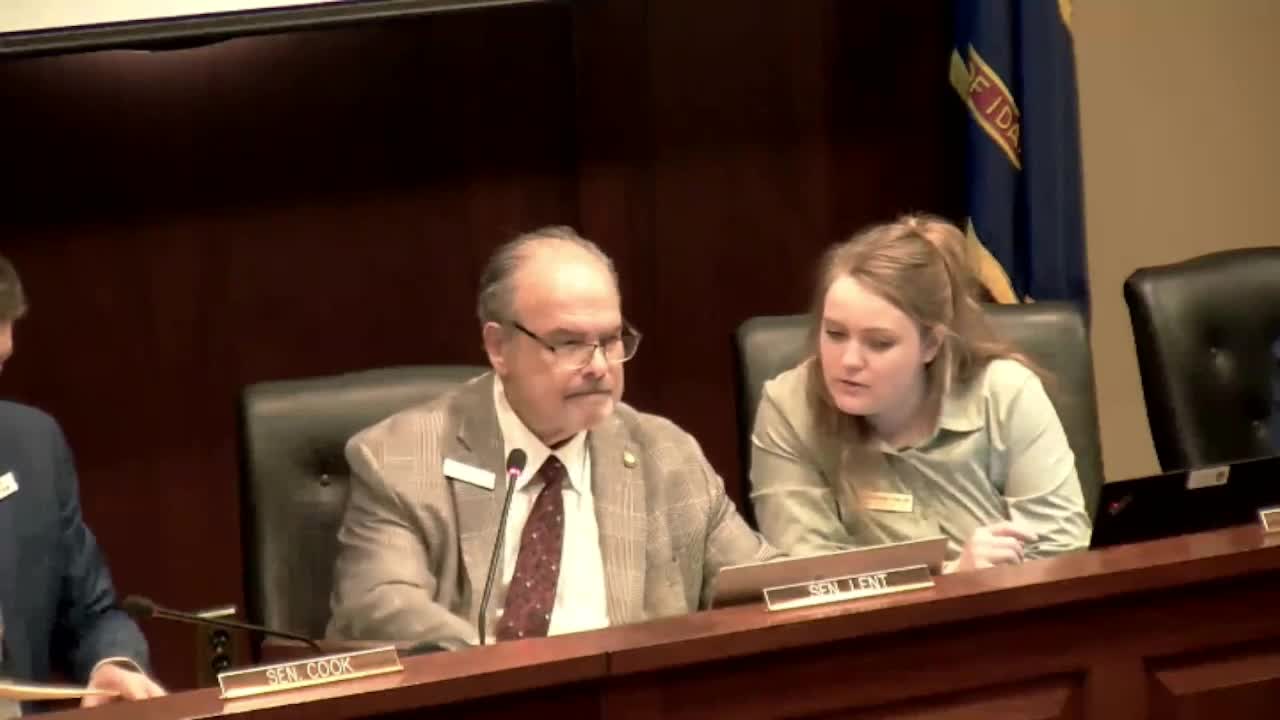
Senate committee recommends House Bill 44 to floor; bill would require parent notice for serious bullying suspensions
Summary
House Bill 44 would require schools to notify parents of both the accused bully and the victim when a bullying incident results in student suspension, Representative Chris Mathias told the Senate Education Committee.
House Bill 44 would require school districts to notify parents when a bullying incident rises to a level that results in student suspension, Representative Chris Mathias told the Senate Education Committee on Feb. 11.
The bill’s goal, Mathias said, is to give parents “time‑sensitive” information so they can help children at moments of acute risk. “When serious incidents of bullying occur, we are acknowledging that’s when kids are most vulnerable in many instances to suicide,” Mathias said.
Mathias said the bill narrows language from a prior proposal (House Bill 539) that had required notification for all bullying incidents. Under HB 44, only incidents resulting in suspension would automatically trigger notification to the families of both the alleged bully and the alleged victim. The bill does not prescribe the specific contents of the notice, Mathias said: it requires only that the incident be reported to families.
The bill also states that if an alleged incident may violate criminal law, school staff may notify law enforcement. Mathias explained that the language uses “may” so building administrators are not forced to make criminal‑law determinations: “We want them to call the professionals,” he said. Committee members asked whether the provision conflicts with practices of boards handling student matters in executive session. Mathias said he could not speak for how local school boards conduct executive sessions, and noted that mandatory‑reporter duties and existing law about parental rights constrain how and when administrators can share student information.
Senators raised questions about whether most districts already notify parents in serious cases, what the bill adds beyond local practice, and how schools should protect student privacy during investigations. Senator Ward Engelking, a former educator, said notification is not always reliable in practice and that codifying a baseline may help: “There are instances where schools do not notify parents — it’s not always done,” he said. Senator Nichols asked why the bill uses “shall” for required reporting to families but “may” for notifying law enforcement; Mathias reiterated that “may” preserves professional judgment for administrators.
After discussion and without public comment, a committee member moved to send HB 44 to the Senate floor with a due‑pass recommendation; the motion was seconded and carried by voice vote.
Votes and next steps
The committee approved sending House Bill 44 to the Senate floor with a due‑pass recommendation by voice vote; the record does not show a roll‑call tally. The committee did not adopt amendments during the hearing.
Why it matters
Supporters say timely parent notification helps families intervene in moments when students are at heightened risk of self‑harm. Opponents in earlier debates had objected to broader notification requirements; HB 44 narrows that scope to incidents resulting in suspension.
Speakers
Representative Chris Mathias, sponsor and presenter; Senator Ward Engelking; Senator Burton Shaw; Senator Zito; Senator Carlson; Senator Tammy Nichols; Chairman Lehi.
Authorities cited
Idaho Code (statutory provisions on parental rights and school reporting) — referenced during discussion; House Bill 539 (prior year bill referenced as predecessor).