Get Full Government Meeting Transcripts, Videos, & Alerts Forever!
Get email alerts on the Gaza Humanitarian topic
No spam. Unsubscribe anytime.
UN warns Gaza aid constrained by access, fuel and security despite limited deliveries
Summary
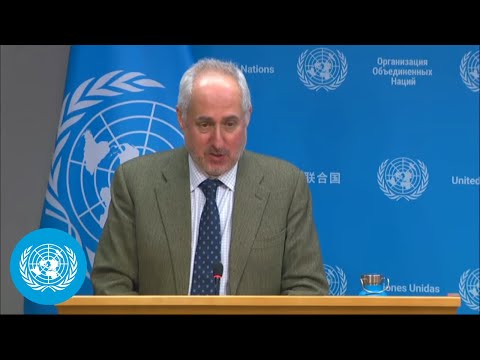
At a UN press briefing, the spokesperson said recent UN and partner deliveries reached some Gaza hospitals and bakeries but ongoing denials of access, fuel shortages, unexploded ordnance and violent looting are severely constraining relief operations.
The United Nations warned on Tuesday that humanitarian operations in Gaza remain severely constrained by denials of access, rising fuel costs and security threats even as some limited deliveries reached hospitals and bakeries.
Stéphane Dujarric, Spokesperson for the Secretary-General, said teams from UN agencies and partners were able this week to deliver fuel and medical supplies to Al Shifa Hospital and to transfer three patients and eight companions for onward medical evacuation. He also said World Food Programme–supported bakeries in Gaza were operating but “at half capacity due to lack of fuel.”
“It is imperative that vital aid and commercial goods can enter Gaza through all available border crossings without delay at a scale needed,” Dujarric said, summarizing the Office for the Coordination of Humanitarian Affairs’ (OCHA) concerns about blocked or denied UN-led missions.
Dujarric told reporters that OCHA reported two recent attempts to reach hospitals in North Gaza were denied by Israeli authorities. He said Al Aouda hospital in Jabaliya remained “extremely limited” in access and was experiencing critical shortages of fuel and medical supplies; an Indonesian hospital was described as out of service with destroyed central equipment and no reliable electricity or water.
UN and partner deliveries this week included a WHO fuel delivery to Al Shifa of 9,700 liters plus blood and plasma units, and transfers of several patients for evacuation, Dujarric said. UNICEF and the Palestinian Water Authority distributed hygiene kits to displaced people in shelters, the spokesperson added.
Dujarric and other UN staff flagged several constraints to scaling up aid after any ceasefire: uncertainty about which border crossings would be opened and when, the persistence of armed groups and criminal actors, risks to humanitarian staff, damage to roads and communications, and widespread unexploded ordnance. He said planning was underway “with our eyes wide open” but that those logistical and security factors could limit the speed and scale of an aid surge.
The briefing also said UN senior humanitarian coordinator Sigrid Kaag had held meetings in Jerusalem, Tel Aviv and Ramallah with Israeli and Palestinian officials and with partners to discuss potential UN engagement related to a ceasefire and humanitarian arrangements.
The UN statement repeated OCHA’s appeal that humanitarian and commercial consignments be allowed into Gaza “without delay at a scale needed,” and warned that the combination of access restrictions, fuel shortages and security threats put both lives and the ability to run hospitals and bakeries at risk.
Less critically, Dujarric noted that five bakeries supported by WFP are operational but at reduced capacity and that partners continue to distribute flour to households where access allows. The UN said ongoing hostilities, violent armed looting, road damage and unexploded ordnance are continuing barriers to assistance.