Get Full Government Meeting Transcripts, Videos, & Alerts Forever!
Get email alerts on the Monetary Policy topic
No spam. Unsubscribe anytime.
Fed Chair Powell: Economy "strong overall," Fed not in a hurry to ease further as inflation nears target
Summary
Federal Reserve Chair Jerome H. Powell told the Senate Banking Committee the economy is "strong overall," inflation has moved closer to the Fed's 2% goal, and the FOMC will balance risks when assessing future rate adjustments; he reiterated the Fed's commitment to its dual mandate.
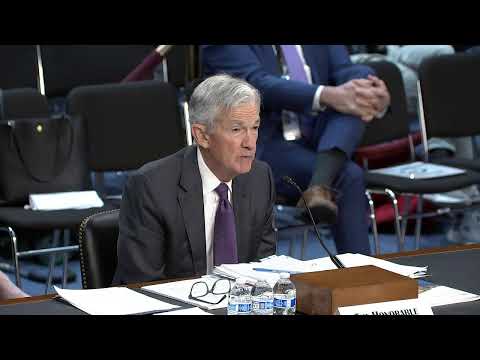
Federal Reserve Chair Jerome H. Powell told the Senate Banking Committee that the U.S. economy remained "strong overall" and that the Federal Open Market Committee would weigh incoming data, evolving outlooks and risks before altering its policy stance.
"Labor market conditions have cooled from their formerly overheated state and remain solid," Powell said in opening remarks. He reported payroll gains averaging 189,000 per month over the past four months and an unemployment rate that had stabilized near 4 percent.
Powell said headline PCE inflation rose 2.6 percent over the 12 months ending in December and core PCE was 2.8 percent, both nearer to the Fed’s 2 percent longer-run goal. He described the FOMC’s September-to-January recalibration — a one percentage-point reduction in the policy rate from its peak — as appropriate given progress on inflation and cooling labor-market conditions.
On future policy, Powell warned against moving too quickly to reduce policy restraint. "If the economy remains strong and inflation does not continue to move sustainably toward 2%, we can maintain policy restraint for longer," he said. Conversely, if labor-market weakening or faster-than-expected disinflation occurred, the Fed could ease policy.
The chair described an ongoing second periodic review of the Fed’s monetary policy framework and communications tools. He said the committee will retain the 2 percent longer-run inflation goal and expects to complete the review by late summer.
Senators raised related topics. Several members asked for faster rate cuts to ease mortgage costs; Powell replied that long-term mortgage rates are influenced more by longer-term Treasury yields than by the Fed’s short-term policy rate. He also repeated that the Fed does not control longer-term rates directly and that mortgage rates may remain high even after policy normalization because of supply-and-demand factors in the Treasury market and term premium.
Powell reiterated the Fed's intention to continue the gradual reduction of its balance sheet until reserve conditions are somewhat above those judged consistent with "ample reserves." On quantitative easing, he said the Fed would use that tool only if policy rates reached the effective lower bound.
Why it matters: Powell’s testimony provides the Fed’s current assessment of inflation and employment and signals the committee’s cautious approach toward reducing policy restraint. Markets and households watch the Fed’s guidance for signals on mortgage rates, lending conditions and broader economic activity.
What was decided: The FOMC’s stance remains data dependent. Powell stated the Fed will proceed cautiously in adjusting the policy rate and will finish a periodic review of strategy and communications by late summer. No formal policy changes were announced at the hearing.
Ending note: Powell emphasized that the Fed’s work serves the public mission of promoting maximum employment and stable prices and that the committee will continue to adapt its approach where appropriate.