Get Full Government Meeting Transcripts, Videos, & Alerts Forever!
Get email alerts on the Yemen Humanitarian Crisis topic
No spam. Unsubscribe anytime.
UN representative says Yemen crisis ‘getting worse’ after strikes on ports, Sana'a airport
Summary
Speaking to the Security Council, Madam Suya warned that recent strikes on Red Sea ports and Sana'a International Airport have sharply reduced humanitarian access and urged respect for international humanitarian law, full humanitarian funding and support for envoy Hans Grundberg’s political efforts.
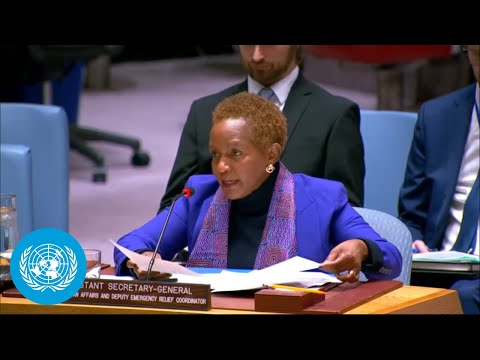
Madam Suya, a representative to the United Nations Security Council, told the council that recent attacks on Yemen’s ports and on Sana'a International Airport have severely reduced humanitarian access and left “the crisis is getting worse.”
She told members that Houthi attacks on Israel and Israeli airstrikes in and around Hodeidah and Sana'a have killed and injured civilians and damaged essential infrastructure, and that damage to Red Sea ports — especially Al Hudaydah — has reduced their operating capacity and hampered deliveries of food, fuel and medical supplies.
“The airport sustained substantial damage, notably the destruction of the air traffic control tower,” she said, citing the Israeli attack on Sana'a International Airport on Dec. 26, which she said killed at least three civilians and wounded 30 more including a crew member of the United Nations Humanitarian Air Service. She said World Health Organization Director-General Dr. Tedros Adhanom Ghebreyesus, the UN resident and humanitarian coordinator Julian Harness, and other UN colleagues were present at the airport at the time.
Madam Suya said Al Hudaydah port is operating at approximately 30% of its capacity “based on best current estimates,” and that disruptions to ports and airports will directly affect the delivery of life‑saving food and medicine. “Humanitarians depend on these seaports to bring in life‑saving humanitarian supplies including food and medicine. Impairing their operations causes direct and immense civilian hardship and suffering,” she said.
She repeated statistics she attributed to the forthcoming Consolidated Humanitarian Appeal for 2025, saying at least 19,500,000 people in Yemen will need humanitarian assistance this year — about 1,300,000 more than in 2024 — and that “almost half of Yemen’s population, over 17,000,000 people, is unable to meet their basic food needs.” She added that nearly half of all children under age 5 suffer moderate to severe stunting and that cholera remains at “appalling levels.” Citing World Health Organization figures, she said Yemen accounted for about 35% of global cholera cases and 18% of cholera‑related deaths in 2024.
Madam Suya said a UN mission recently crossed front lines into Taiz for the first time since 2016 and that there have been “modest but sustained” improvements in visa approvals for international staff and agreements with NGOs in Houthi‑controlled areas that help address bureaucratic impediments to operations.
She also described outcomes from a December visit by WHO Director‑General Tedros, saying that Tedros secured commitments from Houthi authorities to “first explore a pathway leading to the release of all detained staff, and second, improve the conditions under which they are detained until they are released.” She urged the Houthi de facto authorities to uphold that commitment and to heed “the secretary‑general’s call for the immediate and unconditional release of all UN and NGO personnel.”
Madam Suya asked the Security Council to support three specific points: use its influence to ensure full respect for international humanitarian law and the protection of critical civilian infrastructure (ports, airports, water and electricity networks); provide full humanitarian funding to respond at scale; and give ongoing support to Special Envoy Hans Grundberg’s efforts toward a Yemeni‑led political transition. She closed by urging the council to support efforts to secure the safe release of detained UN and humanitarian staff.
The representative emphasized that Yemen relies on imports for more than two‑thirds of its food needs and about 90% of medicines and medical supplies, making seaports and airports indispensable for humanitarian operations. She warned that impairing such infrastructure harms those most in need, including women and girls, displaced people and young children.