Get Full Government Meeting Transcripts, Videos, & Alerts Forever!
Get email alerts on the Business Property Exemption topic
No spam. Unsubscribe anytime.
House Revenue panel approves $50,000 business personal-property exemption
Summary
The House Revenue Committee voted to advance Senate File 48, which would exempt the first $50,000 of fair market value of tangible personal property for a taxpayer; committee members and assessors discussed reporting, allocation across multiple accounts, and a 2026 effective date to allow administrative rulemaking.
The House Revenue Committee on Thursday voted 5-3 to advance Senate File 48, a bill that would exempt the first $50,000 of fair market value of a taxpayer's tangible personal property from property tax.
The measure, described to the committee by Ken Gill of the Department of Revenue's Property Tax Division, would replace the current de minimis provision (an exemption under $2,400 that still required reporting) with a straight exemption: "it exempts the first 50000 dollars of fair market value from tangible tangible personal property," Gill said.
Supporters told the committee the change would help small businesses. Brett Moline of the Wyoming Farm Bureau Federation said the exemption "is a good help for small businesses" and would encourage new and existing businesses. Several assessors and Department of Revenue staff urged caution about administration.
Dixie Huxtable, Converse County Assessor, explained practical challenges in allocating a single $50,000 exemption for a taxpayer who reports multiple accounts across tax districts. "We would have to figure out a way to allocate this $50,000 between those accounts," Huxtable said, and she urged the 2026 effective date in the bill to give the department time to promulgate rules and update systems.
Committee members pressed on mechanics and fiscal effects. Ken Gill said his fiscal estimate was prepared at the report/account level because of difficulties matching reporting names to single companies statewide; he told the committee he expected the fiscal impact would be lower if the exemption were applied at the company (reporting entity) level rather than the account level.
Representatives who opposed the bill argued the administrative burden on assessors outweighed the limited tax relief for many taxpayers. "This is asking the assessors to do a lot of work, and the value from each taxpayer is fairly minimal," Representative Thor told the committee, urging either a smaller number of reporting requirements or a broader study of the tax system.
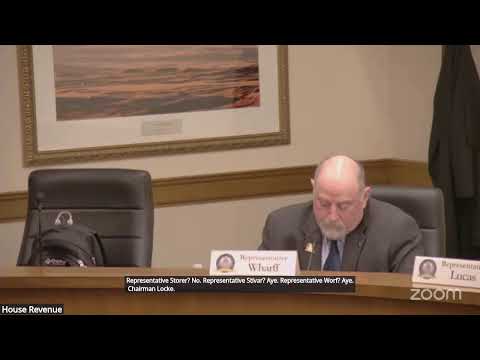
The committee recorded the roll-call vote: Yes votes from Representatives Campbell, Lean, Lucas, Stivaler and Chairman Locke; No votes from Representatives Brown, Storer and Worf; Representative Riggins was excused. The committee recorded the motion to move the bill as made by Representative Stivor and seconded by Representative Lean.
The bill retains reporting requirements: assessors and Department staff said reporting by taxpayers would still be required and the exemption would apply at the appraisal/assessment stage rather than removing reporting obligations. The bill lists an effective date in 2026; testimony from assessors and Department staff indicated that date was intended to allow time to update the computer-assisted mass appraisal (CAMA) systems and to promulgate rules for allocation and consistent statewide administration.
With the committee's approval, Senate File 48 will move to the full House for consideration; the committee did not pick a carrier at the meeting.
Votes at a glance: Senate File 48 (business property exemption) '139: moved by Representative Stivor, seconded by Representative Lean; committee vote 5-3 (Aye: Campbell, Lean, Lucas, Stivaler, Locke; No: Brown, Storer, Worf; Riggins excused).